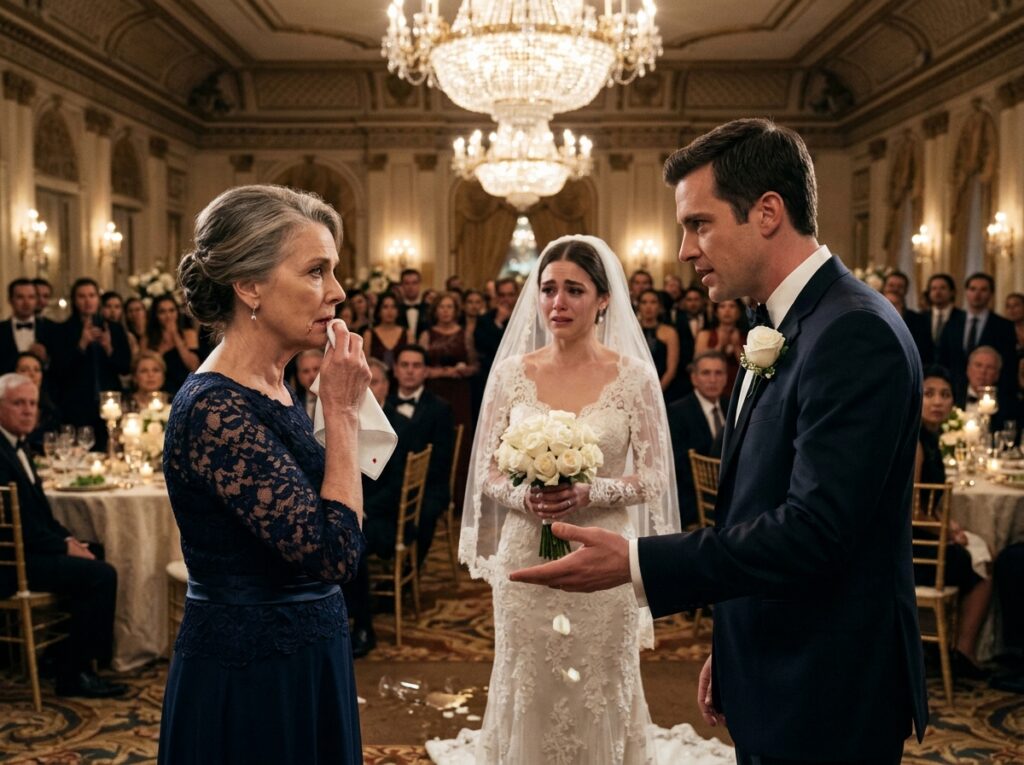
The slap landed before the music had finished playing.
For one frozen second, the whole wedding stopped breathing.
Two hundred guests stared at me as if I had fallen through the floor in the middle of my daughter’s perfect reception. My hand struck the edge of the gift table. Champagne glasses rattled. A silver knife clinked against a porcelain plate. Somewhere behind me, a child whispered, “Mommy?”
My cheek burned. My mouth tasted like blood.
Brent Harlan, my brand-new son-in-law, stood over me in his white tuxedo with a smile so cold it seemed carved into his face.
“Don’t embarrass yourself, Evelyn,” he said. “Hand over the farm keys.”
My daughter Clara stood beside him in her wedding dress, pale beneath her makeup, her fingers twisting around her bouquet until petals dropped onto the floor.
“Mom,” she whispered. “Please. Just do it.”
That hurt worse than the slap.
Waverly Farm had belonged to my family for four generations. My grandfather had planted the first apple trees. My father had built the western fence after the storm of ’78. My late husband Daniel had rebuilt the farmhouse with his own hands, board by board, while I was pregnant with Clara.
Brent had once called it “dead land.”
Then the county announced a new highway extension nearby.
Suddenly, my dead land became valuable.
Vivian Harlan, Brent’s mother, raised her wineglass from the front table.
“Really, Evelyn,” she said smoothly. “You’re alone now. You can’t manage all that land forever. Let the men handle the business.”
A few groomsmen laughed.
Alone.
That was what they all believed.
A sixty-two-year-old widow in a navy dress. Soil under my fingernails. A quiet woman who baked pies for church suppers and smiled through insults.
Brent stepped closer and opened his palm.
“The keys,” he said.
I slowly straightened. My cheek throbbed, but my voice did not shake.
“I promised Clara a home,” I said. “Not a title deed for you.”
His smile disappeared.
“You don’t understand business.”
“No,” I said, tasting blood at the corner of my mouth. “But I understand forged signatures.”
The room went silent in a different way.
Vivian’s glass stopped halfway to her lips.
Brent’s eyes sharpened.
“What did you just say?”
I looked at my daughter. My beautiful Clara, trembling beside the man she had married less than an hour ago. I wondered how long he had been teaching her to fear consequences that did not belong to her.
Then I turned back to Brent.
“You made a mistake,” I said softly.
He laughed once, harsh and ugly.
“No, Evelyn. You did.”
I walked past him. Past the guests. Past the flowers. Past the photographer, who lowered his camera as if he had witnessed a crime.
Outside, the October wind touched my burning cheek.
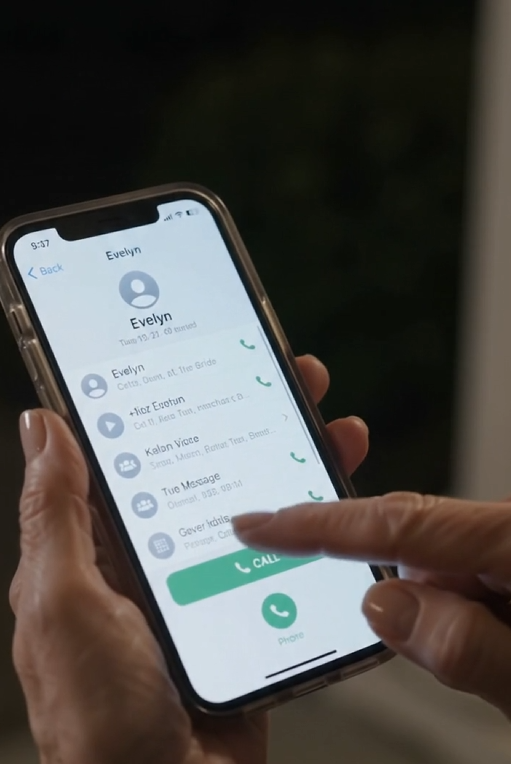
I reached into my purse, took out my phone, and dialed the one person Brent Harlan never imagined I knew.
“Sheriff,” I said when the line connected. “This is Evelyn Waverly. I need you at the farm. Now.”
Behind me, the wedding music tried to start again and failed.
I stood at the edge of the orchard while the sun slipped lower behind the apple trees. My hands were steady. That surprised me. For months, I had imagined this moment in fear Brent cornering me, Brent pressuring Clara, Brent turning my daughter’s love into a weapon.
But I had not spent those months crying.
I had spent them collecting evidence.
The forged proposal. The fake authorization papers. The meeting notes from the county planner. The emails Brent thought he had deleted. The developer’s offer with my name typed neatly beneath a signature I had never written.
He thought I was weak because I was quiet.
The first sheriff’s SUV rolled up the driveway ten minutes later.
Then another.
Then a third.
By the time Brent came outside, still wearing that smug white tuxedo, the driveway was blocked.
His smile faltered.
“Evelyn,” he called. “What is this?”
I looked at him calmly.
“This,” I said, “is what happens when you slap the wrong woman on her own land.”
Deputy Reynolds stepped forward.
“Brent Harlan, we have reports of assault, threats, fraud, and attempted illegal transfer of property. You need to come with us.”
Brent’s face changed so quickly I almost missed it.
Anger.
Confusion.
Fear.
Vivian hurried down the steps behind him.
“This is absurd,” she snapped. “My son did nothing wrong.”
I reached into my purse and held up a folder.
“Then he won’t mind explaining why my dead husband’s signature appears on a development agreement dated eight months after his funeral.”
Clara gasped.
Brent turned toward her.
“Clara, don’t listen to her.”
But Clara had already taken one step away from him.
Then another.
Her eyes filled with tears, but this time they were not frightened tears.
They were waking-up tears.
“Is that true?” she whispered.
Brent said nothing.
That silence finished what my words had started.
Deputy Reynolds moved in. Brent tried to pull away, shouting about lawyers, money, family business, misunderstandings. But the handcuffs closed around his wrists in front of two hundred guests, and suddenly the man who had demanded my farm looked very small.
Vivian’s face went gray.
“You’ll regret this,” she hissed at me.
I stepped closer, my cheek still red from her son’s hand.
“No,” I said. “I already regretted staying silent too long.”
Clara came to me then.
Not as a bride.
Not as Brent’s wife.
As my daughter.
She fell into my arms and broke.
“I thought you were going to give in,” she sobbed. “I thought he had already won.”
I held her tightly.
“He never owned the farm,” I whispered. “And he never owned you.”
The guests slowly began to leave. Some avoided my eyes. Some touched my shoulder. One elderly neighbor, Mrs. Bell, squeezed my hand and said, “Daniel would be proud.”
That almost broke me.
After the last car disappeared down the road, Clara and I walked through the orchard together. Her wedding dress dragged through fallen leaves. She did not seem to care.
“Mom,” she said quietly, “why didn’t you tell me?”
“Because I was afraid if I pushed too hard, he’d pull you farther away.”
She cried again, softer this time.
“I kept thinking love was supposed to feel difficult.”
I stopped walking and turned to her.
“Love can be hard,” I said. “But it should never make you afraid to breathe.”
The farmhouse glowed in the fading light. Daniel’s porch swing moved slightly in the wind. For the first time all day, I felt him there not as grief, but as strength.
That night, I sat in the kitchen with a glass of apple cider from the last pressing of the season. My cheek was swollen. My heart was bruised. But the farm was safe.
Then my phone buzzed.
A message from my attorney appeared on the screen.
All filings confirmed. Development transfer frozen. Brent Harlan will face charges. You and Clara are protected.
I closed my eyes and breathed.
The storm had finally broken.
In the weeks that followed, the story spread through the county. Brent faced charges for assault and fraud. Vivian disappeared from the social circles she had once ruled. The developer backed away the moment the documents became public.
Clara moved back into the farmhouse for a while.
At first, she barely spoke. She spent mornings on the porch, wrapped in one of Daniel’s old flannel shirts, staring at the orchard like she was trying to remember who she had been before Brent.
So I gave her small things.
A basket.
A pair of gloves.
A row of young apple trees that needed tending.
One morning, she came inside with mud on her knees and the smallest smile on her face.
“I forgot how quiet it is here,” she said.
I smiled back.
“It’s not empty quiet,” I told her. “It’s healing quiet.”
Months later, when autumn returned and the trees bent heavy with fruit, Clara stood beside me in the orchard holding her little daughter’s hand.
“Grandma,” the child asked, “is this our farm?”
I knelt and brushed a leaf from her hair.
“Yes,” I said. “This is our farm.”
Clara looked at me, tears shining in her eyes, but she was smiling now.
I looked across the rows of apple trees, the pasture, the old white farmhouse Daniel had built back into beauty.
“This farm was protected by people who loved it,” I told my granddaughter. “And sometimes, when someone tries to take what love built, you have to stand taller than fear.”
The child giggled and ran toward the trees.
Clara slipped her hand into mine.
And in the golden light of that quiet autumn evening, Waverly Farm stood strong.
So did we.





