The first thing my mother asked after I buried my husband was not whether I could breathe.
She did not ask whether I had eaten, whether someone was driving me home, or whether I needed her to sit beside me while I learned how to exist in a world without Everett.
She did not say she was sorry.
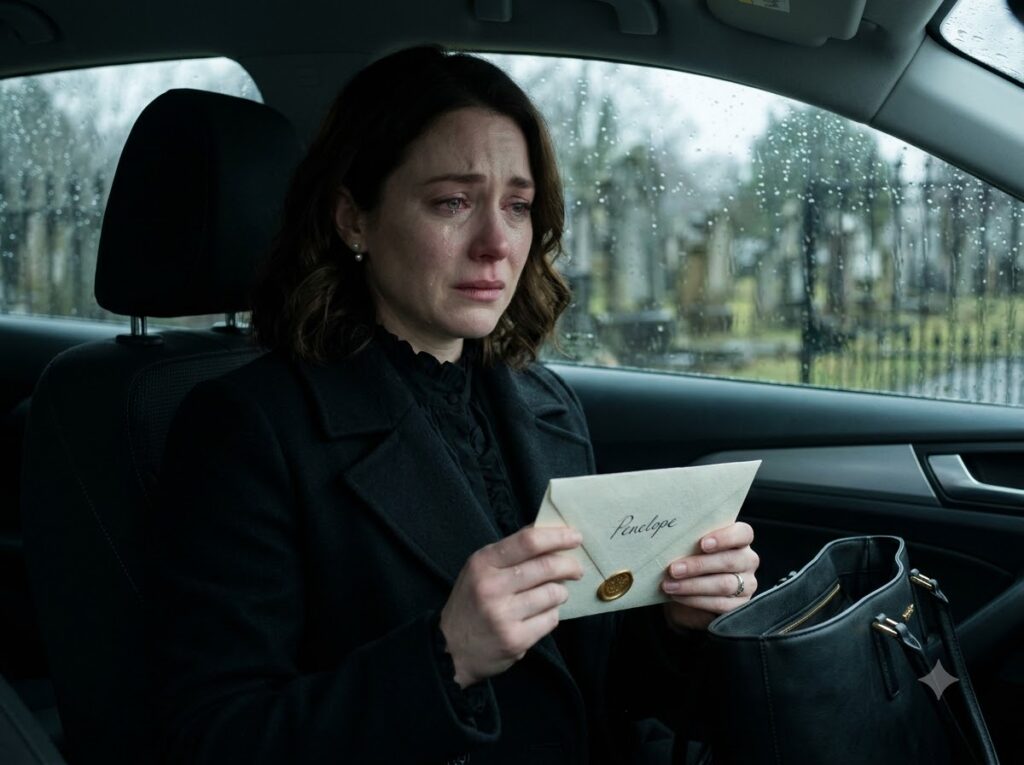
Instead, as I stood beside my car with cemetery mud clinging to my heels and rainwater sliding beneath the collar of my black dress, my mother called me for the twenty-fourth time and said:
“What about the money Everett promised for your sister’s party?”
For several seconds, I thought grief had distorted her words.
Behind me, the cemetery gates creaked in the wind. Beyond them, a mound of fresh earth covered the man who had kissed my forehead every morning for eleven years.
Everett Hale was thirty-eight years old when cancer took him.
Thirty-eight.
He had built bookshelves for the house we hoped to fill with children. He had memorized the exact way I liked my coffee. He had once driven four hours through a snowstorm because I mentioned over the phone that I was afraid of being alone.
And now he was beneath six feet of wet Arizona soil while my mother shouted over dance music about an unpaid party bill.
“Mom,” I whispered, “I just left my husband’s funeral.”
“Yes, sweetheart, I know. It’s terribly sad.”
Her voice softened for exactly three words.
Then champagne glasses clinked behind her.
“But we have a crisis here. Penelope invited nearly two hundred people. The venue manager says the remaining balance must be paid tonight. Everett promised to cover it, and your sister is already upset enough.”
I looked through the rain-streaked windshield of my car.
Twenty-three missed calls glowed on my phone.
For one foolish moment, I had believed they represented remorse.
I had imagined my mother, Jasmine Mercer, standing inside the glittering Phoenix event hall and suddenly realizing that she had chosen gold balloons over her daughter’s grief. I had imagined her calling to confess that she had made a terrible mistake.
But Jasmine had not forgotten the funeral.
Neither had my father, Raymond.
Neither had my younger sister, Penelope.
They had known the exact time.
They had all promised to attend.
Three days earlier, Penelope had texted me:
Of course we’ll be there. Family comes first.
Then, while Everett’s coffin was lowered into the ground, my entire family had posed beneath a crystal arch at Penelope’s thirty-first birthday celebration.
I had seen the photographs before leaving the cemetery.
Penelope in an emerald-green gown.
My father smiling beside a three-tiered cake decorated with gold roses.
My mother lifting a champagne glass beneath the caption:
CELEBRATING LIFE WITH THE PEOPLE WHO ARE ALWAYS THERE.
The people who were always there.
They had not been at the hospital when Everett’s oncologist told us the treatments were no longer working.
They had not been there during his final night, when his hand became too weak to hold mine and he apologized for leaving me as though dying were something he had done wrong.
They had not been there that morning when I pressed my lips to his cold wedding ring before the funeral director closed the coffin.
But they were demanding his money before the dirt over his grave had settled.
“Selena?” my mother snapped. “Are you listening?”
Something inside me stopped breaking.
Perhaps there is a limit to how much pain a person can absorb before the heart protects itself by turning to stone.
“I’m listening,” I said.
“Good. Everett said he would help. The venue is owed eighty-six thousand dollars.”
My fingers tightened around the phone.
“Eighty-six thousand?”
“Penelope deserves one memorable birthday. You know how difficult this year has been for her.”
Penelope’s difficult year had included a canceled Mediterranean cruise, a temporary suspension from a luxury-clothing sponsorship, and the humiliation of discovering that the penthouse she wanted had already been leased to an actress.
Everett’s difficult year had included chemotherapy, surgery, vomiting blood into a hospital basin, and learning that he would never see another Christmas.
“I don’t have access to Everett’s estate yet,” I said.
“You have your joint account.”
“That money is for the mortgage and his medical bills.”
My mother exhaled sharply.
“Please do not make tonight about you.”
The cruelty of the sentence was so pure that it cleared the fog from my mind.
Not the funeral.
Not the widowhood.
Not the fact that my husband had died with only me beside him.
The problem, in Jasmine’s mind, was that I might make Penelope’s party about me.
I heard my father’s voice in the background.
“Has she transferred it?”
My mother covered the phone badly.
“She’s being emotional.”
Then Penelope said something I could not hear, and several guests laughed.
My mother returned.
“Everett made a promise, Selena. A promise is a promise.”
I looked down at the silver wedding ring on my hand.
Everett had made me promises too.
He had promised to love me.
To protect me.
To tell me the truth, even when it hurt.
And on the last morning he was conscious, he had pulled me close and whispered something I had not understood.
When they ask for the money, do not give them anything.
At the time, I thought the medication was confusing him.
Now, in the rain outside the cemetery, his words returned with startling clarity.
“When they ask for the money,” I repeated softly.
“What?” my mother asked.
“Nothing.”
“Then make the transfer.”
“No.”
Silence replaced the party noise for half a heartbeat.
My mother had heard me refuse her before, but only in small ways. I had declined dinners, delayed favors, and resisted demands long enough to be called selfish before eventually surrendering.
I had never given her a clean, complete no.
Her voice lowered.
“Selena, do not punish your sister because your day was difficult.”
My day.
As though I had missed a flight.
As though I had spilled coffee on my blouse.
As though I had not watched the love of my life disappear beneath the earth.
“My husband died,” I said.
“And your sister is still alive,” Jasmine replied. “The living should not have to apologize for celebrating.”
The rain struck the roof harder.
I ended the call.
Then I blocked her number.
I blocked my father.
I blocked Penelope.
I sat behind the steering wheel while the cemetery blurred beyond the glass and made myself a promise.
My family would never again use my guilt, loyalty, or pain to take something from me.
I believed that was the end of it.
Then someone knocked on the passenger window.
I flinched so violently that the phone slipped from my hand.
A woman stood outside beneath a black umbrella.
She was in her early forties, with a severe dark-blue suit and rain shining across the shoulders of her coat. I recognized her after a moment.
Mara Chen.
Everett’s attorney.
She had been one of the two coworkers who attended the burial.
I unlocked the door.
Mara climbed into the passenger seat and closed the umbrella carefully between her knees.
“I’m sorry to frighten you.”
“It’s fine.”
“No, it isn’t.”
Her voice was gentle but direct, the way Everett’s had been whenever he believed kindness should not be confused with dishonesty.
Mara looked toward the cemetery.
“I also need to apologize for approaching you today. Everett gave me very specific instructions.”
My body tensed.
“What instructions?”
She reached inside her leather case and removed a cream-colored envelope.
It was thick, sealed with dark red wax, and marked in Everett’s handwriting.
One name had been written across the front.
PENELOPE MERCER.
The sight of my sister’s name felt like a fist against my ribs.
“What is that?”
“I don’t know everything inside,” Mara said. “Everett instructed me not to open it.”
“Why does it have Penelope’s name?”
“He said you would ask that.”
She handed me the envelope.
The paper was heavier than ordinary stationery. Something metallic shifted inside.
“What did he tell you?”
Mara’s expression tightened.
“He said that after his funeral, your mother would call you repeatedly about money. He said you must refuse her.”
Cold moved through my arms.
“He knew?”
“He expected it.”
“Why?”
“Because the party is not only a party.”
I stared at her.
Mara looked down at the envelope.
“Everett wanted you to open that only after your family asked for the money. He said the timing mattered.”
My thumb rested against the wax seal.
“What will I find?”
“His explanation.”
I broke the seal.
Inside were four objects.
A small brass key.
A black flash drive.
A folded letter addressed to me.
And a photograph.
The photograph showed Everett standing outside a nursing facility I had never seen. He looked thinner than I remembered, his cheeks hollow from treatment, but he was smiling.
Beside him stood Penelope.
My sister’s emerald nails were curled around Everett’s arm.
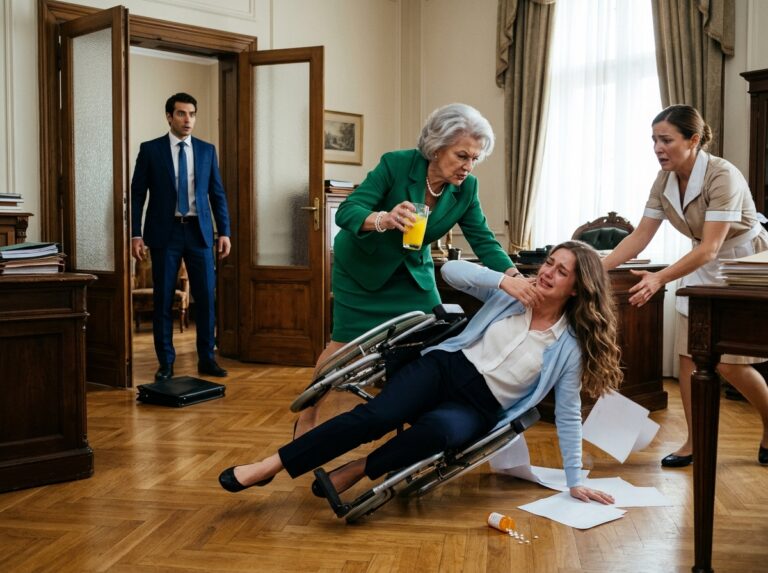
Between them was an older woman in a wheelchair.
Her silver hair was cut to her chin. Her face was pale and lined, but something about her eyes stopped my breath.
They were dark brown.
Almond-shaped.
Exactly like mine.
On the back of the photograph, Everett had written:
HER NAME IS NOT CLARA VOSS.
Below that was a second line.
Ask Penelope why your mother has paid to keep this woman hidden for thirty-two years.
The car seemed to tilt.
“Who is she?” I whispered.
Mara shook her head.
“I was hoping you could tell me.”
I unfolded Everett’s letter.
His handwriting was weaker than usual, the lines slanting downward.
My dearest Selena,
If you are reading this, your family has done exactly what I believed they would do. I am sorry. I wanted to be wrong more than I wanted to finish any investigation I have ever begun.
The envelope carries Penelope’s name because she holds the first half of the truth. The flash drive holds the second.
Do not assume you know who betrayed you.
Do not trust anyone who tells you this is only about money.
Go to the party.
Find Penelope before your parents realize what is happening.
Ask her about Room 214.
And Selena—whatever you discover tonight, remember this: none of it changes who you are.
I loved you before I knew the truth.
I love you after it.
Always,
Everett
I read the final line three times.
“What truth?” I said.
Mara looked toward the flash drive.
“We should find out.”
We drove to Everett’s office because Mara did not believe the contents should be opened on a personal computer.
The building was nearly empty. Rainwater gleamed across the downtown streets, turning traffic lights into smears of red and green.
Everett’s office still smelled like him.
Cedar soap.
Coffee.
The faint peppermint gum he chewed whenever deadlines made him anxious.
His jacket hung behind the door.
I touched the sleeve before I could stop myself.
For one impossible instant, I expected him to return from the hallway and smile at me.
You stole my chair again, Lena.
Then I saw the framed photograph on his desk.
Everett and me at Lake Powell, sunburned and laughing, his arm around my waist.
My grief broke through the numbness.
I bent forward, gripping the edge of the desk.
Mara waited without speaking.
“I don’t know how to do this,” I whispered.
“Do what?”
“Learn secrets about him when I can’t ask him why.”
Mara’s expression softened.
“He spent his last six months trying to make sure you would not be alone when you learned them.”
“That isn’t the same as having him.”
“No,” she said. “It isn’t.”
I wiped my face and inserted the flash drive.
A password request appeared.
Below the blank field was a clue.
THE PLACE WE FIRST CHOSE EACH OTHER.
I typed the name of the little bookstore where Everett had proposed.
The drive opened.
There were folders labeled BANKS, MEDICAL, PROPERTY, RECORDINGS, and MERCER FAMILY FOUNDATION.
At the top was a video file titled FOR SELENA.
I clicked it.
Everett appeared on the screen.
He was seated in the same office, wearing the navy sweater I had bought him for our tenth anniversary. His face was thin, his skin almost translucent, but his eyes were steady.
“Hello, Lena.”
The sound of his voice destroyed me.
My hand flew to my mouth.
On the screen, Everett took a slow breath.
“If this video is playing, then I am gone, and your mother has already asked you to pay for Penelope’s party.”
He gave a tired, humorless smile.
“I know how absurd that sounds. Unfortunately, Jasmine has always been predictable when money and appearances are involved.”
He looked down briefly.
“I need you to understand something before you continue. I did tell them I would arrange payment for the party. I did not lie.”
Mara glanced at me.
“I promised the venue would receive everything it was owed by midnight,” Everett continued. “But I never promised the money would come from us.”
A chill ran along my spine.
“For the past fourteen months, I have been investigating the Mercer Family Foundation. On paper, your parents have raised millions for housing, medical aid, and scholarships. In reality, much of that money was transferred through shell companies controlled by your father.”
Files appeared beside him on the screen: account numbers, signatures, property documents.
“One of those shell companies was opened in your name when you were seventeen.”
“What?” I whispered.
“Your signature was forged. Your identity was used to receive and redirect charitable funds. If the scheme collapses without evidence of the forgery, you could be blamed.”
I gripped the desk.
Everett continued.
“The money your mother wants tonight is not merely a party balance. The venue deposit came from an account already flagged by federal investigators. The unpaid balance is large enough that Jasmine and Raymond must either expose another hidden account or allow the event to fail publicly.”
His face hardened.
“I designed the choice that way.”
Mara leaned toward the screen.
Everett had set a trap.
“My original plan was to tell you while I was alive,” he said. “Then my condition worsened faster than expected, and something else happened.”
He paused.
“Penelope came to me.”
My stomach tightened.
“She had discovered payments from the foundation to a private long-term-care facility outside Tucson. The payments began thirty-two years ago, shortly after your first birthday. The patient was registered as Clara Voss.”
The photograph appeared.
“But Clara Voss did not exist before 1994. Her Social Security number belonged to a child who died in infancy. Her medical history had been fabricated, and all visitors required written approval from Jasmine Mercer.”
Everett looked directly into the camera.
“Selena, the woman in that photograph claims she is your mother.”
The room became silent except for the computer fan.
I shook my head.
“No.”
On the screen, Everett’s expression filled with grief.
“I did not believe her at first. Penelope did not either. Then we obtained a DNA sample.”
A document appeared.
The highlighted probability read:
MATERNAL RELATIONSHIP: 99.9987%.
My chair rolled backward as I stood.
“No.”
Mara rose beside me.
“Selena—”
“No. Jasmine is my mother.”
But the words sounded weak.
Memories surfaced without permission.
My mother refusing to show me photographs from my birth.
The locked metal box she kept in her closet.
The way my father once shouted when I requested a copy of my original birth certificate.
The childhood nightmares about a woman singing through a door.
Everett continued speaking.
“The woman’s real name is Celeste Vale Mercer. She is Jasmine’s older sister.”
I stopped breathing.
I knew that name.
Celeste had been the tragic aunt no one discussed.
According to family history, she and her husband had died in a boat fire before I was born.
Their bodies had never been recovered.
“My investigation indicates Celeste survived,” Everett said. “She was severely injured and suffered memory loss. Instead of helping her, Jasmine arranged for her to be declared unidentified and mentally incompetent. She was moved between facilities under false names for more than three decades.”
“Why?” I whispered.
Everett answered as though he could hear me.
“Money.”
A photograph of an old trust agreement appeared.
“Celeste was the sole heir to the Vale estate. If she died, her assets passed to her child.”
Me.
“Jasmine presented herself as your mother and legal guardian. She gained control of the trust.”
The numbers on the screen made me dizzy.
The original trust had been worth four million dollars.
With investments and property appreciation, it should have been worth more than twenty-seven million.
Most of it was gone.
Everett looked exhausted now.
“Your parents used the trust to build the life you believed came from Raymond’s business success. Their home, the foundation, Penelope’s education, the vacation properties, the public donations—much of it began with money stolen from you and Celeste.”
I pressed both palms against the desk.
The birthday photographs flashed through my mind.
My mother beneath gold balloons.
My father beside the cake.
Forever Our Queen.
They had celebrated Penelope’s life using money stolen from mine.
“There is more,” Everett said.
Of course there was.
“When Penelope confronted Jasmine about the care-facility payments, Jasmine told her Celeste was dangerous and had tried to kill you as an infant. Penelope believed her until she visited Room 214.”
The video cut to footage filmed inside a modest nursing-home room.
The older woman sat beside a window.
Penelope’s voice came from behind the camera.
“What was your daughter’s name?”
The woman looked frightened.
“Selena.”
My knees nearly failed.
“What did you call her?”
The woman’s eyes filled with tears.
“Little star.”
A sound escaped me.
Everett used to call me that.
Not often.
Only when I was afraid.
I had assumed he invented it.
On the screen, Penelope asked, “How would you recognize her?”
Celeste lifted a trembling hand.
“She has a crescent-shaped birthmark beneath her left shoulder. And when she was tired, she rubbed the edge of her ear between two fingers.”
My hand was already touching my ear.
Mara saw it.
Neither of us spoke.
Everett returned to the screen.
“Penelope agreed to help me collect evidence. The birthday party was part of that plan.”
My disbelief turned instantly to anger.
“She agreed to miss your funeral?” I demanded at the recorded image. “She smiled for photographs while I buried you?”
Everett’s eyes seemed almost apologetic.
“Penelope had to convince Jasmine and Raymond that she remained loyal. If they suspected she had changed sides, they would move Celeste and destroy the financial records.”
He paused.
“I asked Penelope to stay at the party.”
The anger had nowhere to go.
He had made that decision without me.
My dead husband and my sister had designed a plan around the worst day of my life and trusted me with none of it.
“I know you may hate us for that,” Everett said. “You have every right.”
My throat closed.
“But there is a difference between forgiveness and understanding. Tonight, you need the truth before you decide whether to offer either.”
The screen darkened, then displayed a final message.
GO TO THE PARTY. TAKE MARA. TRUST THE WOMAN IN GREEN ONLY AFTER SHE SAYS: HE KEPT THE LIGHT ON.
The video ended.
For several seconds, I stared at my reflection in the black screen.
Then Mara said, “We don’t have to go.”
“Yes, we do.”
“You buried your husband today.”
“And apparently my family buried my mother thirty-two years ago.”
I pulled the flash drive from the computer.
“What happens at midnight?”
Mara checked the time.
It was 8:46 p.m.
“The venue payment deadline.”
“And if my parents use another hidden account?”
“Federal investigators trace it.”
“If they don’t?”
“The party collapses in front of two hundred guests.”
I picked up Everett’s brass key.
“What does this open?”
“I don’t know.”
I looked at Penelope’s name on the envelope.
“Then she can tell me.”
The event hall glowed like a palace built to mock the dead.
Golden light poured through thirty-foot windows. Valets hurried beneath white umbrellas. Music pulsed through the walls so loudly I could feel it in my chest before we entered.
Guests in evening clothes crowded the lobby.
A towering floral display spelled Penelope’s initials in white roses.
P.M.
Two letters surrounded by thousands of dollars’ worth of flowers while Everett’s grave had received a single arrangement from his office.
People recognized me.
The whispers began immediately.
“Isn’t that Selena?”
“She came from the funeral?”
“Why would she come here?”
A photographer lowered his camera.
I walked forward in my rain-darkened funeral dress.
No makeup.
No jewelry except my wedding ring.
Mud still marked my shoes.
The ballroom doors opened, revealing a sea of gold balloons and champagne.
At the center, Penelope stood beneath a chandelier in her emerald gown.
She was laughing at something a man beside her had said.
Then she saw me.
The laugh vanished.
Our mother followed her gaze.
Jasmine’s expression transformed from surprise to outrage before she remembered the guests watching.
She crossed the room quickly, smiling through clenched teeth.
“Selena, what are you doing here?”
“You called twenty-three times.”
“I was concerned.”
“You wanted money.”
Her smile twitched.
“Not here.”
“Why? You discussed Everett’s money while I was standing outside his grave. This seems like a more appropriate setting for you.”
Several nearby guests became silent.
My father approached.
Raymond Mercer was sixty-two, silver-haired, tanned, and perpetually dressed as though cameras might appear. He had built his public identity around generosity. Newspapers called him a philanthropist. The governor had once praised his foundation.
Now his eyes fixed on Mara.
“What is the attorney doing here?”
“Attending a family celebration,” Mara said.
“This is invitation only.”
“So was Everett’s funeral.”
My father’s jaw tightened.
Penelope began moving toward us.
Jasmine stepped into her path.
“Go back to your guests.”
Penelope stopped.
Her eyes found mine.
She looked beautiful, composed, and utterly foreign.
I wanted to strike her.
I wanted to hold her.
I wanted her to explain how she could stand beneath gold lights while Everett was placed in the ground.
Instead, she lifted her champagne glass slightly and said:
“Selena, you shouldn’t be here.”
My hand curled around the envelope inside my coat.
Then she added quietly:
“He kept the light on.”
The words changed everything.
Everett’s code.
Jasmine glanced between us.
“What did you say?”
Penelope smiled.
“I told her the cemetery keeps its lights on.”
Our mother’s face relaxed slightly.
Penelope turned toward the crowd.
“Everyone, please enjoy yourselves. My sister has had an emotional day.”
The familiar condescension stung, but I saw the fear behind her eyes.
She was acting.
The party continued around us.
Penelope walked past me without another glance.
As she did, she whispered:
“Ladies’ room. Three minutes.”
Jasmine reached for my arm.
I pulled away.
“Where is the money?” she asked under her breath.
“Everett’s dead.”
“That does not erase his obligations.”
“He owed you nothing.”
My father moved closer.
“Lower your voice.”
“Why? Are you worried your donors will hear?”
His eyes sharpened.
“What have you been told?”
That question confirmed more than any accusation could have.
Mara stepped beside me.
“Selena needs a moment.”
Jasmine blocked our path.
“You have always been jealous of your sister.”
I almost laughed.
“Today I buried my husband alone, and somehow you still found a way to make Penelope the victim.”
“You chose a private funeral.”
“I asked all of you to come.”
“Penelope’s birthday had been booked for months.”
“A party can be moved.”
“Not one of this scale.”
There it was.
The Mercers’ true religion.
Not love.
Not family.
Scale.
Appearance.
A large enough spectacle could justify any cruelty.
My father leaned close.
“Transfer the money, Selena. We will discuss your behavior tomorrow.”
“No.”
Jasmine’s eyes widened.
“We raised you.”
The sentence carried thirty-two years of leverage.
We fed you.
We housed you.
We made you one of us.
You owe us everything.
But now I knew that even those sacrifices had been purchased with money stolen from me.
“You raised me,” I said softly, “with my own inheritance.”
My mother went completely still.
The music continued.
A woman nearby laughed.
A server passed with champagne.
But between the three of us, the world stopped.
My father recovered first.
“Who told you that nonsense?”
I watched Jasmine’s face.
Not confusion.
Not indignation.
Fear.
“Room 214,” I said.
The champagne glass slipped from my mother’s hand.
It struck the marble floor and shattered.
Every head turned.
Penelope appeared at the edge of the crowd.
My father seized my elbow.
“Come with me.”
“Take your hand off her,” Mara said.
His grip tightened.
Then two uniformed venue-security officers approached, drawn by the breaking glass.
Raymond released me instantly and smiled.
“Family misunderstanding.”
“Of course,” one guard said uncertainly.
Jasmine stared at me.
“You have no idea what you are doing.”
“Then explain it.”
“Not here.”
“Everett wanted it here.”
At the sound of his name, something flickered across her face.
Not grief.
Hatred.
“You think your husband was a saint?” she whispered. “You have no idea what he did.”
Before I could answer, the ballroom lights dimmed.
Penelope’s birthday video began playing across a giant screen.
Images of her childhood filled the room.
Penelope at five, wearing a crown.
At twelve, riding a horse.
At eighteen, standing between our parents at graduation.
Every photograph showed the same family pattern.
Penelope in the center.
My mother touching her shoulder.
My father smiling proudly.
I appeared at the edges.
Holding bags.
Cut off by the frame.
Looking toward people who were looking at someone else.
Then the screen flickered.
The childhood montage vanished.
Numbers appeared.
Bank transfers.
Shell corporations.
Property deeds.
My father’s face drained of color.
A recording filled the ballroom.
His voice.
Move it through Selena’s account. She never checks anything.
Then Jasmine:
What if Everett notices?
Raymond laughed.
By the time he does, he’ll be dead.
Gasps spread through the guests.
My mother turned toward Penelope.
“What did you do?”
Penelope stood beside the audio booth, one hand resting on the controls.
For the first time that night, she stopped performing.
“I finished what Everett started.”
My father lunged toward her.
Security intercepted him.
The ballroom erupted.
Guests pulled out phones. Donors shouted questions. Board members demanded explanations.
The screen changed again.
A live countdown appeared.
02:41:19 UNTIL PAYMENT DEADLINE.
Below it were the words:
BALANCE DUE: $86,000.
Penelope took the microphone.
Her hands trembled, but her voice did not.
“My parents have spent years convincing this city that generosity was their legacy. Tonight’s party was meant to be another display of that image.”
Jasmine pushed toward the stage.
“Turn it off!”
Penelope continued.
“The venue deposit was paid from a charitable account designated for families facing eviction.”
The room exploded with outrage.
My father shouted, “That is a lie!”
Documents appeared behind Penelope.
Invoices.
Transfer records.
Families’ names.
Amounts diverted.
“The remaining balance was supposed to be covered by my brother-in-law,” Penelope said, and her voice cracked briefly. “Everett Hale died three days ago. He was buried this afternoon.”
People turned toward me.
I stood in the center of the ballroom wearing the rain from his cemetery.
Penelope looked directly at me.
“While my sister buried him alone, we continued this party because Everett asked me to.”
Whispers became confused.
“I agreed because he believed this was the only way to force my parents to expose where the stolen money was hidden.”
Jasmine reached the stage.
“You ungrateful little monster.”
Penelope flinched.
Our mother tore the microphone from her hand.
“This woman is emotionally unstable,” Jasmine announced. “She has been manipulated by Selena and her husband.”
Mara raised her phone, recording.
Jasmine pointed at me.
“Selena has always resented her sister. Now she is using Everett’s death to destroy this family.”
For most of my life, that accusation would have reduced me to silence.
I would have questioned my memory.
My motives.
My right to be angry.
But grief had burned away the part of me that needed Jasmine’s approval.
I walked onto the stage.
“You missed my husband’s funeral.”
Jasmine’s mouth tightened.
“This is not the time.”
“You called me twenty-three times while I stood outside the cemetery.”
“We needed to settle a financial matter.”
“You told me not to make the day about myself.”
Some guests stared at her in disbelief.
She lowered her voice.
“Selena, stop.”
“You knew my husband was dead, and your only concern was whether his widow could pay for this room.”
“Everything we did was for our daughters.”
“Which daughters?”
Her face changed.
I removed the photograph of Celeste from my coat and held it up.
“Because the woman you have kept in Room 214 says I am hers.”
The ballroom fell silent.
Penelope closed her eyes.
My father stopped struggling against security.
Jasmine looked at the photograph.
For a moment, the polished philanthropist disappeared.
What remained was a frightened, aging woman staring at a ghost she had spent thirty-two years hiding.
“She is sick,” Jasmine said.
“She is my mother.”
“I am your mother.”
“No. You are the woman who stole her name, her money, and her child.”
Jasmine slapped me.
The sound cracked across the ballroom.
Mara stepped forward.
I raised one hand.
“No.”
My cheek burned.
I looked back at Jasmine.
She had slapped me before.
Not often.
Never where marks would show.
But this time two hundred people had witnessed it.
Cameras were recording.
Her control was gone.
“You should have been grateful,” she hissed.
“For what?”
“For the life I gave you.”
“You mean the life you bought with money stolen from my mother?”
“She could not care for you!”
“Because you kept her drugged in a facility under a false identity.”
Her breathing became ragged.
“You do not know what she was.”
“Then tell me.”
Jasmine looked toward Raymond.
He shook his head once.
A warning.
She saw it.
And something between them cracked.
Perhaps people like my parents remain loyal only while the lie protects both of them. Once the walls begin collapsing, love becomes a race toward the nearest exit.
Jasmine pointed at my father.
“It was his idea.”
Raymond stared at her.
“Jasmine.”
“He said Celeste would ruin us.”
“Be quiet.”
“He arranged the doctor. He arranged the records.”
Raymond pushed against the guards.
“You signed every document.”
“Because you threatened Penelope!”
Penelope went pale.
“What?”
Jasmine turned toward her.
“I did everything to protect you.”
Penelope’s voice dropped.
“From what?”
Our mother’s eyes filled with tears.
Real tears, perhaps for the first time.
“From him.”
Raymond laughed coldly.
“You are pathetic.”
At that moment, the ballroom doors opened.
Four federal agents entered.
Behind them came detectives from the state financial-crimes unit.
A man in a dark suit stepped onto the stage.
“Raymond Mercer and Jasmine Mercer, we have warrants for your arrest relating to wire fraud, identity theft, conspiracy, unlawful imprisonment, and the misappropriation of charitable funds.”
Cameras flashed.
Guests backed away.
Jasmine grabbed my arm.
“Selena, please.”
It was the first time she had said please.
Not when Everett was sick.
Not at the funeral.
Not while demanding money.
Only now, when her own life was collapsing.
“I raised you,” she whispered.
I looked into the face I had called Mother for thirty-two years.
“Then you should have learned to love me.”
The agents pulled her hands behind her back.
My father did not beg.
He looked at Penelope.
“You think they will forgive you? You stood here smiling. You drank our champagne. You helped build everything you are now condemning.”
Penelope’s face crumpled.
He smiled.
“You are exactly like us.”
Then the agents led him away.
The crowd parted.
Jasmine’s gold dress shimmered beneath the lights as she was escorted past the cake that called Penelope a queen.
At the ballroom doors, she turned back.
Her eyes found mine.
“Celeste tried to kill you,” she shouted. “Ask her what happened on the boat!”
Then she disappeared into the corridor.
The ballroom filled with noise.
Reporters.
Guests.
Crying employees.
Board members calling attorneys.
The birthday cake remained untouched beneath the chandelier.
Penelope stood beside me.
For several seconds, neither of us spoke.
Then she said, “I’m sorry.”
I turned toward her.
“For which part?”
Her face tightened.
“All of it.”
“You posed for photographs.”
“I had to make them believe me.”
“You posted that caption.”
“Mom took my phone.”
“You told me family comes first.”
“Everett told me to keep acting normally.”
“You let me bury him alone.”
Her eyes filled.
“I wanted to come.”
“But you didn’t.”
“No.”
I looked away.
“I don’t know whether I can forgive you.”
“I know.”
“You and Everett made decisions about my life without me.”
“He believed you would confront them immediately if you knew.”
“He was right.”
“That could have gotten Celeste moved or killed.”
The name struck strangely.
Celeste.
My mother.
Not Jasmine.
Penelope reached inside her handbag and removed a small metal box.
“The key Everett left you opens this.”
My brass key fit the lock.
Inside was a cassette tape, an old photograph, and a hospital bracelet.
The bracelet read:
BABY GIRL VALE.
The photograph showed Celeste holding an infant.
On the back, in faded ink, were the words:
Selena, my little star. May 17, 1994.
I touched the baby’s face.
My face.
“Where did you find this?”
“Room 214.”
“And the tape?”
“She recorded it before the boat trip.”
Penelope swallowed.
“Everett said you should hear it privately.”
I looked around the destroyed party.
“No more private secrets.”
I took the cassette to the sound technician.
Minutes later, Celeste’s younger voice filled the ballroom.
If anything happens to me, it was not an accident.
The remaining guests fell silent.
Raymond has been taking money from the Vale accounts. Jasmine knows. I confronted them tonight. Raymond threatened to take Selena.
There was a pause, followed by a baby crying faintly.
I am leaving tomorrow. I am taking my daughter somewhere safe.
The recording crackled.
Then Celeste said something that made Penelope stagger backward.
Jasmine is pregnant. She says the child is Raymond’s.
Penelope looked at our father’s empty place.
Her lips parted.
She had always been told Raymond was her father.
The tape continued.
But Raymond cannot have children.
A murmur passed through the room.
Penelope’s face went white.
He told me years ago after the accident. If Jasmine’s baby belongs to someone else, he will never forgive her. I fear what he might do.
The tape ended.
Penelope stared at me.
“If Raymond couldn’t have children…”
“He wasn’t my father,” I said.
“And he may not be mine.”
The first revelation had destroyed our family’s public image.
The second destroyed its bloodlines.
But Everett had warned me.
Do not assume you know who betrayed you.
We had uncovered Jasmine’s fraud.
Raymond’s conspiracy.
Celeste’s imprisonment.
Yet we still did not know what happened on the boat.
And my mother’s last words followed me from the ballroom.
Ask her what happened.
The nursing facility was two hours south of Phoenix.
We drove there before dawn.
Mara came with us, along with a detective named Luis Ortega and a physician appointed by the court to evaluate Celeste.
Penelope sat beside me in the back seat.
The emerald gown was hidden beneath Everett’s old coat, which Mara had brought from his office. Penelope had removed her earrings and washed off most of her makeup in a gas-station bathroom.
Without the glitter, she looked young.
Not thirty-one.
Twelve, perhaps.
The age at which I first understood that our mother loved us differently.
“I did know about the money,” Penelope said quietly.
I stared out the window.
“How much?”
“Not everything. I knew Mom used foundation accounts for some personal expenses. She told me rich donors expected a glamorous image.”
“And you believed that?”
“I wanted to.”
“Because the glamorous image benefited you.”
“Yes.”
Her honesty hurt more than an excuse would have.
“I thought you judged me,” she continued. “Every time you refused a trip or said a party was excessive, I thought you resented me.”
“I resented paying your bills.”
“I didn’t know you were.”
“You never asked.”
“No.”
The desert passed in darkness beyond the window.
Finally, Penelope said, “Everett came to me six months ago.”
“How did he know you would help?”
“He didn’t. He showed me a transfer from the foundation to the care facility. It had my authorization code.”
“Did you make it?”
“No. Mom had been using my name.”
The pattern was familiar.
They had used my identity for shell companies.
Penelope’s identity for medical payments.
Our parents had not raised daughters.
They had cultivated signatures.
“Everett told me I could protect them or find out who Clara Voss was.”
“And you chose to find out.”
“Not immediately.”
She twisted her fingers together.
“I called Mom first. She cried. She said Clara had attacked you as a baby. She said Dad saved you from the boat fire.”
“Did you believe her?”
“I believed what allowed me to keep loving her.”
That sentence silenced me.
How many lies had I accepted for the same reason?
Penelope continued.
“I visited the facility secretly. Celeste recognized your photograph.”
“Did she recognize you?”
Penelope looked down.
“She asked if I was Jasmine.”
The pain in her face was raw.
“I hated her for that. For a few seconds, I hated a sick woman because she saw Mom when she looked at me.”
I reached for her hand, then stopped.
Forgiveness had not arrived.
But understanding had begun.
“At the party,” I said, “was the caption your idea?”
“No. Mom wrote it.”
“You could have deleted it.”
“Yes.”
“But you didn’t.”
“If I started behaving differently, she would have known.”
I faced her.
“Do not make Everett responsible for every choice you made.”
Her eyes filled.
“I won’t.”
We reached the facility at 5:37 a.m.
It was a low beige building surrounded by gravel and desert shrubs. Nothing about it looked sinister. That made the truth worse.
Evil should announce itself with locked towers and dark corridors.
Instead, it often hides behind clean windows, polite receptionists, and forms signed by the correct people.
The administrator met us in the lobby.
Her name was Dr. Elaine Foster.
She was pale and visibly frightened.
“We had no knowledge that the patient’s identity was fraudulent,” she said.
“You accepted payments from shell companies for decades,” Ortega replied.
“The guardianship documents appeared valid.”
“Who visited her?”
“Mrs. Mercer twice a year. Mr. Mercer less often.”
“Was the patient permitted to communicate outside the facility?”
Dr. Foster hesitated.
“Her guardian restricted calls because of documented delusions.”
“What delusions?” I asked.
“That she had a daughter named Selena.”
My fingernails cut into my palms.
“Take me to her.”
Room 214 stood at the end of a quiet corridor.
The door was partly open.
A lamp glowed beside the bed.
He kept the light on.
Everett’s phrase.
Penelope touched my arm.
“He bought that lamp. Celeste was afraid of waking in the dark.”
I stepped inside.
The woman from the photograph was awake.
She sat beside the window wearing a blue robe, her silver hair brushed neatly. Time had narrowed her shoulders and thinned her hands, but her eyes were alive.
She looked at Penelope first.
Then at me.
Her lips parted.
The room seemed to hold its breath.
“Little star,” she whispered.
My knees gave way.
I sank into the chair beside her.
She touched my cheek with trembling fingers.
For thirty-two years, my mother had existed less than two hours away.
She had missed my first day of school.
My graduation.
My wedding.
Every birthday.
Every ordinary morning.
Not because she had abandoned me.
Because someone had erased her.
“I’m sorry,” she said.
“No.” I covered her hand with mine. “You have nothing to apologize for.”
“I could not get back.”
“I know.”
Her gaze moved over my black dress.
“You are mourning.”
“My husband.”
“The kind man.”
“You knew Everett?”
“He came often.”
A smile touched her face.
“He brought terrible coffee.”
A sob escaped me, half laugh and half grief.
“Yes. He did.”
Celeste looked toward the door.
“Is he here?”
I closed my eyes.
“He died.”
Her hand tightened around mine.
“No.”
“He was sick.”
“He said he had time.”
“He wanted to believe that.”
Tears traveled slowly down her face.
“He found me,” she whispered. “He promised he would bring you.”
“He did.”
Not the way he wanted.
But he had.
Celeste leaned her forehead against mine.
For a while, we cried without words.
Then Detective Ortega entered.
“I am sorry,” he said gently. “But we need to ask about the boat.”
Celeste’s body stiffened.
I felt it immediately.
“Jasmine said you tried to kill me,” I told her.
Fear filled her eyes.
“No.”
“What happened?”
Celeste looked toward the window.
For thirty-two years, she had been called delusional whenever she tried to tell this story.
Now people were finally waiting to believe her.
“Raymond came to the marina,” she said. “He knew I planned to leave.”
“Was Jasmine with him?”
“Yes.”
“Did they start the fire?”
“Raymond poured fuel below deck. He wanted the records I had hidden there.”
“What records?”
“Proof of the stolen money.”
Her voice began to shake.
“He thought I was alone. Then Selena cried.”
My mother’s thumb stroked my hand.
“He did not know I had brought you aboard.”
“What did he do?”
“He tried to take you. I fought him. Jasmine screamed that the fire was spreading.”
Celeste closed her eyes.
“Raymond struck me. I fell into the water.”
“And me?”
“Jasmine had you.”
My stomach turned.
“Did she save me?”
“Yes.”
It was not the answer I expected.
Celeste looked at me.
“Jasmine jumped from the boat with you in her arms. She saved your life.”
The room went still.
Even monsters can perform one act of courage.
Perhaps that was how they survived their own reflection.
“What happened after?” Ortega asked.
“I woke in a hospital. I could not remember my name. Jasmine came to see me.”
“You recognized her?”
“Not at first.”
Celeste’s voice weakened.
“She told the doctors I was Clara. She said I had attacked a family at the marina. She said my baby died in the fire.”
My mother looked at me.
“I believed her.”
“Why did your memory not return?”
“They gave me medicine. So much medicine.”
The court physician frowned.
“What medication?”
Celeste listed names.
Some were antipsychotics.
Others were sedatives.
One had not been commonly prescribed for twenty years.
“When my memory returned,” Celeste said, “Jasmine told me Selena was happy. She said if I tried to leave, Raymond would kill her.”
“Did you ever see him again?”
“Many times.”
“What did he want?”
“Signatures.”
Trust documents.
Property transfers.
Consent forms.
My mother had not merely been hidden.
She had been forced to authorize her own theft.
Penelope stood in the doorway, weeping silently.
Celeste saw her.
“Jasmine?”
“No,” Penelope said. “I’m her daughter.”
Celeste studied her face.
Something changed in her expression.
Not recognition.
Alarm.
“Whose daughter?”
Penelope swallowed.
“We don’t know.”
Celeste looked toward Ortega.
“There was a man.”
“What man?” he asked.
“Jasmine loved someone before Raymond.”
“What was his name?”
Celeste pressed her fingers to her temple.
“I cannot remember.”
Penelope stepped closer.
“Please.”
Celeste looked at her again.
Then she whispered:
“Everett knew.”
The room tilted.
“What?” I said.
“He found the man.”
My heart began pounding.
“Who was he?”
Celeste looked toward the lamp Everett had bought.
“He said the answer would hurt you both.”
I gripped her hand.
“Tell us.”
But she could not.
Whether trauma or medication had taken the name, it was gone.
Penelope turned to me.
“Was it on the flash drive?”
We had searched the folders only briefly.
There might be dozens of files we had not opened.
Mara called Everett’s office and asked an investigator to review everything.
At 7:12 a.m., he called back.
“There’s an encrypted folder,” he said. “It’s labeled PENELOPE.”
“What is the password clue?” Mara asked.
“A debt paid in blood.”
No one knew the answer.
Then Celeste began humming.
A soft melody.
The same melody from my childhood dreams.
Penelope stared at her.
“Mom used to sing that.”
Celeste stopped.
“No. Our father sang it.”
“Your father?”
“Daniel Vale.”
Mara typed DANIELVALE into the password field remotely.
It failed.
“A debt paid in blood,” I repeated.
Everett had chosen every clue carefully.
A blood debt.
A family.
A name inherited.
Then I remembered the hospital bracelet.
BABY GIRL VALE.
“Try Selena Vale.”
The folder opened.
Inside was a single video.
Mara sent it to my phone.
Everett appeared again.
This recording had been made later than the first. He wore a hospital gown beneath his sweater. An IV line was taped to his hand.
“Selena and Penelope,” he began. “I hoped you would watch this together.”
We stood beside Celeste’s bed and listened.
“I delayed recording this because I was not certain the evidence was accurate. I am certain now.”
He looked exhausted.
“Raymond Mercer is not Penelope’s biological father. Medical records confirm he was infertile after an accident at nineteen.”
Penelope gripped the bed rail.
“Jasmine’s relationship with Penelope’s biological father began before her marriage and continued afterward.”
A photograph appeared.
It showed Jasmine at approximately twenty-eight years old beside a young man in military uniform.
The man’s arm was around her waist.
His face was familiar.
Not because I had met him.
Because his photograph had stood for years on Everett’s mother’s mantel.
I stopped breathing.
“No,” I whispered.
Everett continued.
“Penelope’s biological father was my father, Thomas Hale.”
Penelope made a small sound.
The room vanished around me.
Everett’s father had died when Everett was fourteen. He had been a military pilot, remembered by the Hale family as charming, restless, and frequently absent.
According to the DNA report displayed on the screen, Thomas Hale had fathered Penelope during an affair with Jasmine.
Which meant Penelope was Everett’s half sister.
My sister was also my husband’s sister.
The envelope bearing Penelope’s name had not concealed an affair.
It had concealed a blood relationship.
Everett spoke slowly.
“I learned this after Penelope provided a DNA sample for Celeste’s test. The laboratory flagged an unexpected familial connection between Penelope and me.”
Penelope covered her mouth.
“I did not tell her,” Everett said. “I wanted confirmation. By the time I received it, I was hospitalized.”
His voice weakened.
“I am sorry that I left this for you to discover without me.”
I could barely look at the screen.
All those secret meetings.
The photograph of Penelope holding Everett’s arm.
His protectiveness.
Her willingness to risk everything for his plan.
They had not been lovers.
They had been siblings who learned the truth only as one of them was dying.
“I asked Penelope to continue with the party because Raymond was becoming suspicious,” Everett said. “But there is one fact she did not know.”
Penelope looked at me.
Everett’s face filled the screen.
“Thomas Hale did not merely have an affair with Jasmine.”
He took a breath.
“He helped Raymond arrange the boat fire.”
Penelope staggered back.
I caught her arm.
“Thomas had gambling debts,” Everett continued. “Raymond paid them in exchange for help obtaining access to Celeste’s financial records. Thomas believed the boat would be empty. When he learned Selena and Celeste were aboard, he tried to stop Raymond.”
The image changed to a scanned letter.
“My father spent the rest of his life collecting evidence. Before he died, he placed the files with an attorney under instructions that they be released if Celeste or Selena were found.”
Everett looked directly at me.
“That attorney was my mother.”
I remembered Evelyn Hale’s composure at Everett’s memorial service.
Her absence from the cemetery.
No—she had not been absent.
The older woman near the gate.
The second coworker I had barely noticed beneath the umbrella.
Not a coworker.
Evelyn.
Why had she not approached me?
“After my father’s death, my mother received the evidence,” Everett said. “She did not release it.”
My confusion hardened into dread.
“She protected his reputation.”
Everett’s voice broke.
“For twenty-four years, my mother knew enough to reopen the investigation. She chose silence.”
Another betrayal.
Another respectable family built around a buried woman.
“I discovered the files only after my diagnosis,” Everett said. “My mother gave them to me because she feared I would die hating my father.”
His eyes filled with tears.
“She was right.”
The video paused as he gathered himself.
“I do not know whether my work will repair what our parents destroyed. I only know that silence is how they kept destroying it.”
He looked toward someone beside the camera.
A woman entered the frame.
Evelyn Hale.
Everett’s mother.
She looked older than I remembered, her face hollow with shame.
“I am sorry, Selena,” she said. “I told myself I was protecting a dead man and a grieving child. In truth, I was protecting myself from admitting that the man I loved had helped ruin another family.”
She held up a sealed folder.
“The original evidence is in a safe-deposit box. The key is with you.”
The brass key.
“The bank is listed in the PROPERTY folder,” Everett said. “The contents will prove Celeste’s identity, Raymond’s fraud, Jasmine’s complicity, and Thomas’s role.”
He leaned closer to the camera.
“But the final decision belongs to you.”
“What decision?” I whispered.
Everett answered.
“Whether the truth should destroy my father’s name too.”
The video ended.
No one spoke.
Celeste reached for Penelope.
Penelope hesitated, then took her hand.
“My husband was your brother,” I said.
She nodded, tears running down her face.
“And his father helped attack my mother.”
“Yes.”
Celeste squeezed both our hands.
“The sins are theirs,” she said. “Not yours.”
It was a simple sentence.
But it separated us from the people who had raised us.
Jasmine had taught us that family guilt moved downward.
Parents sacrificed, so children owed them.
Parents suffered, so children must forgive them.
Parents lied, so children were responsible for protecting the lie.
Celeste offered another truth.
Blood could explain where we came from without deciding who we became.
The safe-deposit box contained enough evidence to collapse three reputations.
Raymond’s.
Jasmine’s.
Thomas Hale’s.
It also contained forty-two letters Celeste had written to me over the years.
Most had never been mailed.
Some were written on facility stationery.
Some on napkins.
One on the back of a medication schedule.
Dear Selena,
Today you are six, if my memory is right. I wonder whether you have lost your first tooth.
Dear Selena,
You should be starting high school. I hope someone tells you that being frightened does not make you weak.
Dear Selena,
Today a nurse showed me a wedding photograph from the newspaper. I think the bride was you. The man beside you looked kind.
The last letter was dated two weeks before Everett died.
Dear Selena,
Your husband came again. He says he will bring you when it is safe. He leaves the lamp on because he knows I am afraid of darkness.
I told him I had forgotten the sound of your voice.
He said I would know it when I heard you.
I folded the letter against my chest.
Everett had not only investigated accounts and crimes.
He had carried messages between a stolen mother and the daughter she was told had forgotten her.
The funeral had seemed like the final act of his love.
It was not.
His final act was returning my life to me.
The arrests became national news.
The Mercer Family Foundation dissolved within a week.
Properties were seized.
Accounts were frozen.
Former employees came forward.
Families who had been denied assistance learned that funds meant for their rent and medical care had financed parties, vacations, jewelry, and political donations.
The photographs from Penelope’s birthday were replayed everywhere.
The emerald gown.
The gold balloons.
The cake proclaiming her a queen.
But the image that spread most widely showed me entering the ballroom in my funeral dress.
Commentators called it dramatic.
Symbolic.
A widow walking from a graveyard into a celebration built with stolen money.
They did not know I had not felt symbolic.
I had felt empty.
Jasmine requested to see me from jail.
I refused three times.
On the fourth request, she included a message.
Ask Celeste who carried you from the burning boat.
I went.
The visitation room smelled of disinfectant and old coffee.
Jasmine appeared behind the glass wearing a gray uniform. Without her salon appointments, jewelry, and tailored clothes, she looked smaller.
Still, when she lifted the telephone, her posture remained regal.
“You look tired,” she said.
“You look arrested.”
Her mouth tightened.
“You always had a cruel streak.”
“I learned from you.”
She looked down.
For a moment, neither of us spoke.
Then she said, “I saved your life.”
“I know.”
Surprise crossed her face.
“Celeste told you?”
“She did.”
“I carried you through fire.”
“And then stole you.”
“I was afraid.”
“You imprisoned my mother.”
“She was confused.”
“You kept her drugged.”
“Raymond controlled everything.”
“You signed the documents.”
“He would have killed Penelope.”
“Did he threaten her?”
“He did not need to. I knew what he was capable of.”
I studied her face.
“Why did you favor Penelope?”
The question had lived inside me longer than any question about money.
Jasmine stared through the glass.
“Because she was mine.”
The answer was quiet.
Brutal.
“You told everyone I was yours too.”
“I raised you.”
“But you never loved me.”
“That is not true.”
“Then what was it?”
Her eyes became wet.
“You looked like Celeste.”
There it was.
Every time Jasmine saw me, she saw the sister she betrayed.
My existence had been evidence.
My face had accused her before I knew there was a crime.
“I tried,” she said.
“No. You provided enough care to keep control of my trust.”
“I gave you a home.”
“You bought yourself a home with my money.”
“You had opportunities.”
“So did Penelope. Why was I charged for mine?”
She looked away.
“I thought if you became independent, you would leave.”
“I did leave.”
“Yes. With Everett.”
Hatred sharpened her voice.
“He started asking questions.”
“He loved me.”
“He turned you against us.”
“You did that yourselves.”
Jasmine leaned closer to the glass.
“Did he tell you everything?”
“I found the safe-deposit box.”
Her face changed.
“So you know about his father.”
“Yes.”
“You will destroy the Hale name too?”
“The evidence has been submitted.”
A strange smile touched her mouth.
“Then he won.”
“What does that mean?”
“Everett always wanted to be better than his father.”
“He was.”
“Was he?”
I felt anger rise.
“Be careful.”
“He knew he was dying. He used his death to manipulate everyone into completing his plan.”
“He protected me.”
“He deprived you of choices.”
The accusation hurt because it contained a fragment of truth.
Everett had hidden the investigation.
He had asked Penelope to miss the funeral.
He had arranged my actions through messages left after his death.
Love had guided him.
But control had shaped the plan.
“I can love him and still be angry with him,” I said.
Jasmine’s smile vanished.
She had never understood that.
To her, love required surrender.
If I criticized her, I did not love her.
If I refused her, I betrayed her.
If I left, I was ungrateful.
Everett had made mistakes.
But he had never demanded that I call them virtues.
“Why did you call me twenty-three times?” I asked.
“For the money.”
“I know. Why twenty-three?”
She hesitated.
The number mattered.
Everett had anticipated it precisely enough to mention repeated calls, but twenty-three felt excessive even for Jasmine.
“The venue manager kept pressuring us.”
“What were you afraid would happen?”
She looked toward the guard.
“Time is almost over.”
I leaned toward the glass.
“What were you afraid would happen at midnight?”
Jasmine lowered her voice.
“Raymond had arranged another transfer.”
“From where?”
“I do not know.”
“You expect me to believe that?”
“He said it was from an account Everett could never trace.”
Cold spread through me.
“Whose account?”
She smiled again.
“Yours.”
My pulse jumped.
“All the accounts in my name were identified.”
“Not Selena Mercer.”
“What?”
“The account belonged to Selena Vale.”
My biological name.
“You opened an account under Celeste’s child’s identity before changing my records?”
Jasmine’s eyes held mine.
“There was more money than Everett found.”
“How much?”
“Enough that your party problem is irrelevant.”
I stood.
“Selena.”
I looked back.
“For what it is worth,” she said, “I did love you when you were small.”
I picked up the phone one final time.
“For what it is worth, I loved you until you called me outside my husband’s grave.”
I hung up.
The Selena Vale account contained twelve million dollars.
Raymond had hidden it in Luxembourg through a chain of trusts.
But when investigators traced the account, they discovered something unexpected.
The money had been moved three days before Everett’s death.
Not by Raymond.
Not by Jasmine.
By Everett.
My husband had found the account.
He had transferred every dollar.
The destination was a newly created nonprofit called the Celeste Project.
Its mission statement was simple:
To provide legal aid for adults hidden, controlled, or financially exploited through abusive guardianships.
Everett had named me as chair.
Penelope as treasurer.
Celeste as honorary founder.
At first, I was furious.
He had moved money that legally belonged to my mother and me without asking.
Then Mara showed me the authorization.
Celeste had signed it while independently evaluated by a court-approved attorney Everett had secretly arranged.
She remembered.
She understood.
She had chosen.
Everett had not taken the money.
He had returned the decision to the woman from whom every decision had been stolen.
Celeste moved into a small house near mine.
She refused the mansion recovered from Jasmine and Raymond.
“Too many rooms,” she said. “Rooms can become cages.”
We planted lavender outside her window.
Penelope sold most of her designer clothes and donated the proceeds to repay the foundation’s victims. Some people called the gesture performative.
Perhaps part of it was.
Change rarely begins in perfect purity.
Sometimes we do the right thing while still hoping someone will see us doing it.
The important thing was that she continued after the cameras left.
She attended therapy.
She testified against our parents.
She sat beside Celeste through nights when memories returned like storms.
Our relationship did not heal quickly.
There were days I could not look at her without seeing the emerald gown.
There were days she could not look at me without seeing the sister whose grief she had used as part of a plan.
But she stopped asking me to forgive her.
Instead, she became someone forgiveness might eventually find.
Everett’s mother, Evelyn, testified publicly about Thomas.
The Hale family removed his military portrait from their home.
A scholarship bearing his name was renamed for Everett.
At the dedication ceremony, Evelyn stood beside me.
“I was afraid truth would erase everything good about my husband,” she said.
“Did it?”
“No. It made the good more difficult to use as an excuse.”
I understood.
People want the dead to become simple.
Saints or monsters.
Victims or villains.
But Thomas had tried to stop a fire he helped arrange.
Jasmine saved me from flames and then stole my life.
Penelope betrayed me and helped free my mother.
Everett loved me and manipulated the timing of my grief.
The truth did not simplify them.
It made them human.
And human beings can cause more damage than monsters because we keep expecting love to prevent cruelty.
Sometimes it does not.
Six months after the funeral, I returned to Everett’s grave.
The desert spring had arrived.
Tiny yellow flowers grew near the path where rain had turned the soil to mud on the day of his burial.
This time, I was not alone.
Celeste stood beside me, one hand resting on a cane.
Penelope waited several steps behind us.
I placed Everett’s favorite peppermint gum beside the headstone.
Celeste smiled.
“He always brought that.”
“He said it helped him think.”
“He said it stopped him from crying.”
I laughed softly.
“That too.”
For several minutes, we stood in silence.
Then Penelope approached.
She carried a small envelope.
“I found this in the lining of the metal box.”
My name was written across it.
Not Everett’s handwriting.
Thomas Hale’s.
I opened it.
The letter was dated seventeen years earlier, shortly before Thomas’s death.
To Selena Vale,
If you are reading this, then someone braver than I was has finally told you the truth.
I helped Raymond Mercer access your mother’s accounts. I believed we were stealing money. I did not know he planned to burn the boat until I smelled fuel.
When I heard you crying below deck, I tried to reach you. Raymond struck me and locked the cabin.
Jasmine broke the window and carried you out.
Celeste fell into the water.
I found her alive on the shore.
I stopped.
The official evidence said emergency workers found Celeste.
Thomas’s letter said he did.
I continued reading.
She knew my name. She begged me to take her to the police.
I did not.
Celeste closed her eyes.
I took her to Raymond because he threatened my son.
Everett.
Raymond knew Evelyn was pregnant. He said Everett would disappear if I confessed.
My hands shook.
I chose my child over yours.
That is the truth I could never forgive in myself.
But there is one final truth Raymond never knew.
The wind moved through the cemetery.
Before I delivered Celeste to him, she gave me a necklace containing a key. She said it opened a box holding proof of everything.
I gave the necklace to Evelyn.
Years later, Evelyn told me she had lost it.
I looked at Evelyn’s name.
The safe-deposit key Everett gave me had not come from a necklace.
I read the final lines.
If the box is ever opened, look beneath the documents.
Celeste placed something there for her daughter.
We had emptied the safe-deposit box months ago.
Or believed we had.
Mara arranged for the bank to reopen it that afternoon.
The metal box appeared empty.
Then the bank manager lifted the false bottom.
Beneath it lay a sealed plastic pouch.
Inside was a birth certificate.
Not mine.
Penelope’s.
The mother was listed as Jasmine Mercer.
The father’s name had been left blank.
Behind it was a notarized statement written by Celeste before the boat fire.
It described Jasmine’s affair with Thomas Hale.
But the final paragraph contradicted everything Everett’s DNA report had led us to believe.
Jasmine believes Thomas is the father of her child.
He is not.
Penelope gripped my arm.
We kept reading.
She was already pregnant when their relationship began.
The statement named the real father.
Raymond Mercer.
“That’s impossible,” Penelope whispered. “Raymond was infertile.”
The attached medical document explained it.
Raymond’s infertility diagnosis had occurred after the accident.
Penelope had been conceived weeks before it.
Thomas had believed Penelope was his daughter.
Jasmine had believed it too.
Everett’s laboratory match had been real—but misinterpreted.
Penelope was related to Everett through another line.
Mara traced the remaining records.
The answer arrived two days later.
Thomas Hale and Raymond Mercer had shared a father.
They were half brothers.
A secret neither family had known.
That genetic relationship had made Everett and Penelope appear to be half siblings when they were actually cousins.
Penelope was Raymond’s biological daughter after all.
The revelation seemed almost trivial after everything else.
Then Mara placed one more document on the table.
“If Raymond was Penelope’s father,” she said, “and he knew he was fertile before the accident, we revisited Selena’s records.”
I stared at her.
Celeste sat beside me.
“What records?” I asked.
“Your original blood test from infancy.”
Mara turned the page.
“Raymond Mercer was also your biological father.”
The room became silent.
Celeste began to cry.
I looked at her.
“You and Raymond?”
“Before Jasmine,” she whispered. “Before the marriage. He told me he loved me.”
Raymond had fathered me with Celeste.
Then left her for Jasmine.
Then fathered Penelope.
Then tried to kill Celeste, stole her fortune, imprisoned her, and raised both daughters beneath one roof while convincing each that only the other truly belonged.
Penelope and I were not merely cousins through a tangled affair.
We were half sisters.
We had always been sisters.
Raymond had known.
Jasmine had known.
Their cruelty had not come from confusion about blood.
It had come from control.
I thought of every time Jasmine compared us.
Every time Raymond told me Penelope had inherited the “Mercer strength” while I was too sensitive.
Every time they praised her as their real legacy.
They had known the same blood ran through both of us.
They had simply chosen which daughter would be loved and which would be used.
Penelope reached across the table.
For the first time since the funeral, I took her hand without hesitation.
“They made us compete for something they never knew how to give,” she whispered.
“Love?”
She nodded.
I looked at Celeste.
At the woman who had written me letters from captivity.
At the sister who had stood in a green dress to keep criminals in a ballroom.
At the evidence Everett had spent his final breath assembling.
Then I understood the true meaning of his last message.
None of it changes who you are.
Blood had not made Jasmine my mother.
A legal document had not made Raymond my father.
Years of comparison had not made Penelope my enemy.
And Everett’s death had not ended his love.
The people who raised us had treated family like a debt.
Everett had treated it like a choice.
One year after the night of the party, the Celeste Project opened its first legal clinic.
The building had once belonged to the Mercer Family Foundation.
We removed the marble donor wall.
We sold the gold fixtures.
We converted the ballroom into offices where attorneys helped people challenge abusive guardianships and recover stolen assets.
The corner where Penelope’s birthday cake had stood became a children’s reading room.
Celeste chose the name for it.
THE LIGHT ROOM.
No doors were locked.
Every lamp remained on.
At the opening ceremony, reporters asked me whether I had forgiven my family.
I knew they meant Jasmine and Raymond.
“I no longer organize my life around what they deserve,” I said. “That is different from forgiveness.”
Raymond received twenty-eight years in federal prison.
Jasmine received nineteen.
She wrote to me every month.
I read none of the letters.
Penelope read one.
Then she burned the rest without opening them.
Evelyn volunteered at the clinic twice a week. She never asked us to excuse her silence. She simply spent the years she had left helping other families uncover truths hidden by respectable people.
Celeste learned to use a smartphone.
Her first message to me contained only three words:
Are you eating?
I laughed until I cried.
Some parts of motherhood survive even thirty-two years of theft.
On the anniversary of Everett’s death, we gathered at his grave.
Celeste brought lavender.
Evelyn brought peppermint gum.
Penelope brought a small photograph from the party.
Not the one beneath the balloons.
A security camera had captured the moment I entered the ballroom.
I was in black.
Penelope was in green.
Between us stood a room full of people who did not yet know their world was about to collapse.
On the back, Penelope had written:
THE NIGHT WE STOPPED BEING THEIR DAUGHTERS AND FINALLY BECAME SISTERS.
I placed the photograph beside Everett’s headstone.
“You planned too much,” I told him.
The wind moved softly through the grass.
“You should have trusted me sooner.”
My eyes burned.
“But you kept the light on.”
Celeste slipped her hand into mine.
Penelope took the other.
For years, my family had taught me that love was proven by what I surrendered.
Money.
Silence.
Dignity.
Grief.
Everett taught me something else.
Love does not demand that you disappear to keep someone else comfortable.
Love tells the truth.
Love opens locked rooms.
Love leaves a lamp burning for the person still trying to find her way home.
On the day I buried my husband, I believed I had lost the only person who had ever chosen me.
By midnight, I discovered a mother who had never stopped searching for me, a sister who had finally stopped competing with me, and a truth powerful enough to free us all.
My family had gone off to celebrate while I buried Everett.
They thought his death had left me weak enough to rob one final time.
They were wrong.
Everett’s final gift was not the missing money.
It was the end of their power over me.