PART 1
“If Genevieve arrives at that wedding with her face intact, Sabrina will never be able to take her place,” a sharp voice echoed down the hall.
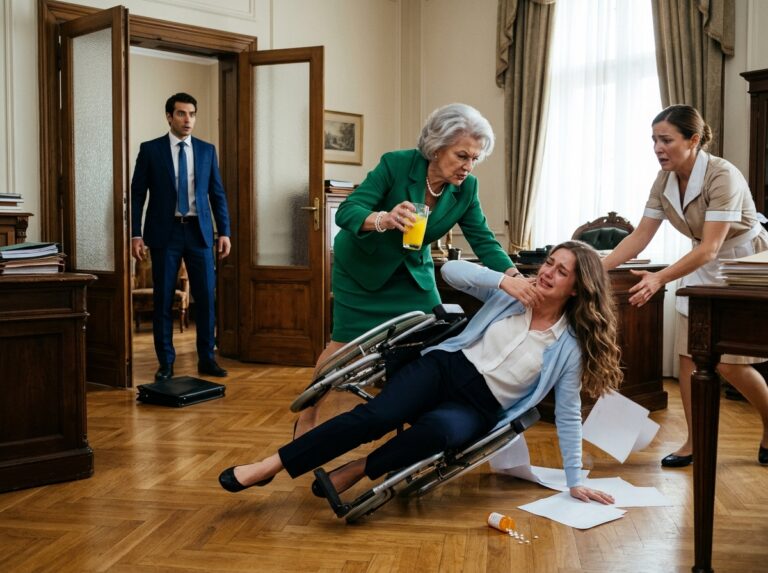
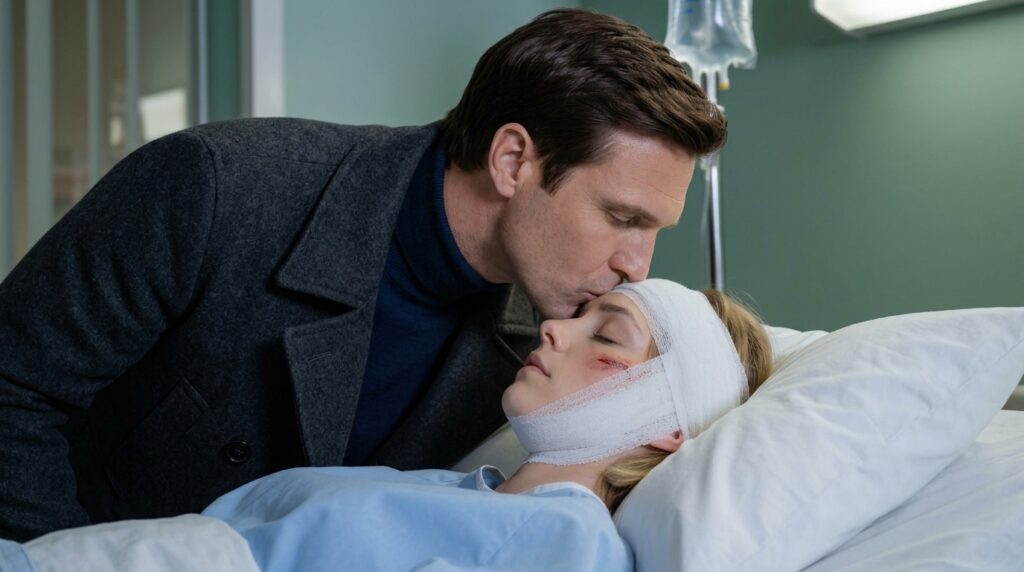
I heard that brutal phrase a week before I was supposed to marry Christian Prescott, one of the country’s most famous pop artists, while I was pretending to remain unconscious in a private room at St. Jude Medical Center in Columbus.
Hours earlier, as I was leaving a bridal shop in downtown Indianapolis, a strange man approached me under the guise of requesting a photo for Christian. He suddenly pulled a glass bottle from his coat and splashed severe industrial acid across the right side of my face. I clearly remember the agonizing fire on my skin, my violent screams, and the cold pavement rushing up to hit me before everything went dark.
When I woke up in the hospital bed, my entire head was wrapped tightly in heavy medical bandages. I was terrified to open my eyes because I feared discovering what was left of the face Christian had kissed for five straight years.
Then I heard the heated voice of his talent manager, Gabriel.
“You could have simply broken up with Genevieve, Christian!” Gabriel yelled in a hushed, furious tone. “You could have called off the lavish wedding publicly, so why on earth did you pay a criminal to do this to her?”
My heart stopped beating in my chest as I listened to the deadly quiet in the room.
Christian responded with a terrifying calm that chilled me far more than the icy air conditioning flowing through the room.
“Because if I dumped her a week before the wedding, all of America would be hunting down Sabrina and destroying our reputations,” Christian explained casually. “I needed Genevieve to be physically incapable of showing up so everyone would view me as the devastated, grieving fiancé.”
Gabriel gasped loudly and called him a sick monster.
“At the very least, hire the best reconstructive surgeon in the country to fix her,” Gabriel pleaded desperately.
“There is absolutely no need for that,” Christian replied with cold indifference. “If she is permanently scarred, it works out even better for my public image because I will take care of her forever, offering her a private home, money, and round-the-clock nurses so she will never want to leave me.”
I felt as though the air had been entirely sucked out of my lungs while I lay completely paralyzed under the sheets.
Then Christian added something far more sinister that shattered my entire soul.
“Besides, she can no longer bear children anyway since I took care of that permanent issue a long time ago,” Christian remarked coolly.
My mind immediately flashed back to my three agonizing pregnancy losses over the past few years. I remembered those terrible early mornings in the emergency room when Christian held my hand, stroked my hair, and swore to me that the losses were not my fault.
“What in the world did you do to her?” Gabriel asked, his voice shaking with absolute horror.
“Dr. Lawson adjusted a few key elements in her daily routine,” Christian answered without a drop of remorse. “He manipulated her vitamins, treatments, and daily dosages to ensure she could never carry a baby to term again.”
I wanted to rip the heavy bandages off my raw skin and scream until my lungs burst.
However, the cruelest revelation was still waiting for me.
“Little Leo is already four years old, and Sabrina is completely exhausted from hiding our son in the shadows,” Christian whispered slyly. “Right after our private legal ceremony, I will bring him to the estate because Genevieve won’t have the courage to expose herself to the media, nor can she give me heirs, so she will eventually accept the boy.”
Leo was his secret four-year-old son with Sabrina.
While I had spent years weeping over lost babies that I thought were destroyed by bad luck, Christian was busy maintaining a secret family behind my back.
Gabriel took a very long pause before asking another heavy question.
“Are you honestly still planning to marry Genevieve after putting her through this hell?” Gabriel questioned softly.
“Of course I am, because my wholesome public image with her is worth millions in endorsements,” Christian stated coldly. “Sabrina only wants to experience a real wedding ceremony once, so I can give her that privately while keeping Genevieve as my tragic public wife.”
He then calmly ordered Gabriel to make sure the hired attacker was secretly smuggled out of the country immediately.
When Gabriel left the room, Christian stepped quietly over to the side of my hospital bed. He tenderly gripped my trembling hand with the exact same warmth he always used to comfort me when obsessed fans threatened me online.
“Please wake up soon, my sweet love,” Christian whispered softly against my ear. “We still have a wonderful wedding to attend together.”
In that terrifying moment, I finally understood that I had never been the great love of his life over those five long years.
I had merely been his perfect public alibi.
I kept my eyes tightly shut until I heard the heavy wooden door click close behind him.
A few minutes later, Gabriel slipped back into the room alone, gasped when he saw me staring directly at him, and turned completely pale as a sheet.
I raised a single shaking finger to my lips to keep him quiet.
“Please help me,” I whispered through my chapped lips.
“Do you want me to call the police and report him right now?” Gabriel asked nervously.
“First, you need to help me stay alive,” I replied carefully.
Gabriel glanced nervously toward the quiet hallway, realizing that Christian still truly believed he had me completely under his cruel control.
Yet, what was about to unfold was so surreal that I still struggle to fully process it today.
PART 2
Gabriel managed to secretly move me out of that hospital without alerting Christian to my sudden absence.
Officially, my medical records stated that I had been urgently transferred to a specialized burn unit to treat an unexpected severe infection. In reality, a private medical team transported me to a quiet recovery clinic in Cincinnati, where Dr. Jocelyn Pratt, a brilliant burn specialist, took over my care in the middle of the night.
When Dr. Pratt carefully reviewed my initial medical charts, her facial expression hardened with deep concern.
“Did almost nine whole hours seriously pass without any proper reconstructive evaluation for these severe facial burns?” Dr. Pratt asked angrily.
Gabriel lowered his eyes nervously before answering her question.
“There were strict orders from her fiancé’s team to keep her medical treatments to an absolute minimum,” Gabriel admitted quietly.
The doctor looked directly into my eyes with intense compassion.
“I do not care who gave those terrible orders, Genevieve, because no one dictates what happens to your body except you,” Dr. Pratt said firmly.
For the very first time since the horrific attack, I cried tears of genuine relief.
I underwent an immediate emergency surgery where the medical team successfully saved part of my damaged right eyelid and carefully cleaned away the destroyed tissue. The doctor was entirely honest with me, explaining that I faced extensive scarring, long rehabilitation treatments, and multiple reconstructive surgeries.
I held only one urgent question in my heart.
“Will I eventually be able to stand in a courtroom and testify against him?” I asked nervously.
“Yes, you absolutely will,” Dr. Pratt confirmed without hesitation.
“Then please do whatever you have to do to fix me,” I replied courageously.
While I was slowly recovering in isolation, Christian constantly flooded Gabriel’s phone with urgent frantic messages while pretending to be a shattered partner. He even posted a dramatic black-and-white photo on his public social media pages, claiming that the absolute love of his life was fighting bravely for her survival in a ICU unit.
Millions of clueless fans praised him online as the ultimate devoted partner.
I threw up in my hospital basin when I read those fake public posts.
On the fourth day of my stay, Gabriel entered my room and held up a small metallic USB drive.
“I managed to secretly record a portion of what Christian said in your hospital room that night,” Gabriel revealed nervously.
I stared at him with intense anger in my eyes.
“Did you honestly suspect his dark motives before he hired someone to throw acid in my face?” I demanded firmly.
He confessed that he had noticed suspicious financial movements for several weeks, including huge payouts to a woman named Sabrina Croft, a private home purchased in Indianapolis under a shell company, and exclusive private school fees paid for a young child.
“Why on earth didn’t you come to me directly with that information?” I asked bitterly.
“I simply did not possess enough concrete evidence back then,” Gabriel claimed quietly.
“I suppose you didn’t think my face was worth saving until it was already melted off, did you?” I countered harshly.
Gabriel lowered his head in utter shame and remained completely silent.
I could not bring myself to forgive his long silence, but I desperately needed the valuable information he possessed.
Over the following weeks, Gabriel worked closely alongside a sharp criminal attorney named Bridget Vance. They successfully gathered photos of Christian entering Sabrina’s private residence at night, video footage of young Leo calling him daddy, and monthly bank transfers extending back four whole years.
However, the most shocking evidence came from a completely different source.
Attorney Vance managed to legally secure my original gynecological records before Christian’s team could alter the files. The official paperwork revealed unauthorized medical consultations, duplicate prescriptions, and large secret payments made by Christian’s staff directly to Dr. Lawson.
One afternoon, Gabriel walked into my quiet recovery room with a deeply disturbed look on his face.
“We finally tracked down the deleted text exchanges between Christian and the doctor,” Gabriel stated somberly as he handed me a stack of papers.
“We must prevent another pregnancy at all costs before the public wedding occurs,” one message read clearly.
“Make sure to lower her daily dosage because she is already asking suspicious questions about her constant dizziness,” another message detailed.
“Her ongoing suspicion will not matter in the long run because her permanent reproductive damage is already done,” the doctor had callously replied.
My trembling hands froze as I read those horrific words over and over.
Those documents proved that my painful miscarriages were neither an unpredictable tragedy nor the result of a weak body.
PAR 2
Dr. Lawson was permanently stripped of his medical license and sentenced to prison for non-consensual medical administration and falsifying official records.
The personal assistant received a reduced prison sentence in exchange for his full cooperation with federal prosecutors.
The direct attacker was convicted and handed a lengthy prison term without the possibility of early parole.
Christian was ultimately found guilty of conspiracy to commit severe bodily harm, obstruction of justice, and multiple felonies related to domestic abuse and health violation.
When the judge read the final guilty verdict inside the courtroom, I did not feel an explosion of intense joy.
Instead, I felt clean air fill my chest.
It felt as though I had spent two long years struggling to breathe underwater.
As we prepared to leave the courthouse, Attorney Vance offered to lead me out through a secure rear exit.
“There are hundreds of media cameras blocking the main entrance,” Attorney Vance noted carefully.
“That is precisely why I intend to walk out through the front doors,” I replied with complete confidence.
I chose not to cover my facial scars with scarves or dark sunglasses.
I walked proudly alongside my parents, Dr. Pratt, and Attorney Vance into the bright sunlight while dozens of reporters shouted my name at once.
A journalist aggressively asked if I would ever consider forgiving Christian for his crimes.
I paused on the concrete steps and looked directly into the news cameras.
“For years, the public believed a romantic love story constructed around my life, but today I want to share a simple truth with everyone watching,” I declared clearly. “If someone intentionally destroys your physical body to maintain control over your life and then claims they acted out of devotion, that is not love, but rather toxic ownership.”
The chaotic noise from the crowd instantly died down.
“My face was permanently altered and my body was damaged, but my true name still belongs to me,” I added firmly.
That powerful video clip circulated across global news networks for months.
For the very first time in my adult life, I was no longer identified as the tragic girlfriend of a famous celebrity.
I was simply Genevieve Hayes.
The following years belonged entirely to me, even though the path was not always easy to navigate.
I gradually learned how to apply specialized makeup over my scars when I wanted privacy, and how to display them openly when I felt like making a statement. Surviving a terrible tragedy did not mean I had to feel grateful for the suffering or romanticize the trauma I endured.
Alongside Attorney Vance and Dr. Pratt, I founded a non-profit organization named Modern Image Foundation. Our mission began as a specialized fund dedicated to providing legal resources, burn surgeries, and psychological support for women facing domestic violence, physical attacks, and medical abuse from powerful partners.
Gabriel donated a substantial portion of his personal savings to our foundation and agreed to testify publicly about the corrupt industry tactics used to cover up abuse.
“You still cannot buy complete forgiveness from me,” I reminded him during a board meeting.
“I am still not asking for forgiveness, but simply trying to remain useful to your cause,” Gabriel replied humbly.
Five full years after the brutal attack occurred, I received a hand-written letter sent directly from the state penitentiary.
The letter was written by Christian.
I left the unopened envelope sitting on my wooden desk for two straight weeks.
When I finally broke the seal and read his words, I did not find the arrogant performer I used to adore, but rather a broken man who seemed to finally understand the true weight of his actions.
“For a very long time, I foolishly believed my only mistake was losing control of my public career, but I now realize my true crime was believing I had the right to control your life,” Christian wrote in his tidy handwriting. “I wanted to lock you away in a small, quiet life filled with a private home, money, and complete dependence on my terms, and I am deeply ashamed that I ever called that behavior love.”
He did not ask me for forgiveness in his letter.
He shared that Leo was growing up quickly, that Sabrina had explained the painful truth to the boy, and that his son sometimes missed him while simultaneously resenting his past actions.
I carefully folded the paper back up.
I did not shed a single tear over his words.
I chose not to write a reply back to the prison.
I placed his letter inside a secure drawer alongside my old medical files and a single photograph showing my face before the attack.
I kept those items not to dwell on the man who hurt me, but rather to measure how far I had traveled since that dark night.
On the tenth anniversary of the attack, we officially opened our first multi-story medical and legal center in downtown Columbus.
Dr. Pratt directed our state-of-the-art reconstructive surgery wing, Attorney Vance managed our team of civil rights lawyers, and my proud parents cut the ceremonial ribbon by my side.
Near the main entrance of the building, we engraved a simple message into the stone wall.
“We are not defined by what was brutally done to us, but rather by what we courageously choose to build afterward.”
That afternoon, a young woman featuring fresh healing scars along her neck stepped up to speak with me.
“Genevieve, does the emotional pain ever truly stop hurting inside?” the young woman asked softly.
I considered telling her a comforting lie, but I chose to offer her absolute honesty instead.
“The pain transforms over time,” I answered gently. “In the beginning, the trauma dictates every single step you take, but eventually the pain learns to sit quietly in a far corner of the room while you go out and build a beautiful life.”
Tears streamed down her cheeks as she listened to my words.
I felt warm tears fill my own eyes as well.
Late that evening, when I returned to my quiet apartment, I stood before the bathroom mirror and looked directly at my reflection without a single drop of makeup covering my skin.
Christian had desperately tried to melt my face so that I would remain completely dependent on his wealth.
He had systematically destroyed my fertility so that I would be forced to raise his secret child without complaint.
He had tried to turn my wounded body into a lifelong prison while using his money as the master key.
He failed completely on all three counts.
For five long years, I had lived my life completely obsessed with being chosen by a famous partner, by his demanding fans, and by the idealized version of myself displayed on glossy magazine covers.
After surviving the attack, I had to master a far more important lesson.
I had to learn how to choose myself above everyone else.
If I possessed the magic power to turn back hands of time, I would choose to never meet Christian in the first place.
I do not believe that extreme suffering is a divine gift, nor do I believe a woman needs to be physically destroyed to discover her inner strength.
However, no human being possesses the power to rewrite history.
The only power we hold is deciding who gets to write the final chapter of our story.
Christian wanted my life journey to end tragically inside a cold hospital room, with my head wrapped in thick medical bandages while he held my hand and dictated my future.
My story did not end in that hospital room.
He wanted the world to remember him for a tragic love story.
Instead, the world ended up remembering him for his cowardly crimes.
I discovered that a physical scar can alter a person’s face without ever erasing their identity.
Today, when people ask me who I am, I do not offer victim as my primary answer.
I proudly tell them my name is Genevieve Hayes.
Daughter.
Loyal friend.
Foundation founder.
Unstoppable survivor.
I am a woman who was supposed to be hidden away from the world, but who decided to step forward and take up even more space.
Christian tried to destroy my face so that no one would ever want to look at me again.
His cruelty ended up forcing the entire nation to watch me rise.
PART 3
The grand opening of the Columbus medical and legal center was not the end of a long journey, but the beginning of a far more demanding phase. In the weeks that followed the ribbon-cutting ceremony, the quiet hallways of the Modern Image Foundation filled with the muffled sounds of ringing telephones, low-voiced consultations, and the steady rustle of legal briefs.
Genevieve sat at her desk, looking out the large window that faced the bustling downtown street. Outside, autumn leaves were beginning to drift across the concrete plaza, turning shades of dry copper and rust. The excitement of the tenth anniversary had faded, replaced by the daily, methodical labor of running an organization that had grown larger than she had ever anticipated.
“We have three new intake files this morning, Genevieve,” Attorney Vance said, stepping into her office without knocking. He carried a stack of manila folders, his expression characteristically sober. He sat down in the leather chair opposite her desk, adjusting his glasses. “Two are standard civil representation cases for protective orders. The third, however, is… complicated.”
Genevieve reached for the folder he extended. “Complicated how?”
“Her name is Maya Lin,” Vance explained, leaning back. “She’s a classical violinist, twenty-four years old. Her former manager—who also happens to be the son of a very prominent state senator—has been systematically controlling her finances, her travel, and her medical care under the guise of an exclusive representation contract. When she tried to terminate the agreement last month, her apartment was vandalized, and she received several highly specific threats regarding her physical safety.”
Genevieve opened the file. She looked at the photograph of the young woman—bright eyes, holding a violin with an expression of intense focus. The subsequent pages, however, detailed a different story: copies of threatening text messages, bank statements showing unauthorized withdrawals, and police reports that had been quietly filed away with no action taken.
“The local police department has been slow to investigate,” Vance noted, his voice flat. “The senator’s family has deep roots in the district. They are treating it as a private contractual dispute rather than a pattern of intimidation and harassment.”
Genevieve felt a familiar, cold weight settle in her stomach. It was the same systemic wall she had run into years ago—the protective shield that wealth and influence threw up around abusers.
“Does Dr. Pratt need to be involved?” Genevieve asked, scanning the medical history.
“Fortunately, there has been no severe physical attack yet,” Vance replied. “But Maya is showing severe symptoms of trauma. She’s stopped practicing. She refuses to leave her hotel room. The intimidation is working exactly as intended. It’s paralyzing her.”
“I want to meet her,” Genevieve said, closing the folder. “Not in a formal conference room. Bring her to the library on the third floor tomorrow morning. We’ll have tea.”
The following morning, the third-floor library was quiet, bathed in the soft, gray light of an overcast sky. The room was designed specifically for privacy, with high bookshelves, comfortable armchairs, and a small kitchenette.
Maya Lin was waiting when Genevieve entered. She was a petite young woman, her shoulders hunched inward as if she were trying to occupy as little space as possible. When she looked up and saw Genevieve, her eyes immediately darted to the visible scars along Genevieve’s jawline and neck. It was a look Genevieve was entirely accustomed to—a mixture of curiosity, fear, and a strange, desperate hope.
“Thank you for coming, Maya,” Genevieve said gently, setting a tray with a teapot and two cups on the low table between them. “I know how difficult it is to walk through those doors.”
“I didn’t think anyone would take me seriously,” Maya said, her voice barely above a whisper. Her fingers nervously traced the seam of her coat. “Everyone keeps telling me that it’s just a business disagreement, that I’m being emotional because we used to be together. But I know what he’s capable of.”
“I know,” Genevieve replied, pouring the tea. “The people around him will always try to convince you that you are the one who is unstable. It is the easiest way for them to protect their own interests.”
Maya looked down at her tea, her shoulders trembling slightly. “He told me that if I left the agency, he would make sure I never played in an orchestra again. He said he owns my career. He said I’m nothing without his family’s support.”
Genevieve sat back, looking at the young violinist. She did not offer empty platitudes or promise that everything would be solved instantly. She knew that false comfort was a disservice to someone facing real danger.
“He does not own your hands, Maya,” Genevieve said, her tone quiet but incredibly firm. “He does not own the music you’ve spent your entire life learning to play. He owns a piece of paper, and pieces of paper can be torn up in a court of law.”
“But his father—”
“His father has a seat in the senate, but Attorney Vance has twenty years of civil rights law behind him,” Genevieve interrupted gently. “And the Modern Image Foundation has the resources to ensure that your legal team cannot be bought, intimidated, or exhausted by endless court delays. You are not fighting this alone in a dark room anymore.”
A tear slipped down Maya’s cheek, but she did not sob. She simply nodded, her posture straightening slightly.
“We are going to start by securing your immediate safety,” Genevieve continued, outlining the plan methodically. “Vance is filing for an emergency injunction this afternoon. We have a secure residence where you can stay, and we are going to assign a private security detail to accompany you. After that, we address the contract. But your only job right now is to breathe, and perhaps, when you feel ready, to pick up your violin again.”
As she watched Maya leave with one of the foundation’s advocates later that afternoon, Genevieve felt a quiet, steady resolve. The work was endless, and the forces they fought were powerful, but they were no longer helpless. Every survivor they protected was a crack in the wall of silence that had protected men like Christian for generations.
PART 4
The letter arrived on a Tuesday, tucked between a utility bill and a medical supply catalog. It was addressed to Genevieve personally, but the handwriting on the envelope was unfamiliar—neat, rounded, and written with a blue ballpoint pen.
Genevieve sat at her kitchen table, the quiet of her apartment surrounded by the familiar sights of her independent life: her watercolor paintings on the wall, her books neatly arranged, and her plants thriving in the window. She slid her thumb under the flap and pulled out a single sheet of lined paper.
Dear Genevieve,
My name is Leo. I am fifteen years old now. Sabrina, my aunt, helped me get this address. She said it was up to you whether you wanted to read this, but she thought it was important that I write to you.
I know what my father did to you. Sabrina told me the truth when I was twelve, because she didn’t want me to hear it from kids at school or from the internet first. I’ve seen the news clips, and I’ve read about your foundation.
I am writing because I don’t know how to feel about him. He writes to me from prison, and sometimes he sounds like a regular dad who regrets his life. But then I look at what he did to you, and I feel sick. People tell me I look like him, and it frightens me.
I don’t expect you to forgive him, and I don’t want you to think I’m defending him. I just… I wanted to ask if I could meet you. Just once. I want to see the person he tried to destroy, because I think it might help me understand who I am supposed to be.
Sincerely,
Leo
Genevieve laid the letter down. Her hands were perfectly steady, but her mind was flooded with a complex web of memories. She remembered Leo as a small child—a quiet, watchful boy caught in the crossfire of Christian’s chaotic, controlling household. She had tried to protect him then, even when she was failing to protect herself.
She spent three days considering the request. She discussed it with no one, not even her parents or Dr. Pratt. This was an echo of her past that belonged entirely to her, and she had to decide how to handle it without compromising the peace she had worked so hard to establish.
On the fourth day, she called Sabrina.
“Genevieve,” Sabrina’s voice was hesitant, filled with a quiet anxiety. “I hope the letter didn’t upset you. I told Leo he shouldn’t expect anything, but he’s been struggling so much lately. He’s a good boy, Genevieve. He’s nothing like his father.”
“I know, Sabrina,” Genevieve said softly. “I remember him. I’m willing to meet him, but it must be on my terms. No cameras, no media, and it will be at the foundation library. Just Leo, you, and me.”
“Thank you,” Sabrina whispered, her relief palpable through the line. “Truly. Thank you.”
The meeting was set for a Saturday afternoon when the foundation offices were closed to the public. The library was exceptionally quiet, the only sound the soft patter of rain against the glass.
When the door opened, Genevieve stood up.
Leo had grown tall, his shoulders broad, but he had a hesitant, gentle posture that was entirely different from Christian’s arrogant, theatrical stride. He had his father’s dark hair and sharp jawline, but his eyes were soft, filled with an intense, nervous vulnerability.
“Hello, Leo,” Genevieve said, stepping forward.
The boy stopped, his eyes focusing on her face. He did not look away in embarrassment, nor did he stare with morbid curiosity. He simply looked at her, his expression filled with a deep, solemn respect.
“Hello, Genevieve,” he said, his voice cracking slightly with the awkwardness of his teenage years.
Sabrina stayed near the door, giving them space. Genevieve gestured toward the two armchairs near the window.
“Thank you for coming,” Leo said as he sat down, his hands tucked tightly between his knees. “I know this must be hard for you.”
“It is unusual,” Genevieve admitted honestly. “But I wanted to meet you because of what you wrote in your letter. You said you were frightened of looking like him.”
Leo looked down at his shoes. “Sometimes I look in the mirror, and I see his face. And I think… what if that same anger is inside me? What if I hurt people too?”
Genevieve reached out, her fingers resting lightly on the wooden arm of her chair. “Your father’s face is just a collection of features, Leo. It’s bone structure and genetics. But his choices belonged entirely to him. He chose to control, he chose to abuse, and he chose to destroy. Those were not genetic traits. They were decisions made by a man who valued power over everything else.”
She leaned forward, ensuring he looked her in the eyes. “You are fifteen years old. You have your own mind, your own heart, and your own path. You do not carry his guilt, and you do not owe anyone an apology for his crimes.”
Leo’s throat moved as he swallowed hard, his eyes bright with unshed tears. “Did he… did he ever love anyone, really?”
It was a painful question, but Genevieve chose to offer him absolute honesty rather than a comforting lie.
“I believe he loved the idea of having a perfect life,” she answered gently. “He loved the feeling of being adored by his fans, and he wanted to own me because he thought I completed his public image. But that is not real love, Leo. Real love is built on respect, safety, and letting the other person be free. Your father did not understand that.”
They talked for nearly an hour. Leo told her about his school, his interest in history, and his plans for college. Genevieve listened, finding a quiet satisfaction in seeing that the boy had grown up in a healthy, supportive environment under Sabrina’s care, free from the toxic influence of his father’s fame.
When they stood to leave, Leo looked at her once more, his posture visibly lighter.
“Can I… can I write to you sometimes?” he asked hesitantly.
Genevieve smiled, a genuine, warm expression that crinkled the scars around her eyes. “You may, Leo. But let’s keep it to your school and your future. The past has had enough of our time.”
“Okay,” he agreed, a small but real smile appearing on his face. “Thank you, Genevieve.”
As she watched them walk down the hallway, Genevieve felt a quiet sense of closure. She had met the son of the man who had tried to destroy her, and she had felt no anger, no fear, and no bitterness. She had simply seen a young boy trying to find his way in the world, and she had been able to offer him a hand. It was a victory of a different kind—a quiet, generational healing that Christian’s cruelty could never touch.
PART 5
By the following spring, the courtyard behind the Columbus medical and legal center had been transformed from a concrete parking lot into a lush, multi-tiered green space. The project had been funded by private donations, designed specifically as a healing garden for the survivors who utilized the center’s services.
Genevieve spent her Saturday mornings there, working alongside Thomas, the landscape architect who had designed the space.
Thomas was a quiet, observant man in his late thirties, with hands that were permanently calloused from working with stone and soil. He had a practical, low-key manner that Genevieve found immensely grounding. He did not treat her like a famous survivor, nor did he look at her scars with the clinical curiosity of a surgeon. To Thomas, she was simply the co-designer of the garden, a partner who shared his appreciation for quiet, resilient plants.
“These ferns are native to the region,” Thomas explained, kneeling on the damp earth as he arranged a cluster of green fronds near a small stone waterfall. “They look delicate, but they can survive the harshest winters. They don’t need constant attention. They just need the right soil and some shade.”
Genevieve sat on a nearby stone bench, her sketchbook on her lap. She had been drafting ideas for a small iron gate that would separate the garden from the alleyway. “I like them. They don’t try to draw attention to themselves, but they make the space feel complete.”
Thomas looked up, his grey eyes warm beneath his cap. “That’s the secret of a good garden. It’s not about having the loudest, brightest flowers. It’s about creating a balance where everything has room to grow without crowding out everything else.”
He stood up, wiping his dirt-stained hands on his jeans. “Would you like to walk down to the local nursery with me? I need to select a few more shrubs for the east wall, and I’d value your opinion on the layout.”
“I’d like that,” Genevieve said, closing her sketchbook.
The walk to the nursery was quiet, the spring air fresh and filled with the scent of damp earth and budding trees. As they walked along the sidewalk, Genevieve noticed that she did not feel the need to pull her scarf up to cover her jawline. With Thomas, she felt a rare, comfortable ease that allowed her to simply exist in the present moment, free from the constant self-consciousness that had defined her public life for so long.
They spent an hour at the nursery, examining various plants and discussing their growth patterns. Thomas listened to her ideas with a quiet, respectful attention, never interrupting her or dismissing her suggestions.
“You have a good eye for structure, Genevieve,” he noted as they waited for the delivery truck to be loaded. “Most people just look at the colors, but you look at how the plants will fit together ten years from now.”
“I’ve learned that structures matter,” she replied quietly. “If the foundation isn’t solid, the rest won’t survive the weather.”
Thomas looked at her, his expression serious but gentle. “Yes. I think that’s true for more than just gardens.”
Later that evening, after the center had closed and the garden was empty, Genevieve sat on the stone bench alone. The small waterfall trickled softly in the darkness, the sound soothing and rhythmic.
She thought about her life before the attack—the constant scramble for fame, the obsession with maintaining a flawless appearance, and the desperate need to be chosen by a partner who valued her only as a trophy. It felt like a life lived by someone else, a character in a movie she had watched a long time ago.
Thomas walked out of the back door of the center, carrying two mugs of tea. He walked over and handed one to her, sitting down on the far end of the bench, leaving a comfortable, respectful distance between them.
“It’s peaceful out here at night,” he said, looking up at the stars visible between the high brick walls of the surrounding buildings.
“It is,” Genevieve agreed, taking a sip of the warm tea. “Thank you for building this, Thomas.”
“I didn’t build it alone,” he replied softly. “You gave it a purpose. A garden is just dirt and rocks until someone decides to make it a sanctuary.”
They sat in silence for a long time, the cool night air wrapping around them. There was no pressure to speak, no performance to maintain, and no expectations to meet. For the first time in many years, Genevieve felt a quiet, delicate flutter of something new in her chest—not the frantic, obsessive passion she had once mistaken for love, but a slow, steady sense of trust. It was uncharted territory, but as she looked at the sturdy stone path beneath her feet, she felt ready to take the first step.
PART 6
In the late autumn of the twelfth year of Christian’s sentence, Attorney Vance walked into Genevieve’s office and closed the door with a distinct, heavy click.
“Christian’s legal team has officially filed for a sentence reduction and early parole review,” Vance said, sitting down. “They are citing his exemplary behavior, his public letters of remorse, and his participation in various rehabilitation programs within the facility.”
Genevieve did not look up from her paperwork immediately. She took a slow, steady breath, letting the news settle into her mind before she responded.
“I expected this would happen eventually,” she said, her voice calm. “The system always offers a door, even to men like him.”
“The parole board has scheduled a hearing for next month,” Vance continued, his expression grim. “As the primary victim, you have the right to submit a written impact statement, or you can attend the hearing in person to testify. Christian’s lawyers are going to present him as a reformed man, a father who wants to be reunited with his son, and a former celebrity who has learned his lesson.”
“He is a very good actor,” Genevieve noted quietly. “He spent his entire life learning how to make people believe his performance.”
“Do you want to go, Genevieve?” Vance asked. “If you choose to attend, I will be right there with you. But it will be a media circus. The press will cover every second of it.”
Genevieve stood up and walked to the window. Outside, the trees in the healing garden were bare, their branches dark and sharp against the gray sky. She thought about the courtroom twelve years ago, the shouting reporters, and the intense, exhausting pressure of the public eye. She had spent a decade building a life of quiet dignity, and the thought of stepping back into that arena made her stomach tighten.
“No,” she said, turning back to Vance. “I am not going to attend in person.”
Vance looked slightly surprised, but he nodded. “I understand. It is a significant emotional burden.”
“It’s not about the burden, Vance,” Genevieve explained, her voice steady. “If I attend, the media will make it about a confrontation between Christian and me. It will become a story about his rehabilitation versus my anger. I refuse to give him that stage. I refuse to let my presence be used to generate ratings for his final performance.”
She sat back down at her desk. “But I will write a statement. And I want you to read it to the board.”
For three days, Genevieve worked on the statement. She did not write with anger or seek vengeance. She did not recount the horrific details of the physical attack; those were already well-documented in the medical files and court records. Instead, she wrote with the cold, precise objectivity of an archivist documenting a historical fact.
On the day of the hearing, Genevieve remained at the center, working her normal hours. She supervised the intake of new clients, met with Dr. Pratt to discuss a reconstructive surgery grant, and helped Thomas select winter covers for the garden plants. She kept her phone in her drawer, refusing to check the live news updates.
At four o’clock in the afternoon, Vance returned. He looked tired, but his eyes were clear behind his glasses.
“The board has denied the petition,” Vance announced, setting his briefcase on her table. “He will serve the remainder of his sentence. He will not be eligible for review again for another five years.”
“How did it go?” Genevieve asked quietly.
“His lawyers presented a very polished case,” Vance said. “They had letters from prison guards, certificates of completion for anger management, and a very emotional statement from Christian himself. He cried, Genevieve. He talked about his regrets, his son, and his desire to do charity work.”
“And then?”
“And then I read your statement,” Vance said, a small, grim smile appearing on his face. “I’d like to think it was the turning point. The board room went completely silent.”
He pulled a copy of her statement from his briefcase and laid it on the desk. Genevieve looked down at her own words, printed in clean black ink:
“I do not write this statement to demand vengeance, nor do I write to evaluate the sincerity of the petitioner’s remorse. The court of law has already determined his guilt. I write simply to remind the board that domestic violence is not a temporary lapse in judgment, but a systematic choice to destroy another human being’s autonomy.
The physical scars on my body are permanent. The medical damage is irreversible. These are the physical facts of his choices. A sentence reduction would suggest that twelve years of good behavior in a controlled environment can erase the lifelong consequences of a calculated crime.
I ask the board to maintain the original sentence, not to punish the man he claims to be today, but to protect the integrity of the justice system and the safety of the public.”
“They understood,” Vance said softly. “The board chairperson specifically cited your statement in their decision. They agreed that the severity of the original crime and the permanent nature of the damage outweighed any claim of rehabilitation.”
Genevieve closed the folder. She felt no explosion of joy, no sense of triumph over a defeated enemy. She simply felt a quiet, sober confirmation. The law had done its job, and her boundaries had been maintained.
She walked out of her office and down to the healing garden. The air was cold, smelling of approaching snow. She stood near the stone waterfall, watching the dark water trickle over the rocks. She felt light, solid, and entirely safe. The past had tried to claw its way back into her life, but she had met it with clear glass and solid ground, and it had been forced to retreat once more.
PART 7
Two years after the parole hearing, the Modern Image Foundation celebrated its fifteenth anniversary. Instead of a large, public gala, Genevieve chose to hold a quiet, private gathering in the healing garden behind the center.
The evening was warm and clear, the summer sky turning a deep indigo as the first stars appeared. Small, warm lights hung from the branches of the birch trees, casting a soft glow over the stone paths and the lush green foliage.
About fifty people were gathered: staff members, board directors, and several survivors who had successfully navigated the center’s legal and medical programs. Maya Lin was there, looking vibrant and confident, conversing quietly with a group of young women. She had recently joined the first violin section of the Columbus Symphony Orchestra, her career fully restored on her own terms.
Leo was there as well, now seventeen, standing alongside Sabrina. He had recently been accepted into a prestigious history program at the state university, and he looked at Genevieve with a quiet, proud smile from across the garden.
Genevieve stood near the stone fountain, holding a glass of sparkling water. She wore a simple, elegant dark green dress that did not cover her neck or her collarbone, displaying her scars openly, without apology or defense. They were simply a part of her body’s history, like the lines on her palms or the gray hairs starting to appear near her temples.
Thomas walked over, carrying a plate of small appetizers. “It’s a beautiful evening, Genevieve. You’ve brought some wonderful people together here.”
“We did,” she said, looking around the garden. “It’s hard to believe this used to be just a concrete parking lot.”
“It just needed someone to see what it could become,” Thomas said, his voice soft and steady. He looked at her, his expression filled with a quiet, deep affection that had grown stronger over the years. “I’m glad I could help you build it.”
“Thank you, Thomas,” she said, her fingers lightly brushing his hand. It was a simple, comfortable gesture, filled with the ease of a mature partnership that required no performance and no explanations.
Dr. Pratt joined them, holding a cup of punch. “Genevieve, the medical wing has just approved our twentieth pro-bono reconstructive surgery grant for this year. The program is fully funded through next spring.”
“That is wonderful news, Dr. Pratt,” Genevieve said, her eyes bright. “Thank you for your tireless work.”
“It’s the best work of my life, Genevieve,” the old surgeon said, his voice slightly thick with emotion. “I spent forty years performing surgeries for cosmetic vanity, but these last fifteen years… this is where the medicine actually matters.”
As the guests began to say their goodbyes, Genevieve stood by the gate, exchanging warm handshakes and gentle hugs. There was no rush, no chaotic media cameras, and no screaming crowds. There was only the quiet, respectful murmurs of a community that had been built on the solid ground of survival and mutual support.
Later, when the garden was quiet and the lights had been turned off, Genevieve stood in her bathroom before the mirror.
She looked at her reflection. The scars along her face and neck were still there, the skin slightly uneven, the texture different from the rest of her cheek. But when she looked at her eyes, she did not see the terrified, dependent girl who had hidden behind thick bandages in a cold hospital room fifteen years ago.
She saw a woman who had survived a terrible fire and had chosen to use the ashes to build a sanctuary for others.
She had survived the physical destruction of her body, the loss of her fertility, and the systemic corruption of an industry that had tried to silence her. She had built a national foundation, a state-of-the-art medical center, and a beautiful, peaceful life on her own terms.
She was no longer defined by the man who had hurt her, nor was she defined by the public’s curiosity. She was simply Genevieve Hayes.
She turned off the bathroom light, walked into her quiet bedroom, and opened the window to let the warm summer breeze inside. The sound of the leaves rustling in the garden below was soft and steady, like the rhythm of a quiet, regular breath.
She climbed into her bed, pulled the sheet over her shoulders, and closed her eyes. Her story had not ended in that dark hospital room, nor had it ended in a tragic courtroom verdict. It had continued, expanding outward into a wide, beautiful world where there was plenty of room to breathe.
She was home, she was safe, and the final chapter was entirely her own.
PART 8
The transition from late summer to early autumn was always a reflective time for Genevieve. The air in Columbus grew cooler, carrying the scent of dry leaves and damp stone. Inside the Modern Image Foundation, the daily rhythm remained steady, but the scope of their work had subtly shifted. They were no longer just a local resource; they had become a national blueprint for survivor-led advocacy.
One quiet evening, Genevieve sat at her office desk, her reading lamp casting a warm circle of light over a draft of a speech she had been invited to deliver. The State University’s law and social sciences departments were hosting a symposium on “Systemic Power and the Law,” and they had asked Genevieve to be the keynote speaker.
Thomas sat in the armchair near the window, quietly sketching a layout for a new greenhouse project on a pad of grid paper. He looked up, noticing her pause, her pen hovering over the page.
“You’ve been staring at that paragraph for ten minutes,” he said gently, setting his pencil down. “Do you want to read it aloud?”
Genevieve smiled faintly, leaning back in her chair. “I’m struggling with the tone, Thomas. When I first started public speaking, the words came from a place of immediate, raw survival. Now, years later, I don’t want to speak from the perspective of the trauma itself. I want to talk about what happens after the survival is done—when the work becomes about building systems that prevent the trauma from happening in the first place.”
“Then say exactly that,” Thomas suggested. He walked over and stood beside her desk, looking down at the draft. “People often want survivors to remain frozen in their moment of tragedy because it makes for a more dramatic story. But the real strength is in the transition—how you moved from surviving to constructing something permanent.”
Genevieve nodded, her fingers tracing the edge of her paper. “It’s about passing the torch, too. I don’t want the foundation to be synonymous only with my name. It needs to be a structure that stands long after I’m gone.”
The following afternoon, the university auditorium was filled to capacity. The audience was a mix of law students, social workers, local advocates, and members of the public. Sitting in the third row, looking quiet and attentive, was Leo. He was now a sophomore at the university, studying constitutional history, and his presence in the crowd brought a quiet warmth to Genevieve’s chest.
When Genevieve stepped up to the wooden podium, she did not wear heavy makeup to conceal the scars on her face and neck. She stood comfortably, her posture natural and relaxed. The applause subsided, leaving a deep, expectant silence in the large room.
“For many years,” Genevieve began, her voice carrying clearly through the microphone, “the public narrative surrounding domestic violence and abuse was framed as a series of private tragedies. We treated these events as isolated incidents—unfortunate explosions of anger or personal dysfunction within a home.”
She paused, looking across the sea of young, attentive faces.
“But what we have learned over the last fifteen years at the Modern Image Foundation is that abuse is rarely isolated. It is an architecture. It relies on the silence of neighbors, the indifference of institutions, the protective shield of wealth, and the legal systems that prioritize the reputations of the powerful over the safety of the vulnerable.”
The room remained absolutely still.
“Our goal cannot simply be to offer bandages and shelter after the damage is done,” Genevieve continued, her tone measured and objective. “Our goal must be to dismantle that architecture. We do this by ensuring that survivors have immediate, high-quality legal representation that cannot be outspent by wealthy partners. We do this by training medical professionals to recognize the subtle signs of non-consensual medical control. And we do this by changing the way we tell these stories—moving away from sensationalized tragedy and focusing instead on systemic accountability.”
She looked toward the row where Leo was sitting. The young man was watching her, his expression serious and thoughtful.
“We are not defined by the violence that was visited upon us,” Genevieve concluded softly. “We are defined by the spaces we build afterward. Those spaces belong to us, and they are built to last.”
The applause that followed was not the frantic, celebrity-driven noise Genevieve had experienced in her youth. It was a solid, respectful ovation that filled the hall with a deep, resonant warmth.
After the symposium, Genevieve met Leo near the campus library. The autumn sun was low, casting long shadows across the brick pathways as students hurried past with backpacks.
“You did really well, Genevieve,” Leo said as they walked toward a quiet cafe near the campus edge. “My roommate was there. He didn’t know I knew you, and he told me afterward that your speech made him think about the law in a completely different way.”
“Thank you, Leo,” Genevieve said, her heart full. “How are your classes going?”
“They’re demanding, but I like them,” he replied, hands tucked in his jacket pockets. “We’re studying the historical development of civil rights legislation this term. It’s… it’s strange to see how long it takes for the law to catch up to what is actually happening to people on the ground.”
“It does take time,” Genevieve agreed. “But the progress is real, as long as there are people willing to do the tedious, daily work of pushing it forward.”
They sat at a small outdoor table, drinking tea as the dusk settled over the campus. Looking at Leo, Genevieve saw a young man who was steadily, courageously defining his own life, completely independent of the dark shadow his father had cast. It was a quiet, powerful testament to the resilience of the human spirit—and to the simple truth that the legacy of a family does not have to be written in violence.
PART 9
Twenty-five years after the attack that had nearly ended her life, Genevieve stood in the healing garden of the Modern Image Foundation.
She was fifty-two years old now. The passage of time had softened the edges of her physical scars, blending them into the natural lines of her aging skin. Her hair had turned a soft, elegant silver at the temples, and her hands, though still steady, bore the comfortable marks of a life spent working, gardening, and living on her own terms.
The foundation had grown into a mature, self-sustaining institution. The board had recently appointed Maya Lin as the new Executive Director. Maya, who had balanced a successful orchestral career with a decade of dedicated board service, was highly respected, capable, and deeply committed to the mission. Genevieve was officially stepping down from the day-to-day operations, transitioning to a quiet, advisory role that would allow her to spend more time away from the office.
On this quiet Friday afternoon, the center’s staff had gathered in the garden for a small, informal farewell tea.
“I don’t think of this as a departure,” Genevieve said, looking at the small group of advocates, lawyers, and medical staff who stood before her. “A building is only as strong as its foundation, and we have built a foundation that does not depend on any single individual. The work will continue because you are all here to do it.”
Maya stepped forward, holding a beautifully bound scrapbook filled with letters, photographs, and press clippings from the past twenty-five years.
“Thank you, Genevieve,” Maya said, her voice rich with emotion. “You gave us a safe place when we had nowhere else to go. But more than that, you taught us how to stand up and reclaim our own names. We will protect this place, we promise you.”
After the goodbyes were said and the staff had returned to their offices, Genevieve walked through the quiet garden one last time. She touched the smooth stone of the waterfall, looked at the thriving native ferns she and Thomas had planted years ago, and paused by the engraved stone wall near the entrance.
The simple message was still there, the letters slightly weathered but still perfectly clear: “We are not defined by what was brutally done to us, but rather by what we courageously choose to build afterward.”
As she walked out of the building, she received a quiet notification on her phone from the state’s automated legal database. It was a standard administrative email, notifying her that Christian’s twenty-five-year prison sentence had officially concluded, and he had been released from custody earlier that morning.
Genevieve stopped on the concrete steps, the bright afternoon sunlight warming her shoulders.
She looked at the screen for a brief second. Her heart rate did not increase. There was no sudden wave of fear, no rush of anger, and no lingering desire for retribution. She felt only a profound, hollow indifference. The man who had once occupied the very center of her existence had become a complete stranger—a name on an administrative form, a ghost from a life she had long since outgrown.
She slid the phone back into her purse without opening the full release report. She did not need to know where he was going, who was meeting him, or what his plans were. His future was his own to navigate, and her life was entirely her own.
She walked down the steps to her car, where Thomas was waiting in the driver’s seat. He offered her a warm, quiet smile as she climbed in.
“All set?” he asked gently.
“All set,” Genevieve replied, leaning over to kiss his cheek. “Let’s go home.”
They drove out of the city, leaving the high brick buildings and the busy avenues behind as they headed toward the quiet, semi-rural community where they had purchased a modest house three years ago. The property had a large, rambling backyard that Thomas had helped her turn into a beautiful, wild garden filled with native wildflowers, fruit trees, and a small wooden workshop where she could paint.
When they arrived, the evening sun was casting a long, golden light over the fields. The house was quiet, smelling of clean pine and lavender.
Genevieve walked out to the backyard garden, her boots pressing into the soft, cool grass. She sat down on the wooden bench Thomas had built for her, looking out over the rows of lavender and the small orchard of apple trees.
She looked at her hands, resting quietly on her lap.
Her life had not been easy. The path she had traveled since that dark night in the hospital had been marked by physical pain, emotional exhaustion, and the slow, grueling labor of recovery. She had not recovered flawlessly, and she had not found a magical cure that erased the memory of her suffering.
But as she sat in her own garden, listening to the gentle hum of the bees among the lavender and the soft rustle of the wind through the apple trees, she knew she had found something far more valuable than a perfect recovery.
She had found peace.
She had built a life of dignity, safety, and quiet independence. She was loved by a good, respectful man who valued her mind and her heart. She was surrounded by friends who had stood by her side through the darkest storms, and she had helped hundreds of women find their own way back to the light.
The story that Christian had tried to write for her—the tragic, hidden-away victim wrapping herself in bandages—was gone, dissolved into the past like smoke.
Genevieve Hayes sat in the quiet golden light of her own garden, took a deep, steady breath of the fresh evening air, and smiled as she looked toward the horizon. Her story was fully written, and it was a beautiful, quiet life.
THE END