Chapter 1 – THE CALL I MADE FROM THE DRIVEWAY
Clara did not ask where we were going.
She was still shivering beneath my jacket when I helped her into the passenger seat.
I closed the door gently, walked around the hood, and took out my phone.
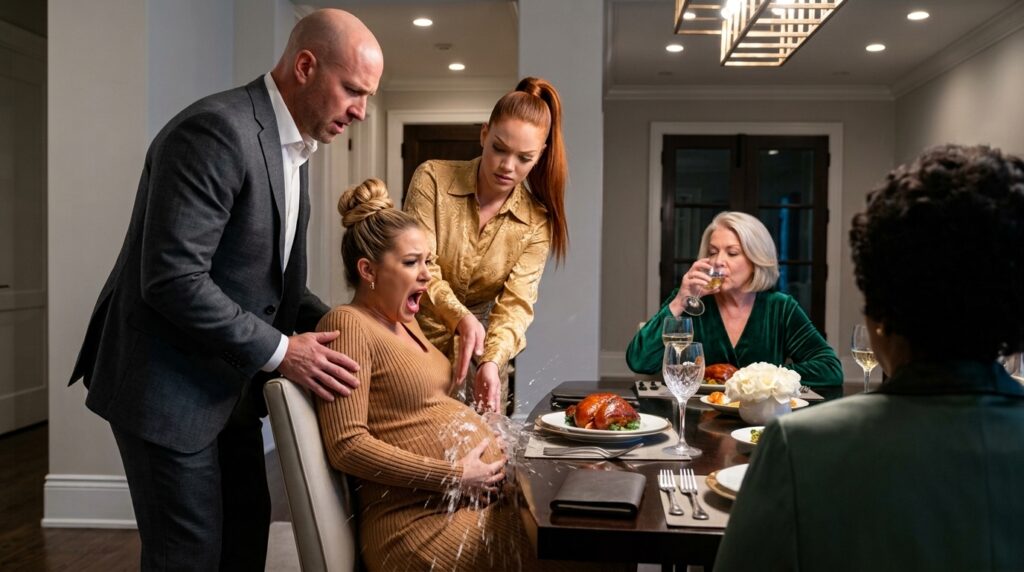
Behind me, through my parents’ dining-room windows, Vanessa was already reclaiming her precious chair.
Dad was pouring wine.
Mom was laughing.
They genuinely believed the evening would continue without us.
I called the twenty-four-hour concierge assigned to my private banking account.
“Mr. Lancaster,” the agent answered. “How can I assist you?”
“I need every reservation under the Mediterranean anniversary itinerary canceled.”
There was a pause.
“All travelers?”
“Richard Lancaster. Eleanor Lancaster. Vanessa Lancaster.”
“And your reservations?”
“Clara and I were never traveling with them.”
“Understood.”
I looked toward the house.
“Cancel the first-class flights, cruise suites, black-car service, private excursions, resort extension, everything.”
“The cancellation penalties will be significant.”
“I know.”
“Would you like us to attempt credits?”
“No refunds needed.”
Another pause.
Then:
“Very well, sir.”
Three minutes later, $150,000 worth of luxury disappeared from my family’s calendar.
I felt nothing.
That surprised me.
For years, spending money on them had given me a strange sense of duty.
Stopping felt cleaner.
Clara reached for my hand when I got into the car.
“Arthur…”
“Yes?”
“You didn’t have to do that because of me.”
I looked at my soaked, seven-month-pregnant wife.
“No.”
I started the engine.
“I did it because of them.”
We went directly to her maternity unit because the impact, shock, and stress had frightened both of us.
Thankfully, after evaluation, our daughter was moving normally and Clara was stable.
Only then did I breathe properly.
At nearly midnight, my phone began exploding.
Vanessa:
What did you do???
Mom:
Arthur, the airline app isn’t showing our tickets.
Dad:
CALL ME NOW.
I switched the phone face down.
Then my concierge called again.
“There’s one additional issue, Mr. Lancaster.”
“What?”
“Your sister added services to the itinerary three days ago.”
“I didn’t authorize additions.”
“That’s why I called.”
“How much?”
“Seventy-eight thousand four hundred dollars.”
I sat upright.
“For what?”
“A private yacht day, luxury retail appointments, helicopter transfers, and an upgraded villa after the cruise.”
My jaw tightened.
“Who approved the payment?”
There was a silence.
Then the concierge said:
“Your mother provided a corporate card ending in 4418.”
I knew that card.
It belonged to my company.
Not my family.
And suddenly the ruined vacation was no longer the biggest problem.
Chapter 2 – THE CARD MY MOTHER SHOULD NEVER HAVE HAD
I had never given Eleanor Lancaster a corporate credit card.
That fact kept me awake until sunrise.
At 6:15 a.m., while Clara finally slept beside me, I called my CFO, Nathan Cole.
“Check card 4418.”
He stopped sounding sleepy immediately.
“Why?”
“My mother used it.”
Silence.
“Arthur, that card was deactivated eighteen months ago.”
“Apparently not.”
Nathan logged in remotely.
Then he cursed.
“What?”
“It was replaced.”
“By whom?”
“I’m checking.”
Ten minutes later, he called back.
A replacement card had been issued eight months earlier after an online request.
The mailing address?
My parents’ house.
My authorization?
Electronic.
I had never submitted it.
“Freeze it,” I said.
“Already done.”
“How much has been charged?”
Nathan hesitated.
“Do you want the weekend number or the total?”
My stomach tightened.
“Total.”
“Just over $214,000.”
I stared through the hospital window.
“What did they spend it on?”
Restaurants.
Hotels.
Designer boutiques.
Country-club dues.
A jeweler.
Vanessa’s cosmetic treatments.
Even Dad’s wine membership.
Months of expenses disguised under vague categories like executive hospitality and client development.
My family had been living part of their social life through my company.
Clara woke while I was still reviewing the list.
She saw my face.
“What happened?”
I told her.
Instead of looking shocked, she looked guilty.
That scared me.
“What?”
She hesitated.
“Your mother asked me for money too.”
I turned toward her.
“When?”
“Several times.”
“How much?”
“Arthur…”
“How much?”
“About thirty-two thousand.”
I could not speak.
Eleanor had told Clara that Dad needed urgent medical procedures insurance would not cover.
Clara paid quietly because she knew I was already handling several “family emergencies.”
“She made me promise not to tell you,” Clara said.
“Why?”
“She said you were under too much pressure.”
The manipulation was almost elegant.
Keep Clara silent to protect me.
Keep me silent because family needs help.
Separate the information.
Multiply the money.
I took Clara’s hand.
“You never hide financial requests from me again.”
She nodded.
“And I won’t hide family problems from you.”
That was my mistake.
I had spent years protecting Clara from how exhausting my relatives could be.
In doing so, I prevented us from seeing the whole picture.
At noon, Nathan sent me a spreadsheet.
The corporate card was not the only unauthorized expense.
My company had been paying a monthly invoice for “Lancaster Strategic Consulting.”
$18,000.
Every month.
For three years.
I had never heard of Lancaster Strategic Consulting.
Nathan pulled the registration.
The owner was my father.
And somebody inside my own company had approved him as a vendor.
Chapter 3 – MONDAY AT JFK
My family did not believe the trip was truly canceled.
That became obvious Monday morning.
By then, Clara was home resting under her doctor’s instructions, and I was sitting at our kitchen island reviewing financial records when Vanessa began posting angry messages in the family chat.
We’re at JFK and Emirates says the bookings are fake.
Dad says fix this NOW.
I stared at the screen.
The bookings had not been fake.
They had been canceled.
Apparently Vanessa had edited old itinerary PDFs and insisted at the first-class counter that the airline system was wrong.
Dad joined her.
Then Eleanor demanded a supervisor.
Within twenty minutes, they had created such a scene that airport security became involved and escorted them away from the premium check-in area.
Vanessa called screaming.
“You made us look like criminals!”
“No.”
I kept my voice calm.
“You tried to travel using canceled reservations and then refused to leave the counter.”
“They were paid!”
“By me.”
“You can’t just take back a gift!”
“I canceled services purchased in my name before they were used.”
Dad grabbed the phone.
“You get us on that flight right now.”
“No.”
“You ungrateful little—”
I ended the call.
Then I blocked all three numbers temporarily.
The silence lasted four minutes.
Nathan called.
“Arthur, we identified who approved your father’s consulting company.”
“Who?”
“My former controller, Martin Reeves.”
Martin had retired six months earlier.
I knew him well.
He had worked for me almost eight years.
“Why would Martin approve Dad?”
“I asked him.”
“And?”
“He says Richard told him you wanted your family compensated privately because you were embarrassed about putting relatives on payroll.”
I actually laughed.
“What services did Dad supposedly provide?”
Nathan opened invoices.
Government relations.
Strategic sourcing.
Executive relationship management.
My father had done none of those things.
Over three years, Lancaster Strategic Consulting received $648,000.
Then Nathan found something worse.
Dad’s firm had subcontracted another business.
Vanessa Lifestyle Advisory.
My sister’s company.
She had received $186,000.
“What exactly does Vanessa advise on?”
Nathan said dryly:
“Apparently lifestyle.”
I rubbed my forehead.
“Freeze every unpaid invoice.”
“Done.”
Then Nathan grew quiet.
“There’s one more thing.”
My father had not only invoiced my company.
He had used the fake consulting relationship to obtain a bank loan.
The lender had approved $900,000 because Lancaster Strategic Consulting supposedly held a long-term contract with my corporation.
Attached to the loan was a corporate guarantee.
Signed:
Arthur Lancaster.
I had never signed it.
Chapter 4 – THE GUARANTEE WITH MY NAME
The signature looked good.
Too good.
Whoever copied it had access to documents I signed regularly.
My attorney, Rachel Bennett, reviewed the loan package that afternoon.
“Do not contact the lender directly until we preserve everything.”
“Understood.”
“Did you ever guarantee your father’s business debt?”
“No.”
“Did you ever authorize him to represent that his consulting arrangement was permanent?”
“No.”
“Good.”
She turned another page.
“There’s a board consent.”
I stared at it.
My company supposedly approved the guarantee in a special meeting.
The date was impossible.
I had been in Singapore negotiating a warehouse acquisition.
Nathan was with me.
Our board had not met.
Yet the document listed three directors.
One was me.
One was Nathan.
The third was a name I recognized.
Richard Lancaster.
My father had listed himself as a director of my company.
“He has never been on my board.”
“I know.”
Rachel looked almost impressed by the nerve of it.
“Who notarized this?”
The answer surprised me.
Eleanor Lancaster.
My mother held a notary commission for her volunteer work with a charitable foundation.
Apparently, she had notarized documents claiming I signed things I had never seen.
I sat back.
This was no longer about rude dinner behavior.
The cruelty toward Clara had simply broken the seal on something much larger.
That evening, Dad finally reached me through an unfamiliar number.
“You’re freezing accounts.”
“I’m stopping unauthorized payments.”
“You’re trying to destroy us.”
“No.”
“You’ve always been selfish.”
That almost made me laugh.
“How much have I given you in ten years?”
Silence.
“Do you even know?”
“We raised you.”
There it was.
The sentence beneath every check.
“We sacrificed for you.”
“So you think that creates a permanent invoice?”
Dad’s breathing became heavier.
“You think your money makes you better than us.”
“No.”
I looked toward Clara sleeping on the couch.
“But how you treated my wife told me exactly what you think my money is for.”
He hung up.
That night, Nathan and I calculated the total support I could document.
Mortgage assistance.
Cars.
Vacations.
Credit cards.
Medical bills.
Vanessa’s rent.
Country-club dues.
Consulting payments.
Emergency transfers.
The number crossed $2.3 million.
Clara stared at the spreadsheet.
“Arthur…”
“I know.”
Then Rachel called.
She had finished reviewing property records.
“Your father told the bank he owned the family house.”
“He does.”
“No.”
I frowned.
“What do you mean?”
“Richard hasn’t owned that house in six years.”
I went still.
Because six years earlier, when Dad claimed foreclosure was days away, I had quietly purchased the property through one of my holding companies.
My parents had been living all this time in a house that legally belonged to me.
Chapter 5 – THE HOUSE THEY CALLED THEIRS
I had forgotten how the rescue was structured.
Back then, I was thirty years old and terrified my parents would lose the home where I grew up.
Dad owed more than the property was worth.
His lender wanted out.
So one of my holding companies purchased the mortgage, cleared the debt, and acquired title.
My parents received a long-term occupancy agreement.
No rent.
They paid utilities and ordinary upkeep.
That was it.
Dad apparently rewrote history.
To friends, he still called himself the homeowner.
To the bank, he represented himself as having controlling interest.
Worse, he pledged the property as supporting collateral for the $900,000 loan.
“He can’t pledge something he doesn’t own,” I told Rachel.
“Correct.”
“Did the bank verify title?”
“Apparently they relied on other representations.”
“So they have a problem too.”
“Yes.”
I did not celebrate.
Financial messes hurt innocent people.
Employees.
Lenders.
Spouses.
I wanted clean separation, not chaos.
Then I checked the occupancy agreement.
One condition was clear:
No fraudulent encumbrances.
Dad may have violated the agreement that allowed him to remain in the house.
Clara watched me close the file.
“You’re not throwing them out tomorrow.”
It wasn’t a question.
“No.”
She smiled faintly.
“That’s why I married you.”
“They’ll have time to make arrangements.”
“You can have boundaries without becoming cruel.”
I kissed her forehead.
Exactly.
That evening, Vanessa showed up at our house.
I did not let her inside.
She stood on the porch wearing sunglasses despite the cloudy sky.
“You canceled my cards.”
“I canceled cards I was paying.”
“My rent is due.”
“Then pay it.”
Her mouth dropped open.
“With what?”
“You’re thirty.”
“You told me family helps family.”
“Helping is not the same as permanent financing.”
She folded her arms.
Then glanced through the doorway.
“Is Clara making you do this?”
That was the moment any remaining sympathy disappeared.
“No.”
I stepped closer.
“Clara asked me not to throw Mom and Dad out immediately.”
Vanessa’s expression changed.
She had expected an enemy.
Instead, the woman she humiliated was the only person advocating patience.
Then Vanessa said:
“You don’t understand. Dad said all of this was temporary until the trust pays out.”
“What trust?”
She froze.
“Vanessa.”
“Nothing.”
“What trust?”
She stepped backward.
But she had already said too much.
I called Rachel.
Within hours, she found an estate trust created by my grandfather fifteen years earlier.
Beneficiaries:
Me.
Vanessa.
And my parents under limited conditions.
Estimated value:
$11.8 million.
I had never received a statement.
Because for the last nine years, the trustee had been my father.
Chapter 6 – THE TRUST NO ONE TOLD ME ABOUT
Grandpa had always liked Clara.
Even before she became my wife.
He once told me, “That woman sees people, Arthur. Don’t become too busy to notice.”
He died two years before our wedding.
I knew he left some money to family.
I did not know he left nearly twelve million dollars in trust.
The trust documents were straightforward.
Thirty percent for me.
Thirty percent for Vanessa.
The remainder generated income for my parents during their lifetimes, with residual assets eventually divided between us.
So why had nobody told me?
Rachel obtained preliminary statements.
Then the answer became obvious.
My share had been distributing income for years.
The payments were not going to me.
They were going into a management account controlled by Dad.
“How much?”
Rachel looked uncomfortable.
“Approximately $740,000 in distributions attributable to your beneficial share.”
I felt nothing at first.
Then I thought of every conversation where Dad told me:
You owe this family.
We sacrificed for your success.
Vanessa needs help.
Mom deserves something nice.
While I was paying their bills, my own trust income was quietly disappearing into Dad’s control.
“Where did the money go?”
“We’re tracing it.”
By afternoon, we knew some of it.
Vanessa’s luxury apartment.
Eleanor’s jewelry.
Dad’s wine collection.
A failed restaurant investment.
Country-club arrears.
And $110,000 toward a boat I had never seen.
When confronted, Dad did not deny using the money.
He defended it.
“You had millions already.”
“That wasn’t your decision.”
“The trust was for the family.”
“It specifically allocated shares.”
“I managed those shares.”
“For my benefit.”
“You didn’t need it.”
The arrogance was breathtaking.
“So because I succeeded, you decided Vanessa deserved my inheritance too?”
He shouted that I had forgotten where I came from.
I ended the call.
Then Vanessa called five minutes later.
“I didn’t know.”
“About what?”
“The trust distributions.”
“You knew the trust existed.”
“Yes.”
“You knew I didn’t?”
She started crying.
That answer was yes too.
“Why didn’t you tell me?”
“Dad said you rejected your share.”
“I never knew there was a share to reject.”
Silence.
Then Vanessa said something I did not expect.
“Arthur, Dad has another account.”
“What account?”
“He calls it the family reserve.”
“Where does the money come from?”
“I thought you knew.”
My stomach tightened.
“Vanessa.”
She lowered her voice.
“Every time you sent Dad emergency money, he put part of it there.”
I felt cold.
The man who repeatedly told me he was about to lose everything had been saving part of my rescues.
The current balance of the “family reserve” was $1.6 million.
Chapter 7 – THE EMERGENCIES THAT NEVER EXISTED
The furnace really had broken.
That was the first legitimate expense I found.
The rest became increasingly difficult to defend.
Dad claimed $80,000 for an emergency property-tax problem.
Actual amount owed:
$31,400.
He asked for $45,000 for Mom’s medical procedure.
Insurance had covered most of it.
Actual out-of-pocket cost:
$6,200.
Vanessa supposedly needed $70,000 to avoid eviction.
Her landlord records showed no eviction proceeding.
She used most of the money as a down payment on a Range Rover and designer furniture.
Each request contained a piece of truth wrapped around a larger lie.
That was why I believed them.
By the end of the week, I had documented over $900,000 in exaggerated or misleading “emergencies.”
Clara sat beside me as I closed the spreadsheet.
“How are you feeling?”
“Stupid.”
“No.”
“I run a logistics company with operations in six countries. I catch discrepancies in freight contracts worth millions.”
“They were your family.”
“That makes it worse.”
“No.”
She squeezed my hand.
“That made them people you wanted to trust.”
I looked at her swollen belly.
Then remembered Vanessa throwing ice water over her.
“You know what I can’t understand?”
“What?”
“Why they hated you.”
Clara’s expression changed.
“They didn’t always.”
“When did it start?”
She hesitated.
“When your grandfather died.”
That surprised me.
Apparently Eleanor had once asked Clara whether we planned to have children.
Clara said yes.
Mom responded:
Then Arthur will stop thinking about the family he already has.
I stared at her.
“You never told me.”
“I thought it was just an insecure comment.”
There had been others.
When Clara and I bought our home, Eleanor called it unnecessary.
When we announced the pregnancy, Vanessa left dinner early.
When I paid off part of our mortgage, Dad suddenly needed money for taxes.
Every milestone in my own household created a fresh emergency in theirs.
They were not simply spending my money.
They were competing with my future.
That evening, Rachel called.
She had traced the $1.6 million reserve.
It was held inside an investment LLC.
Members:
Richard, Eleanor, and Vanessa.
I was not listed.
Then she found the LLC’s most recent purchase.
A waterfront condominium in Palm Beach.
Purchase price:
$1.2 million.
They closed on it two months ago.
The same week Dad told me he could not afford the final payment on the anniversary cruise.
I had paid it for him.
My parents owned a million-dollar vacation condo.
And still let me pay for their groceries.
Chapter 8 – THE PALM BEACH CONDO
I flew to Florida the following morning.
Not to confront anyone.
To meet the attorney handling the title.
The records were clean.
The condominium belonged to Lancaster Family Reserve LLC.
Dad had paid mostly cash.
The source of funds traced back to years of transfers I had made and trust distributions I never received.
The irony was almost impressive.
I had financed a secret vacation home while being told my parents were struggling to keep the lights on.
Rachel recommended a full forensic accounting.
I approved it.
Then I received a message from Vanessa.
Can we talk without Dad?
We met at a hotel lounge.
She looked different without the designer armor.
No oversized sunglasses.
No handbag positioned carefully on the table.
Just my little sister.
“I knew about Palm Beach,” she admitted.
“Did you know where the money came from?”
“Not all of it.”
“Did you care?”
She looked down.
“No.”
At least she was honest.
“I thought you had so much money it didn’t matter.”
“That doesn’t make it yours.”
“I know.”
“Do you?”
She cried.
For once, I did not rush to comfort her.
Then she told me why she had thrown the water.
It had almost nothing to do with the chair.
Mom had spent the afternoon complaining that once our daughter was born, I would “forget everyone else.”
Vanessa was already angry because I had refused to pay off another credit card.
When Clara took “her” chair, she snapped.
“I wanted to embarrass her.”
“You terrified a pregnant woman.”
“I know.”
“You laughed afterward.”
Her face crumpled.
“I know.”
“That is the part you need to live with.”
She nodded.
Then she took an envelope from her bag.
“Dad keeps these in his office.”
Inside were draft documents.
One proposed restructuring the grandfather trust.
Another proposed transferring my company shares into a “family legacy vehicle.”
My father apparently believed my success should eventually become a family asset.
I laughed once.
“He can draft whatever fantasy he wants.”
Vanessa shook her head.
“He already tried.”
She handed me another page.
A shareholder transfer form.
My signature appeared at the bottom.
Forged again.
This one purported to transfer five percent of my logistics company into the family trust.
Five percent of my company was worth approximately $38 million.
For the first time, I understood that Dad had stopped seeing me as his son years ago.
I was an asset class.
Chapter 9 – FIVE PERCENT OF MY LIFE’S WORK
The forged share transfer had never taken effect.
That was the good news.
My company’s transfer agent had rejected it because required internal approvals were missing.
The bad news?
Dad had submitted it twice.
Once eighteen months earlier.
Again six months later.
He was persistent.
Nathan pulled archived correspondence.
My father wrote:
Arthur wants the family protected but prefers not to deal with formalities personally.
A lie.
Then:
Please process this discreetly because family succession matters are sensitive.
Another lie.
The transfer agent had contacted my former personal assistant.
She flagged the request.
I never heard about it because she assumed it was obvious fraud and rejected it internally.
I called her.
“Why didn’t you tell me?”
“I thought your father was confused.”
That sentence summarized too many years.
Everyone had mistaken entitlement for confusion because Richard Lancaster was charming, respected, and good at sounding certain.
Rachel prepared formal notices separating him from every business relationship connected to me.
No company access.
No representation authority.
No vendor relationship.
No use of my name in financing.
Then I confronted Dad one final time.
Not at his house.
My house.
He arrived furious.
“You dragged Vanessa into this.”
“No.”
“She came to me.”
“She’s weak.”
“She’s your daughter.”
“She’s always been weak.”
I stared at him.
There it was.
Vanessa had spent her life acting superior because she was terrified our father thought she was inferior.
And I had spent my life rescuing everyone because Dad taught me love was earned through usefulness.
Different roles.
Same system.
“Why did you try to take company shares?”
He looked genuinely offended.
“Take?”
“You forged my name.”
“I was planning the family estate.”
“You do not own my company.”
“You wouldn’t have that company without the values I taught you.”
I laughed.
“Values?”
His face darkened.
“Watch your tone.”
“I’m thirty-four.”
“And still my son.”
“That doesn’t make me your property.”
For a long moment, neither of us spoke.
Then he said something extraordinary.
“If Clara hadn’t come along, none of this would be happening.”
There it was.
The real resentment.
My marriage had not taken me away.
It had given me someone who loved me without charging rent on my loyalty.
Dad hated that.
Then my phone rang.
Rachel.
“I found the original trust amendment Richard filed after your grandfather died.”
“What amendment?”
“The one that made him trustee.”
I frowned.
“He was named trustee.”
“No.”
My pulse changed.
“Who was?”
Rachel paused.
“Your grandfather named you.”
Dad had altered the succession paperwork after Grandpa’s death and placed himself in control.
Chapter 10 – GRANDPA CHOSE ME, NOT HIM
The original trust document was sitting in a law firm archive in Boston.
Grandpa had named me successor trustee once I turned thirty.
Dad was supposed to serve only until then.
I turned thirty four years ago.
He never stepped down.
Instead, a later amendment appeared in the active file extending his role indefinitely.
The law firm that drafted Grandpa’s estate had no record of preparing it.
The witness signatures were questionable.
The notary?
Eleanor.
Again.
My mother had helped Dad preserve control of nearly twelve million dollars that Grandpa intended me to oversee.
That hurt differently.
Dad’s greed no longer surprised me.
Mom’s cooperation did.
I called her.
She answered after one ring.
“Arthur…”
“Did you notarize the trust amendment?”
Silence.
“Mom.”
“He said your grandfather changed his mind.”
“Did you watch Grandpa sign it?”
She began crying.
“No.”
I closed my eyes.
“Then why certify that you did?”
“Richard said it was only correcting paperwork.”
“How many times has he told you that?”
More silence.
Too many.
That evening, Mom came to our house alone.
Clara sat beside me.
Eleanor could barely look at her.
“I’m sorry.”
Clara did not rescue her from the discomfort.
Good.
Mom continued.
“For the water. For laughing. For all of it.”
“Why did you laugh?” Clara asked quietly.
Mom’s eyes filled.
“Because Richard was laughing.”
That answer was pathetic.
And honest.
“I’ve spent thirty-five years trying to keep him pleased,” Eleanor whispered. “Eventually I stopped noticing when that meant becoming someone I didn’t like.”
I felt anger.
But also grief.
Then Mom handed me a locked document box.
Inside were years of records Dad kept at home.
Loan applications.
Trust statements.
Corporate requests.
Copies of my signatures.
And a letter from Grandpa addressed to me.
It had never been opened.
Dad had hidden it.
My hands shook as I broke the seal.
Arthur,
If you are reading this, I hope Richard gave it to you willingly.
That line almost made me laugh.
Grandpa continued:
Your father believes providing for family means controlling family. You are different. Do not let success turn your generosity into a leash around your own neck.
I stopped reading.
Clara took my hand.
At the bottom, Grandpa had written one final instruction.
The trust included a protected reserve Dad could never access.
Value at Grandpa’s death:
$4.8 million.
Current value:
$9.3 million.
Beneficiary:
My future children.
Chapter 11 – THE MONEY MY DAUGHTER WOULD INHERIT
I read Grandpa’s letter three times.
Then I put it away.
For once, the money did not matter most.
The intention did.
A man who had been dead for years had protected my daughter before she existed.
Meanwhile, my living family had treated her mother like an inconvenience at dinner.
That contrast settled something inside me.
The protected reserve could not be touched by Dad.
Could not be redirected to Vanessa.
Could not be used for vacations.
It would remain for our child and any future children Clara and I chose to have.
When I told Clara, she cried.
Not because of the amount.
“Your grandfather believed you’d build a family of your own.”
“Yes.”
“And he wanted that family protected.”
“Yes.”
For the first time, the word family stopped feeling like an obligation.
It felt like a choice.
The forensic accounting continued.
Dad’s control of the grandfather trust was challenged.
Independent fiduciaries were appointed while the disputed documents were reviewed.
The fake company guarantee was contested.
The fraudulent share transfer remained invalid.
The corporate-card charges were separated from legitimate business expenses.
I did not drain Dad’s accounts.
I did not seize Vanessa’s belongings.
I simply stopped subsidizing them.
That alone changed everything.
Vanessa sold the Range Rover.
Her luxury apartment lease ended two months later.
She moved into a modest one-bedroom place.
For the first time since college, she got a full-time job.
Mom moved out of the family house and rented a small townhouse while she decided whether she wanted to remain married.
Dad called it betrayal.
Mom called it breathing.
Richard refused to leave the house.
That created another problem.
The occupancy agreement was in breach.
Rachel explained my options.
I chose the least destructive one.
Six months to relocate.
No rent.
Professional moving assistance.
After that, possession returned to my holding company.
Dad called me heartless.
I almost believed him for half a second.
Then Clara waddled into the room, one hand supporting her belly, and reminded me what heartless actually looked like.
A week later, Vanessa asked to see us.
Clara agreed.
Vanessa arrived carrying no expensive gift.
Just an envelope.
Inside was a handwritten apology to Clara.
No excuses.
No “but Mom said.”
No “pregnancy made you sensitive.”
She wrote:
I wanted to make you feel unwelcome because I was terrified that once Arthur had his own child, I would stop being able to live through him.
Clara read it quietly.
Then she asked:
“Did you mean it?”
Vanessa nodded.
Clara did not hug her.
She said:
“Then prove it over time.”
That was fair.
As Vanessa stood to leave, she hesitated.
“There’s something Dad hasn’t told you.”
I looked at her.
“What now?”
“He already sold Palm Beach.”
“When?”
“Yesterday.”
My stomach tightened.
“What did he do with the money?”
Vanessa swallowed.
“He wired it overseas.”
Chapter 12 – THE LAST MILLION DOLLARS
Dad’s attempt to move the Palm Beach money was his final act of control.
The transfer was not mysterious for long.
He sent the proceeds into an investment account in the Cayman Islands controlled by one of his longtime financial advisers.
By then, attorneys and fiduciaries were already reviewing disputed trust assets.
The money trail was preserved.
Dad insisted Palm Beach belonged entirely to him.
The records disagreed.
Much of the purchase price could be traced to the family reserve funded partly from my transfers and diverted trust distributions.
He finally hired independent counsel.
That changed his tone.
Shouting became negotiation.
Accusations became questions.
For the first time in my life, Dad had to hear the word no from people he could not guilt.
A settlement process began.
It was slow.
Complicated.
Uncomfortable.
But reality was finally entering a family that had survived for years on performance.
Vanessa agreed to return certain trust-derived assets through a structured repayment plan.
Mom cooperated fully with the accounting and acknowledged the notarizations she should never have performed.
Dad fought almost everything.
Then one afternoon, he asked to meet me alone.
We sat in a quiet coffee shop.
No marble dining room.
No lamb.
No imported chairs.
He looked older.
“I thought you’d always take care of us.”
“I would have.”
He stared at me.
“What?”
“If you had treated help like help.”
I leaned forward.
“But you turned it into a tax on being your son.”
He looked away.
“I was proud of you.”
“You had a strange way of showing it.”
“You made more money by thirty than I made in my entire career.”
There was bitterness in his voice.
And finally I understood.
My success had not made Dad feel secure.
It had made him feel diminished.
So he built a story where my money belonged partly to him.
That let him feel powerful again.
“Did you hate Clara because she changed me?” I asked.
He answered slowly.
“No.”
Then:
“I hated that she made you realize you could say no.”
That was probably the most truthful thing he had ever said to me.
I stood.
“Then maybe she saved both of us.”
He looked confused.
“She saved me from becoming you.”
I left.
Three weeks later, Clara went into labor early.
Nothing dramatic.
No family confrontation.
Just a quiet Sunday morning when she looked at me from the kitchen and said:
“Arthur.”
I turned.
Her eyes widened.
“I think it’s time.”
All the financial battles disappeared from my mind.
We drove to the hospital.
Hours later, as I stood beside Clara holding her hand, the doctor smiled.
Our daughter was coming.
Then my phone buzzed once.
A message from Mom.
Your father signed the settlement.
Chapter 13 – THE PRICE OF PEACE
I did not read the settlement that day.
I did not care.
For twelve hours, my entire world was one hospital room.
Clara.
Our daughter.
The monitor.
The nurses.
The small, steady sound of a heartbeat that mattered more than every account I had ever opened.
At 8:47 p.m., our daughter arrived.
Healthy.
Loud.
Furious at the entire concept of being born.
I cried harder than she did.
Clara laughed through tears.
“She has your lungs.”
“She has your temper.”
“You better hope so.”
When the nurse placed her in my arms, something inside me reorganized.
For years, I had believed being a good son meant being available whenever my parents needed something.
Now I understood being a good father would sometimes mean doing the opposite.
Saying no.
Protecting boundaries.
Refusing to hand down guilt disguised as loyalty.
We named her Grace.
Not after anyone.
Not to satisfy a tradition.
We simply loved the name.
Mom visited the following afternoon.
Only after Clara invited her.
Eleanor stood outside the room holding a small gift bag.
No entitlement.
No assumption.
She asked:
“May I come in?”
That mattered.
Clara nodded.
Mom entered.
The moment she saw Grace, she covered her mouth.
Then she looked at Clara.
“I don’t deserve to ask.”
“Ask what?”
“To hold her.”
Clara was quiet for several seconds.
Then she said:
“Sit down.”
Mom sat.
Clara placed Grace carefully into her arms.
Eleanor cried without making a sound.
I watched from beside the bed.
Forgiveness was not happening in one magical moment.
Trust was not restored.
But something had started.
Vanessa visited two days later.
She brought soup.
Not flowers.
Not designer baby clothes.
Soup.
“I made it,” she said.
I looked suspicious.
“You cook now?”
“Apparently poverty teaches things.”
Clara laughed.
That was the first time I had heard her laugh with Vanessa since the dinner.
Dad did not visit.
He sent a card.
WELCOME, GRACE.
Nothing else.
No apology.
No demand.
Maybe that was the best he could do.
That evening, I finally opened the settlement summary.
Dad relinquished control of Grandpa’s trust.
Misallocated assets would be restored as possible.
The family house would return fully to my holding company after his relocation period.
Palm Beach proceeds were subject to the settlement.
My company was released from any claimed guarantee.
Then Rachel highlighted one final paragraph.
Richard had waived any future claim that my business, personal wealth, or company shares constituted “family property.”
I smiled.
For the first time in ten years, being someone’s son no longer came with an invoice.
Then Clara whispered:
“Arthur.”
I looked up.
She was holding a travel brochure.
Mediterranean coast.
I stared at her.
She smiled.
“I think somebody still owes me a vacation.”
Chapter 14 – THE TRIP WE CHOSE FOR OURSELVES
We waited ten months.
By then, Grace was healthy, curious, and determined to grab anything within six feet of her stroller.
Clara had recovered beautifully.
My company had grown.
The forensic work was mostly finished.
Life had stopped feeling like a permanent emergency.
So I reopened the Mediterranean itinerary.
Not the old one.
A new one.
Two weeks.
Clara.
Grace.
Me.
No anniversary performance.
No $150,000 attempt to buy gratitude.
We booked a suite overlooking the sea, slow private tours, family-friendly restaurants, and enough empty afternoons for naps.
When Vanessa heard, she laughed.
“Should I start packing?”
I looked at her.
She raised both hands.
“Joke. Definitely a joke.”
She was different now.
Not transformed overnight.
But working.
Paying her own rent.
Driving a used Lexus she bought herself.
Making monthly payments into the restitution agreement.
Most importantly, she treated Clara carefully.
Respectfully.
She had earned coffee visits.
Then lunches.
Nothing more than Clara wanted.
Mom divorced Dad.
Quietly.
No dramatic war.
After thirty-five years, she said she finally wanted to discover whether she had opinions that did not begin with Richard’s.
She moved into a two-bedroom condo.
Started volunteering at a literacy program.
Lost her notary commission.
Accepted that consequence.
Dad moved into a smaller house.
We spoke occasionally.
Never about money.
That boundary alone changed our conversations.
Sometimes he sounded almost human.
Other times, the old resentment returned.
When it did, I ended the call.
No speeches.
No fights.
Just:
“Dad, we’ll talk another day.”
That was enough.
The night before our Mediterranean flight, Nathan called.
“Remember the old corporate-card audit?”
“Unfortunately.”
“We finished recovery.”
“How much?”
Between insurance, repayments, reversed charges, and settlement allocations, the company recovered most of the improperly charged money.
Good.
Then Nathan laughed.
“There’s one more thing.”
“What?”
“Lancaster Strategic Consulting had a retirement account.”
I groaned.
“Please don’t tell me Dad hid another fortune.”
“Not a fortune.”
“How much?”
“About $186,000.”
“Whose money?”
“Mostly your fake consulting payments.”
Of course.
Under the settlement, it would be returned.
I looked over at Clara packing tiny dresses for Grace.
Years earlier, I might have felt victorious.
Now I felt tired of numbers.
“Handle it.”
“That’s all?”
“That’s all.”
I hung up.
Clara smiled.
“You’re changing.”
“How?”
“You just discovered almost two hundred thousand dollars and barely reacted.”
I picked up Grace.
“I have better things to count now.”
Grace grabbed my nose.
Clara laughed.
The next morning, as we left for the airport, my phone buzzed.
Dad.
For a second, I considered ignoring it.
Then I opened the message.
Have a good trip. Take care of your girls.
No request for money followed.
Chapter 15 – THIS TIME, EVERY SEAT WAS OURS
The Mediterranean looked different when nobody owed me gratitude.
Maybe that was why I finally enjoyed it.
On the fourth evening, Clara and I sat on a terrace overlooking the water while Grace slept against my chest.
The sunset turned the entire coastline gold.
No country-club conversations.
No family status games.
No arguments about who deserved which chair.
Just my wife.
My daughter.
And the sound of waves below us.
Clara looked at me.
“What are you thinking?”
“About that dinner.”
Her smile faded slightly.
“So am I.”
“I should have stopped them sooner.”
“Arthur.”
“I mean before the water.”
She reached across the table.
“You can’t rewrite ten years in your head and punish yourself for every moment you trusted someone.”
“I kept rescuing them.”
“You did.”
“I trained them to expect it.”
“Maybe.”
She squeezed my hand.
“But they still made their own choices.”
That mattered.
I had spent months learning the difference between responsibility and blame.
I was responsible for my boundaries.
Dad was responsible for his deception.
Mom was responsible for enabling him.
Vanessa was responsible for humiliating Clara.
Clara was responsible for deciding what forgiveness looked like.
No one person carried everybody else’s choices anymore.
That was healthier than the family I grew up in.
Back home, the settlement eventually closed completely.
Grandpa’s trust moved under independent professional management.
My share remained mine.
Vanessa’s remained hers, but with no access to mine.
The protected reserve for Grace stayed untouched.
The family house was sold after Dad moved out.
I did not keep it.
Too many memories.
Part of the proceeds legitimately belonging to my holding company went into investments.
Another portion funded something Clara suggested.
A small emergency-housing program for pregnant women and new mothers facing sudden financial crisis.
Real emergencies.
Verified needs.
Clear rules.
No guilt.
No manipulation.
Help without ownership.
Mom volunteered there twice a week.
Vanessa eventually helped with fundraising.
Dad did not participate.
That was okay.
Not every relationship ends in perfect reconciliation.
Sometimes a happy ending is simply having the freedom to stop repeating the unhappy parts.
On Grace’s first birthday, we held a small dinner at our home.
Mom came.
Vanessa came.
A few close friends came.
Dad surprised me by asking if he could attend.
I told him the conditions.
Respect Clara.
No arguments.
No money talk.
No rewriting history.
He agreed.
When he arrived, he stopped beside Clara.
For several seconds, the room went quiet.
Then Dad said:
“I behaved shamefully that night.”
Clara watched him.
“Yes.”
He nodded.
“I’m sorry.”
She did not hug him.
She did not say it was fine.
She simply replied:
“Thank you for saying that.”
That was enough.
Later, Vanessa walked toward the dining table.
One chair near Grace was empty.
She reached for it.
Then stopped.
She looked at Clara.
“Were you going to sit here?”
Clara smiled slightly.
“Yes.”
Vanessa immediately pulled out another chair.
“Then it’s yours.”
Nobody laughed.
Nobody mocked anyone.
Nobody threw anything.
It was such a small moment that most people probably forgot it within minutes.
I never did.
A year earlier, Vanessa had acted as though a chair mattered more than my pregnant wife’s dignity.
Now she understood something all of us had needed to learn.
Respect is revealed in tiny choices long before it is tested by enormous ones.
I sat beside Clara.
Grace reached toward her birthday cake and buried both hands in the frosting.
Everyone laughed.
My phone buzzed once.
A promotional email from the same luxury concierge that had handled the canceled anniversary vacation.
MEDITERRANEAN VIP PACKAGES NOW AVAILABLE.
I showed Clara.
She laughed.
“Thinking of sending your family?”
“Absolutely.”
Her eyebrows rose.
I grinned.
“I’ll send them the link.”
She laughed so hard Grace started laughing too.
I put the phone away.
No more buying love.
No more financing disrespect.
No more confusing being useful with being valued.
I looked around my table.
The people there were not perfect.
Some relationships remained cautious.
Some wounds still needed time.
But every person understood one thing now.
My wife and daughter were not standing behind my family.
They were my family.
And this time, every seat at the table belonged to someone who knew how to respect it.