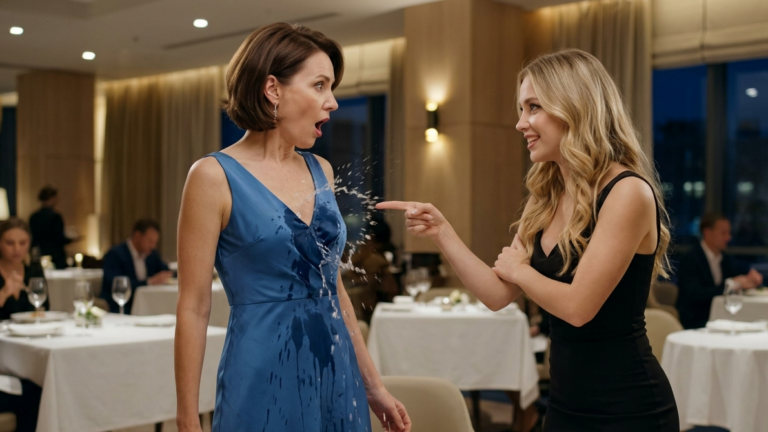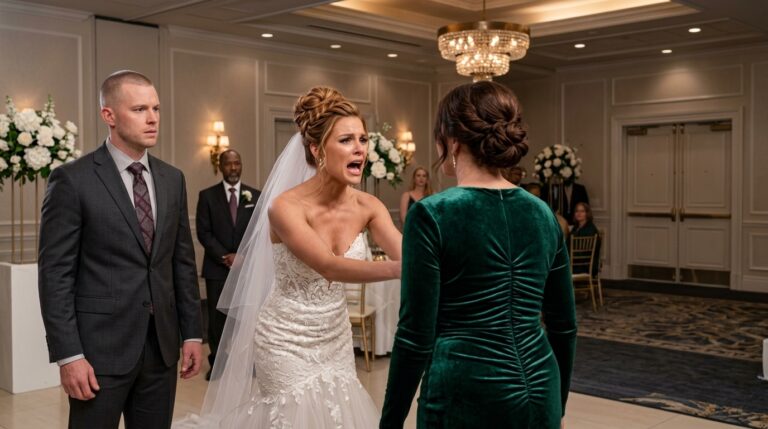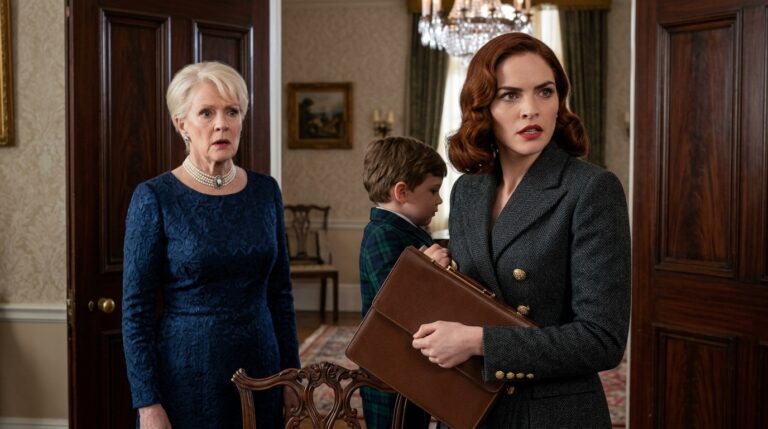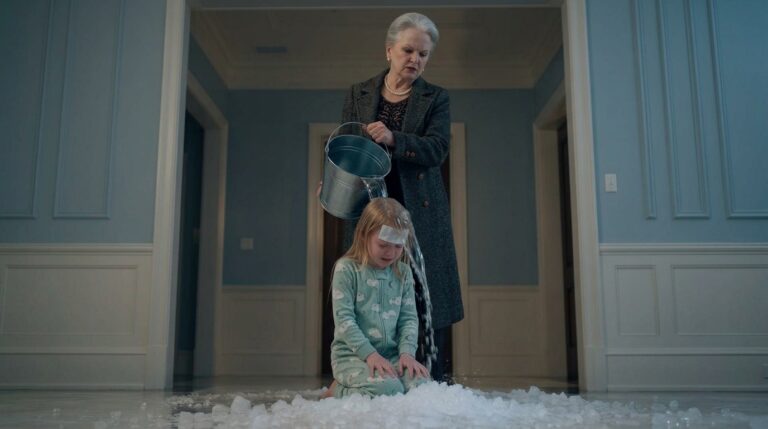
1- THE ENVELOPE: The ambulance arrived before I got an answer.
I hated that.
I wanted to stay in the courtroom, grab Judge Bell by the robe, and demand he explain how he knew my father’s nickname for me.
Instead, two paramedics lowered me onto a stretcher while Rachel walked beside me and Marcus argued with a deputy.
“I’m her husband.”
The deputy didn’t move.
“You’re also a party in an active proceeding.”
“She’s carrying my child.”
I turned my head.
That sentence almost made me laugh.
My child.
Marcus had not attended my last three prenatal appointments.
He had skipped the ultrasound where our daughter opened and closed one tiny hand while the technician laughed.
He had responded to the picture I sent him with a thumbs-up emoji.
Now cameras were probably waiting outside.
Suddenly he was a concerned father.
“Stay away from me,” I said.
Marcus stared at me.
“Emily.”
“Stay away.”
Savannah stood against the far wall with a deputy beside her.
For the first time all morning, she looked afraid.
Her attorney had arrived and was whispering rapidly in her ear.
Judge Bell remained behind the bench.
He had said nothing else about my father.
But as the paramedics pushed me toward the doors, he called Rachel forward.
I watched him hand her a sealed envelope.
Cream paper.
Old.
Very old.
He said something I couldn’t hear.
Rachel’s face changed.
Then she looked at me.
The elevator ride to the first floor felt endless.
“Rachel.”
“Hospital first.”
“What did he give you?”
“Emily.”
“My father has been dead for twenty-four years.”
She glanced at the paramedic.
“Not here.”
That answer frightened me more than anything she could have said.
At St. Vincent’s, I spent the next four hours connected to monitors.
My daughter’s heartbeat remained steady.
The kick had struck mostly along my side, and although I had significant bruising, the doctors found no evidence of placental abruption or immediate fetal distress.
I cried when they told me.
Not delicately.
Not the single cinematic tear women in movies somehow manage.
I covered my face and sobbed until my ribs hurt.
Rachel sat beside the bed without speaking.
When I could finally breathe again, she handed me tissues.
Then she placed the envelope on my blanket.
Across the front, in faded blue ink, were five words.
FOR EMILY, IF SHE NEEDS IT.
I recognized the handwriting.
My father’s.
I knew it before I consciously understood it.
The E leaned too far to the right.
The crossbar on every capital H sat unusually low.
My father had written birthday cards in that handwriting.
Lunchbox notes.
The ridiculous treasure maps he used to draw when I was a child.
My hands began shaking.
“How?”
“Judge Bell says your father gave this to him twenty-five years ago.”
“That’s impossible.”
“He knew him.”
“I’ve searched everyone my father ever worked with.”
“Apparently you didn’t know everything about his work.”
I looked at the seal.
Unbroken.
“What else did Bell say?”
“That he has to recuse himself.”
My stomach dropped.
“What?”
“He has a personal connection to your father. He should never have presided once he recognized who you were.”
“He’s been hearing this case for three days.”
“He didn’t recognize your married name. According to him, the pendant made the connection.”
I touched the bluebird.
“He said Daniel told him you would probably still have it someday.”
The room suddenly felt too small.
“Did he say my father is alive?”
Rachel hesitated.
“No.”
That hurt.
“But?”
“He said the answer is inside.”
I tore open the envelope.
There were three things.
A handwritten letter.
A brass key.
And a Polaroid photograph.
I picked up the photograph first.
My father stood beside a younger Adrian Bell in front of an office building.
Between them was another man.
A man I recognized instantly.
Richard Vale.
Marcus’s father.
The founder of Vale Global.
The man whose portrait hung twelve feet high in the lobby of the company headquarters.
He had died six years before Marcus and I met.
On the back of the photograph, my father had written:
THE DAY THEY THOUGHT THEY WON.
My mouth went dry.
I unfolded the letter.
Bluebird,
If you are reading this, then something went wrong.
I stopped.
Twenty-four years of grief pushed against my chest.
I forced myself to continue.
You will be tempted to trust anyone who says they knew me. Don’t. Trust documents. Trust dates. Trust what can be proved.
That sounded exactly like him.
Even when helping me with fourth-grade math, Dad had insisted that answers meant nothing unless I could show my work.
There are things about my life I hid from you because I wanted you to remain a child for as long as possible.
If Adrian has given you this letter, then you are old enough to decide what happens next.
The key opens Box 614 at Harbor Federal Trust.
Inside you will find the first half.
Do not look for the second half until you understand why Richard Vale was afraid of me.
I stopped again.
Rachel leaned closer.
There was one final line.
And Bluebird, if someone named Vale ever tells you that you owe them anything, remember this:
They owe you.
I read the words three times.
Rachel whispered, “Holy hell.”
My phone vibrated on the bedside table.
Marcus.
I rejected the call.
It rang again.
Rejected.
Again.
Then a text appeared.
We need to control this before the media turns it into something ugly.
Not: Are you okay?
Not: Is our daughter okay?
Control this.
I handed Rachel the phone.
She stared at the message.
“He really is unbelievable.”
Another text arrived.
Savannah is willing to apologize if you agree not to press charges.
Then another.
My lawyers say dragging this out could hurt you in the divorce.
Rachel smiled without humor.
“That sounds dangerously close to intimidation.”
For the first time all day, something inside me steadied.
My father’s letter rested against my stomach.
For months Marcus had controlled every room because he had more lawyers, more money, more influence, more information.
But Marcus had made one mistake.
He thought I had nothing because I had never told him much about my father.
The truth was, I hadn’t told him because I knew almost nothing myself.
Apparently neither did Marcus.
“Can we get to Harbor Federal Trust tonight?”
Rachel checked the time.
“If they still exist.”
“They do.”
“How do you know?”
I looked at the brass key.
“Because my father taught me something too.”
“What?”
I picked up my phone and blocked Marcus’s number.
“Trust documents.”
Two hours later, wearing borrowed hospital sweats and carrying discharge papers, I walked into Harbor Federal Trust with Rachel beside me.
Box 614 had not been opened in twenty-four years.
The bank manager required signatures, identification, and an old secondary authorization Judge Bell had apparently maintained through a private trust.
Finally, we were taken into a secure viewing room.
The manager placed a long gray box on the table.
Then left.
Rachel looked at me.
“You ready?”
“No.”
I inserted the key anyway.
Inside were dozens of files.
Financial statements.
Property records.
Old newspaper clippings.
Corporate formation documents.
And one yellow legal pad.
The first page contained a handwritten list of company names.
Most meant nothing to me.
One did.
Vale Development Holdings.
Beside it, my father had written:
ASSETS ACQUIRED WITH ELLISON FUNDS.
Rachel pulled out an incorporation document.
Her eyes widened.
“Emily.”
“What?”
She turned it toward me.
“Your father owned forty-nine percent of the company that became Vale Global.”
I stared at the document.
“No.”
“He did.”
“That company is worth billions.”
“I know.”
At the bottom of the box sat a thin black folder stamped CONFIDENTIAL.
Inside was a photocopy of a transfer agreement.
According to the document, my father had voluntarily sold his entire interest to Richard Vale for one dollar.
I felt sick.
Marcus’s lawyers had submitted a copy of that exact agreement during our divorce.
They had used it to prove I had no historical claim to Vale family assets.
Rachel held the two versions side by side.
Then she noticed it.
The signature.
My father’s signature on Marcus’s version slanted right.
On the copy in the box, it slanted left.
Rachel looked at me.
“One of these is fake.”
I turned the next page.
My father had already answered.
In large letters across the top, he had written:
FORGERY.
Below that:
ORIGINAL HELD BY A.B.
A.B.
Adrian Bell.
Rachel’s phone rang.
She answered.
Listened.
Her face drained.
“What happened?”
She ended the call.
“That was the courthouse.”
“And?”
“The replacement judge froze the divorce asset transfers pending review.”
My pulse jumped.
“Because of the assault?”
“No.”
She looked toward the papers.
“Because Judge Bell just turned over a twenty-five-year-old sealed affidavit to the state attorney general.”
I stared at her.
“What affidavit?”
Rachel swallowed.
“One accusing Richard Vale of fraud, forgery, and attempted murder.”
And beneath the stack of papers, my father had left one final note.
If Richard failed, his son may finish it.
2- THE MAN MARCUS NEVER KNEW: By nine the next morning, Marcus had sent five lawyers to convince me not to go to the police.
None made it past Rachel.
We had moved temporarily into a secure hotel suite registered under her firm because the emergency protective order against Marcus prohibited direct contact, but money had always made Marcus creative.
The first lawyer called the kick “an unfortunate interpersonal misunderstanding.”
Rachel hung up.
The second offered a private settlement.
Five million dollars.
I nearly laughed.
The third raised it to twelve.
The fourth suggested twenty-five million if I signed a nondisclosure agreement, waived claims against Savannah, and agreed to a streamlined divorce.
By breakfast, I understood something Marcus had spent years teaching me without realizing it.
Rich men rarely begin with their highest number.
“Don’t respond,” I told Rachel.
She looked pleased.
“I wasn’t planning to.”
“Not to any of it.”
“That includes Marcus.”
“Especially Marcus.”
There was a knock at the suite door.
Hotel security checked before Rachel opened it.
Judge Adrian Bell stood in the hall wearing a dark gray suit instead of robes.
He looked older without the bench between us.
He also looked nervous.
Rachel stepped forward.
“Judge Bell, I’m not sure this is appropriate.”
“It probably isn’t.”
“That’s not reassuring.”
“I’m no longer assigned to Mrs. Vale’s matter. I disclosed everything and recused.”
“That doesn’t eliminate ethical concerns.”
“No.”
His eyes found mine.
“But there are things Daniel entrusted to me that are now Emily’s property.”
My throat tightened.
“You called me Bluebird.”
His face softened.
“Your father talked about you constantly.”
“You knew him well?”
“He saved my life.”
That silenced the room.
Bell entered only after Rachel recorded his consent that the conversation could be documented and that he would provide no legal advice.
I appreciated that.
My father’s letter had changed something in me.
Trust documents.
Trust evidence.
Not emotion.
Bell sat across from me at the dining table.
For a moment neither of us spoke.
Finally, I slid the photograph toward him.
“What happened that day?”
He studied it.
“Your father, Richard Vale, and I had created a real-estate investment company six years earlier. Daniel supplied much of the early capital. Richard supplied contacts and aggressively expanded operations.”
“What was your role?”
“Attorney.”
“So you helped create Vale Global.”
“The company had a different name then. Ellison Vale Properties.”
I had never heard it.
Bell continued.
“Daniel was brilliant with numbers. He discovered Richard had been using shell companies to divert investor funds into private acquisitions. When Daniel confronted him, Richard claimed it was temporary.”
“Was it?”
“No.”
Bell stared at the old photograph.
“It was theft.”
“Why didn’t my father go to police?”
“He intended to.”
“Then he disappeared.”
Bell looked at me.
“First, he survived.”
I froze.
“Survived what?”
“A car crash.”
The room blurred around the edges.
Bell spoke quietly.
“Daniel was driving home after meeting a federal investigator. His brakes failed on a mountain road. His car went through a guardrail.”
“I was told he drowned.”
“That came later.”
“Tell me everything.”
Bell nodded.
“Daniel survived the crash with a broken shoulder. A truck driver found him. Daniel believed it was an accident until the mechanic who inspected what remained of the car discovered the brake line had been cut.”
My fingers went cold.
“He called me. We met secretly. He said Richard had people watching his house.”
“Our house?”
“Yes.”
I pictured myself at ten years old, sitting at our kitchen table doing homework while strangers might have been watching through windows.
“What did he do?”
“He began collecting evidence. But the investigation leaked. One witness disappeared. Another withdrew his statement. Daniel became convinced Richard had someone inside law enforcement.”
Rachel asked, “Was that ever proven?”
“No.”
Bell looked back at me.
“Your father decided the safest way to protect you was to appear dead.”
I stood so abruptly my chair struck the wall.
“You’re telling me my father abandoned me voluntarily?”
Bell’s expression tightened.
“I’m telling you what he believed he was doing.”
“No.”
“Emily—”
“No.”
I walked to the window.
Twenty-four years.
Twenty-four birthdays.
College graduation.
My mother’s funeral.
My wedding.
Every day I had wondered how different my life might have been if my father had lived.
Now this man was telling me he had.
“Where is he?”
Bell did not answer immediately.
I turned.
“Where is my father?”
“I don’t know.”
“You knew he survived.”
“Yes.”
“You kept that from me.”
“He made me promise.”
“I was ten.”
“I know.”
“My mother drank herself sick after he died.”
“I know.”
“She spent years thinking he left debts behind.”
“I know.”
“And you let us believe he was dead?”
Bell lowered his eyes.
“Yes.”
I wanted to hate him.
Maybe part of me did.
Rachel came to stand beside me.
“Emily, we can stop.”
“No.”
I wiped my face.
“Finish.”
Bell drew a slow breath.
“Daniel entered a federal witness-security arrangement under circumstances I was never fully told. Not the ordinary program. He was cooperating in several financial investigations beyond Richard.”
“Did my mother know?”
“Eventually.”
That stunned me.
“What?”
“She learned the truth approximately three years after his disappearance.”
I felt another betrayal opening beneath me.
“Why didn’t she tell me?”
“Daniel believed the people looking for him might approach you. Your mother agreed.”
“You all decided for me.”
“You were thirteen.”
“I wasn’t thirteen when I turned twenty.”
“No.”
“I wasn’t thirteen when Mom died.”
“No.”
“Why didn’t he come then?”
Bell looked wounded.
“I asked him the same thing.”
“You spoke to him?”
“Occasionally. Through intermediaries.”
“And?”
“He believed Richard’s network was still active.”
I laughed bitterly.
“Richard died years ago.”
Bell’s eyes sharpened.
“Which brings us to Marcus.”
I sat again.
Bell opened a leather portfolio.
Inside were copies of old reports.
“Richard had one son. Marcus. He was sixteen when Daniel disappeared.”
“Marcus told me his father kept him away from business until college.”
“That was a lie.”
Bell handed me a photograph.
A teenage Marcus stood beside his father outside a warehouse.
Behind them was the same corporate logo that appeared on documents in Box 614.
“Marcus knew about Ellison Vale Properties.”
“How much did he know about my father?”
“We don’t know.”
My marriage rearranged itself in my memory.
Marcus approaching me at a charity event.
Marcus asking my maiden name after our second date.
Marcus appearing fascinated when I said my father had died when I was young.
Marcus proposing within eleven months.
Maybe none of it had been coincidence.
I shook my head.
“No. He couldn’t have married me because of my father.”
Rachel said gently, “We don’t know.”
“I was nobody.”
Bell leaned forward.
“You were Daniel Ellison’s legal heir.”
There it was.
The sentence I didn’t want to hear.
“Under the original corporate agreement, Daniel’s interest transferred to his estate if he died. Richard needed documents showing Daniel had sold first.”
“The forged agreement.”
“Yes.”
“And if evidence ever surfaced proving the transfer was forged?”
“You could have a substantial claim.”
“How substantial?”
Bell glanced at Rachel.
“Potentially controlling.”
My stomach tightened.
“Controlling what?”
“Parts of the holding structure underlying Vale Global.”
I actually laughed.
It was absurd.
Marcus’s empire employed thirty thousand people.
His face appeared on business magazines.
He owned hotels, logistics companies, development projects, technology firms.
“I’m a public school architect,” I said.
“Was,” Rachel corrected quietly. “Before Marcus pressured you to stop working.”
That memory stung.
Marcus had called it preparing for motherhood.
Bell continued.
“The legal fight would be extraordinary. Nothing is guaranteed. But Daniel preserved records for a reason.”
“Where’s the second half?”
Bell hesitated.
“I don’t know.”
“You said my father gave you instructions.”
“He did.”
“What were they?”
Bell reached into his pocket.
He placed an old cassette recorder on the table.
I stared at it.
“He told me that if you ever became involved with a Vale, I was to give you this after you opened Box 614.”
“Is that his voice?”
“Yes.”
My hand trembled when I pressed play.
Static.
A click.
Then a man spoke.
Older than I remembered.
But unmistakably him.
“Hi, Bluebird.”
I broke.
I pressed both hands over my mouth.
The recording continued.
“If you’re hearing this, then you’ve probably learned enough to be furious with me.”
I laughed through tears because even after all those years, he knew me.
“You should be. I made choices for you that no father should make for his daughter. I hope someday I can explain them myself.”
A pause.
“If the man beside you is named Marcus Vale, listen carefully.”
Every hair on my arms lifted.
Marcus had been twenty-two when that recording was made.
My father knew his name.
“Marcus is not Richard.”
Another pause.
“But he wants what Richard wanted.”
The tape hissed.
“Find the lighthouse.”
Then it stopped.
Rachel frowned.
“What lighthouse?”
I knew.
There had only ever been one.
Every summer before my father disappeared, we rented a cottage on Cape Mercy.
A white lighthouse stood at the edge of the bay.
My father used to hide scavenger-hunt clues there for me.
Bell stared at my expression.
“You know where he means.”
“Yes.”
My phone buzzed.
Not Marcus this time.
An unknown number.
One image appeared.
It was a photograph taken through the hotel lobby windows less than ten minutes earlier.
Rachel and I arriving the night before.
Below it was a message.
STOP DIGGING INTO THE PAST.
A second message followed.
YOUR FATHER SHOULD HAVE LEARNED THAT LESSON THE FIRST TIME.
And then:
ASK HIM WHY HE NEVER CAME HOME.
3- THE LIGHTHOUSE: We left for Cape Mercy under police escort.
Rachel objected to almost everything about the plan.
The attorney general’s investigators objected even more.
I agreed with all of them.
Then I went anyway.
For twenty-four years, my father had been a grave without a body.
Now he was a voice on a tape and a trail of clues leading back to the last place where I remembered being completely happy.
I needed answers more than I needed sleep.
Cape Mercy sat three hours north of the city, where gray cliffs met an Atlantic ocean that seemed determined to chew them into pieces.
The cottage my parents once rented had become a vacation home with solar panels and an enormous deck.
The lighthouse remained.
It had been decommissioned years earlier and converted into a tiny maritime museum.
Because of the threats, investigators arrived before us.
Nothing unusual was found.
I walked the narrow path toward the lighthouse with Rachel and Special Investigator Lena Ortiz.
Wind pulled at my coat.
My daughter kicked beneath it.
I placed one hand over my belly.
“You’re going to have a strange family story,” I whispered.
Rachel heard me.
“That might be the understatement of the year.”
Inside the lighthouse, almost everything had changed.
New exhibits.
New railings.
Digital screens where dusty display cases had once stood.
But the spiral staircase remained.
So did the carved wooden post at its base.
I crouched.
There.
Barely visible beneath layers of paint.
A tiny bluebird.
My father had carved it when I was seven.
Ortiz bent beside me.
“That mean something?”
“He used to hide clues.”
I ran my fingers around the carving.
The wooden panel shifted.
Rachel whispered, “No way.”
I pressed harder.
A narrow compartment opened.
Inside sat a metal cylinder wrapped in plastic.
Ortiz stopped me.
“Gloves.”
She photographed everything before removing it.
Inside the cylinder were two microfilm canisters, a key card, and a letter.
The letter was dated three months after my father’s supposed death.
Bluebird,
You found it.
Of course you did.
You were always better at my games than I expected.
I hope you are finding this because the danger has passed.
If not, take everything to someone who cannot be bought.
The records here establish where the original investment money came from, but money is only part of it.
Richard didn’t steal a company from me.
He stole it from hundreds of people.
Small investors.
Retirement accounts.
Families.
I wanted my share back because recovering it would expose what he did to them.
If Richard is gone and Marcus is in control, understand this:
Marcus saw more than anyone realized.
At sixteen, he helped his father move records from the Harbor Street office before federal investigators arrived.
He knows.
My eyes stopped.
Marcus had looked me in the face for eight years and pretended he had never heard my father’s name.
I kept reading.
Do not assume guilt passes from father to son.
Judge Marcus by what Marcus does.
That line mattered.
My father was not telling me to hate him.
He had left room for Marcus to be different.
For years, I had done the same.
The difference was that Marcus had made his own choices.
I unfolded the second sheet.
There were bank routing numbers.
Dates.
Corporate names.
At the bottom:
THE SECOND HALF IS NOT PAPER.
Rachel frowned.
“What does that mean?”
Ortiz lifted the key card.
“Maybe data.”
The card bore the faded logo of an old storage company.
Back in the car, investigators searched the company history.
It had closed nineteen years earlier.
Its assets had been purchased by—
“Vale Storage Systems,” Rachel read.
I stared at her.
“Of course.”
The location listed for the old facility was Harbor Street.
The same street my father mentioned.
The same office Marcus had helped empty as a teenager.
Ortiz called her team.
Half an hour later, she returned with a strange expression.
“The Harbor Street building still exists.”
“Who owns it?”
“A subsidiary of Vale Global.”
“Can we get inside?”
“Not without consent or a warrant.”
Rachel folded her arms.
“Then get a warrant.”
Ortiz smiled faintly.
“Working on it.”
My phone remained with investigators after the threatening messages, but Rachel’s rang.
She checked the screen.
“Marcus’s attorney.”
“Which one?”
“Crane.”
She answered on speaker.
“Rachel Kim.”
Julian Crane’s polished voice filled the car.
“Ms. Kim, I’m calling regarding an urgent family matter.”
“My client has no interest in private negotiations.”
“This is not a negotiation.”
“Then what is it?”
“Marcus has been informed that Mrs. Vale traveled while under medical observation.”
My blood pressure rose instantly.
Rachel’s voice turned cold.
“How would your client know where she traveled?”
Silence.
Then Crane changed direction.
“He’s concerned about the baby.”
“His concern would have been more persuasive before his girlfriend kicked her.”
“That characterization remains disputed.”
“By whom? Gravity?”
Even Ortiz smiled.
Crane continued.
“Marcus would like to arrange an independent medical examination.”
“No.”
“He is the father.”
“And he is currently subject to a protective order.”
“He has rights.”
“So does Emily.”
Crane exhaled.
“This hostility is unnecessary.”
“Your client tried to buy her silence yesterday.”
“That was a settlement communication.”
“He offered twenty-five million dollars before breakfast. What number are we at today?”
Another silence.
Then Crane said, “One hundred million.”
Nobody moved.
Rachel looked at me.
I shook my head.
“Rejected.”
She relayed it.
Crane’s tone sharpened.
“You haven’t heard the conditions.”
“We’re not interested.”
“You should be.”
“Why?”
“Because if Emily continues pursuing obsolete allegations involving the Vale family, Marcus intends to seek sole custody after the child is born.”
My heart stopped.
Rachel’s face changed.
“You’re threatening to take her child.”
“I am communicating my client’s legal position.”
“No. You’re making the worst phone call of your career.”
“Think carefully.”
Rachel disconnected.
For several seconds the only sound was ocean wind against the car.
Then I cried.
Not because I believed Marcus deserved custody.
Because I knew him.
Marcus hated losing more than he loved anything.
A company.
A courtroom.
A wife.
Maybe even a daughter.
He would burn through money and people just to make sure I paid for refusing him.
Ortiz looked at me through the rearview mirror.
“You okay?”
“No.”
“Good answer.”
I wiped my face.
“Does that call help us?”
Rachel’s smile contained no warmth.
“It helps me.”
That evening, we returned to the city.
The warrant for Harbor Street came through shortly after midnight.
Investigators searched the building at six the next morning.
The original storage room had been remodeled twice.
Most records were gone.
But behind a false wall in the basement, they found an old steel cabinet.
Inside were magnetic tapes.
Corporate ledgers.
And a VHS cassette labeled only:
D.E. — AUGUST 14.
The state lab digitized it.
At 3:17 that afternoon, Ortiz called us in.
The footage was grainy.
A security camera mounted over a warehouse entrance.
Date stamp: August 14, twenty-four years earlier.
My father appeared first.
He entered carrying a briefcase.
Richard Vale followed eight minutes later.
Then a teenage Marcus.
My husband.
Sixteen years old.
Tall already.
Thin.
His hair falling over his forehead.
I leaned closer to the screen.
Inside the warehouse, there was no audio.
My father argued with Richard.
Richard shoved him.
Marcus stood by the door.
Then Richard pulled a gun.
Rachel whispered, “Jesus.”
My father raised his hands.
Richard pointed the weapon at his chest.
And sixteen-year-old Marcus did something I would never have expected.
He stepped between them.
I stared.
Marcus pushed his father’s gun arm down.
He shouted something.
Richard struck him across the face.
Marcus fell.
My father ran.
The video ended two minutes later.
I sat back.
For the first time since this started, my certainty cracked.
Marcus had known.
But at sixteen, he had also tried to save my father.
“What happened to him?” I whispered.
Ortiz paused the footage.
“That’s what we need to determine.”
A technician entered.
“We found something else.”
Another file.
Digital.
Recorded eighteen years later.
Six years before Marcus met me.
This one had audio.
Marcus was no longer a teenager.
He was thirty-four.
Richard Vale sat across a desk from him.
Richard said, “The Ellison girl is still out there.”
Marcus responded, “Leave her alone.”
My breath caught.
Richard laughed.
“She owns a problem we haven’t solved.”
“She doesn’t know anything.”
“She doesn’t need to know. She only needs to sign.”
“Sign what?”
Richard slid a document toward him.
Marcus looked down.
Then his jaw tightened.
“No.”
Richard leaned back.
“One day all of this will be yours. And when it is, you’ll understand.”
Marcus looked toward the camera.
His next words made my blood run cold.
“If you ever go near Daniel Ellison’s daughter, I’ll destroy everything you built.”
Rachel slowly turned toward me.
On the screen, Richard Vale smiled.
“You say that now.”
He tapped the document.
“But sooner or later, son, everyone has a price.”
The video stopped.
I stared at the black screen.
The man I had spent the last week believing married me to steal my inheritance had once threatened his own father to protect me.
Which meant the question was no longer why Marcus knew who I was.
The question was why, years later, he married me anyway.
4- THE MARRIAGE CONTRACT: Marcus finally told me the truth from a jail visitation room.
Not because he had been arrested for what happened twenty-four years ago.
Not yet.
He was there because he violated the protective order.
At 1:13 in the morning, he entered the parking garage beneath my attorney’s office and waited beside Rachel’s car.
He claimed he only wanted to talk.
Security footage showed him carrying an envelope containing a hundred-million-dollar settlement agreement.
The judge disagreed with his definition of harmless.
Marcus spent twelve hours in custody before a bail hearing.
I watched remotely.
He looked smaller without his tailored boardroom armor.
Still handsome.
Still composed.
But tired.
When his attorney requested permission for him to speak to me through counsel about our unborn child, I surprised everyone.
I agreed.
Rachel hated it.
Ortiz hated it.
I needed it.
The meeting occurred through thick glass with attorneys present on both sides.
Marcus picked up the phone.
So did I.
For a long moment, neither of us spoke.
Finally, he said, “Is she okay?”
I knew he meant the baby.
“Yes.”
His eyes closed briefly.
Relief.
Real relief.
That complicated things.
I wanted him monstrous.
Monsters are easy.
People aren’t.
“Why did you marry me?”
Marcus stared at me.
“Emily—”
“Don’t waste this conversation.”
He looked toward Crane.
Crane quietly shook his head.
Marcus ignored him.
“I knew who you were before we met.”
It hurt even though I expected it.
“How long before?”
“Years.”
“And you never thought that was worth mentioning?”
“I was trying to keep you out of it.”
“You married me.”
“I know.”
“That is the opposite of keeping me out.”
His mouth tightened.
“When my father died, I inherited records. Among them were documents involving Daniel Ellison.”
“Documents saying I could challenge your ownership.”
“Yes.”
“Did you approach me because of those documents?”
Marcus said nothing.
“Answer me.”
“At first.”
There are sentences that don’t stab.
They hollow.
I pressed my free hand against my stomach.
“At first.”
“I was supposed to determine what you knew.”
I laughed.
My eyes filled anyway.
“So our first date?”
“Emily.”
“The fundraiser?”
“I arranged to be introduced.”
“The coffee shop three days later?”
“Also arranged.”
“The tickets to that awful experimental play?”
That memory nearly broke me.
Marcus had spent the entire performance whispering jokes into my ear while we tried not to laugh.
It had been the night I started falling in love.
“Arranged,” he whispered.
I put the phone down.
Marcus slapped his palm against the glass.
I could not hear him until I lifted it again.
“Then it changed.”
“Convenient.”
“It changed.”
“When?”
“I don’t know.”
“Try.”
He looked desperate now.
Maybe for the first time in our marriage.
“You spilled coffee on my car.”
I stared at him.
“What?”
“The third week.”
Despite everything, I remembered.
Marcus owned a vintage Aston Martin then.
I had backed into a parking bollard while carrying two coffees, stumbled, and thrown an entire vanilla latte through the open passenger window.
He had stared at the leather seat.
I had been certain he was going to explode.
Instead he laughed until he cried.
“You called me a rich idiot for leaving the roof down,” he said.
“You were a rich idiot.”
“I know.”
“Why does that matter?”
“Because you didn’t know who I was that day.”
“I knew you were wealthy.”
“You didn’t know how wealthy. You hadn’t Googled me yet.”
“I was busy.”
“You treated me like a person.”
My anger rose.
“So I earned the privilege of being deceived?”
“No.”
“What happened to all that love after we got married?”
His eyes dropped.
“I became my father.”
The answer was so quiet I almost missed it.
“I spent my entire childhood hating him. Then I inherited his company and discovered power is addictive when everyone tells you your decisions are brilliant.”
“That isn’t an excuse.”
“I know.”
“You controlled my accounts.”
“Yes.”
“You pushed me out of my career.”
“Yes.”
“You isolated me from friends.”
His voice broke slightly.
“Yes.”
“You slept with Savannah.”
“Yes.”
“And when she kicked me, you told me I was making a scene.”
He looked sick.
“I saw her move. I didn’t understand what happened until—”
“Stop.”
“I swear.”
“You watched me fall.”
“I know.”
“You didn’t come to me.”
“No.”
“Why?”
His answer took too long.
“Because cameras were there.”
That was Marcus.
Not evil in the theatrical way.
Worse.
He had trained himself to evaluate every moment as risk.
If he comforted me, he embarrassed Savannah.
If he condemned Savannah, he admitted liability.
If he stood still, lawyers could manage the story.
A billionaire had watched his pregnant wife get hurt and chosen public relations.
“Thank you,” I said.
He looked confused.
“For what?”
“For finally telling me exactly who you are.”
“Emily, please.”
I put the phone down.
But before I could stand, Marcus shouted through the glass.
Rachel gestured for me to ignore him.
Then I saw the words on his lips.
THE CONTRACT.
I picked the phone back up.
“What contract?”
“My father’s document.”
“The forged transfer?”
“No.”
He leaned closer.
“Your marriage.”
Every muscle in my body tightened.
“What are you talking about?”
“Before we married, Crane prepared your prenup.”
“I know.”
“You had separate counsel.”
“Yes.”
“Your attorney missed an attachment.”
Rachel leaned closer.
“What attachment?”
Marcus heard her.
“A corporate ratification.”
I didn’t understand.
“Explain.”
“My father created a mechanism years ago. If Daniel Ellison or his heir ever voluntarily ratified the old ownership transfer, future challenges could be extinguished.”
“And?”
“The document was buried in a schedule attached to your prenup.”
I stared at him.
“I signed it?”
Marcus shook his head.
“No.”
“What?”
“I removed the signature page the night before closing.”
Crane stood.
“Marcus.”
Marcus ignored him.
“My father expected me to trick you. I couldn’t.”
“Then why was it there at all?”
“Because I was still trying to protect the company.”
“So you almost tricked me.”
“Yes.”
Crane reached for the phone.
Marcus turned away.
“Sit down, Julian.”
Crane froze.
Marcus looked back at me.
“There’s a copy of the unsigned ratification in my private safe.”
“Where?”
“Vale Tower. Thirty-ninth floor.”
Rachel asked, “Combination?”
Marcus recited six numbers.
Crane grabbed his shoulder.
“You are waiving privilege and potentially exposing—”
Marcus shoved his hand away.
“I don’t care.”
Then Marcus looked at me.
“The safe also contains something else.”
“What?”
“Letters from your father.”
I stopped breathing.
“How many?”
“Seven.”
“How did you get them?”
“My father kept them.”
“Were they addressed to me?”
“No.”
“To whom?”
“Me.”
That made no sense.
“Why would my father write to you?”
“Because after the warehouse, we spoke.”
“You were sixteen.”
“Yes.”
“What did he want?”
“To know whether I would become Richard.”
My anger disappeared for one terrifying second.
“What did you tell him?”
“That I wouldn’t.”
Marcus looked around the visitation room.
Then back at me.
“I guess he got his answer.”
The meeting ended.
Two hours later, state investigators executed a warrant on Marcus’s private office.
Inside the safe, exactly where he said, were seven letters.
Six had been opened.
One had not.
It was dated three weeks before our wedding.
On the front my father had written:
MARCUS — IF YOU TRULY LOVE HER, TELL HER EVERYTHING BEFORE SHE SAYS I DO.
The envelope was still sealed.
Marcus had never read it.
I stood there staring at it until Rachel finally whispered, “Emily.”
I picked it up.
On the back, in different handwriting, someone had written two words.
Richard Vale.
DESTROY THIS.
Marcus had kept it instead.
But keeping the truth was not the same as telling it.
And when investigators opened the next compartment in the safe, they discovered why Marcus had recently become so desperate.
Vale Global was not worth four billion dollars.
It was drowning.
Marcus had hidden nearly two billion dollars in liabilities.
And if my father’s ownership claim survived—
I wasn’t inheriting an empire.
I might be inheriting its collapse.
5- THE BILLIONAIRE’S LIE: Marcus’s fortune existed because everyone agreed to believe it existed.
That was the simplest way Rachel explained it.
Vale Global owned billions in property, shipping infrastructure, hotels, data centers, and commercial developments.
But it also owed billions.
Loans.
Bond obligations.
Private credit.
Construction debt.
Hidden guarantees.
Marcus had moved liabilities between subsidiaries so aggressively that even sophisticated investors had difficulty understanding where the risk ended.
“He wasn’t necessarily stealing,” Rachel said.
We sat in a conference room surrounded by accountants.
“He was hiding weakness.”
“Is that illegal?”
“Sometimes. Depends what was disclosed to lenders and investors.”
A forensic accountant named Priya Shah pushed a tablet toward me.
“Vale Global’s problem isn’t just debt. It’s liquidity.”
I looked blank.
She simplified.
“They own valuable things but don’t have enough cash to meet obligations coming due.”
“How long?”
“Potentially weeks.”
My daughter kicked.
I had begun interpreting her movements as commentary.
“That seems bad.”
“It is.”
“Why did Marcus offer me a hundred million dollars if he’s running out of money?”
Priya smiled grimly.
“Because he probably hoped you’d sign before you learned how much leverage you have.”
My father’s original capital had been used to purchase several assets that still formed the foundation of Vale Global.
If the forged transfer was invalidated, my ownership claim could extend through multiple entities.
But there was another problem.
Employees.
Thirty thousand of them.
Pension funds.
Small shareholders.
Vendors.
I could destroy Marcus and accidentally destroy people who had never heard the name Daniel Ellison.
I hated that.
Savannah, meanwhile, was making everything worse.
After being charged with assault, she gave an interview from the steps of her attorney’s office.
She wore cream.
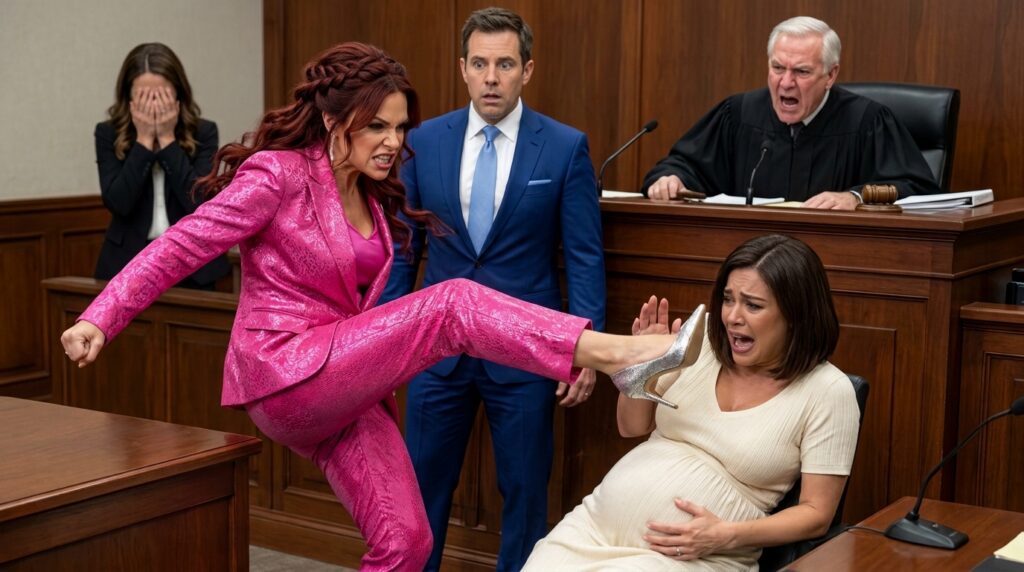
No pink suit.
No silver heels.
No attitude.
Just understated makeup and an expression designed for sympathy.
She claimed I had harassed her for months.
She claimed the kick was an instinctive reaction after I “lunged.”
She claimed Marcus had told her I suffered from pregnancy-related instability.
That part hurt because it sounded like something he might say.
Then she said something unexpected.
“Emily knew her marriage was over. She refused to accept it.”
The reporter asked whether Savannah was pregnant.
I sat upright.
Savannah touched her stomach.
“Yes.”
Rachel cursed.
The screen seemed to tilt.
“How far along?”
The reporter asked exactly that.
“Eleven weeks.”
I counted backward.
Marcus and I had still been sleeping in the same bed.
Not often.
But enough.
The room became very quiet.
Rachel reached for the remote.
“Turn it off.”
“No.”
Savannah continued.
“Marcus and I intended to build a family together.”
Then a reporter shouted, “Does Marcus know?”
Savannah smiled.
“Of course.”
I expected jealousy.
Instead I felt something stranger.
Release.
There was no marriage to save.
No alternate version where Marcus made the right choice and we somehow returned to what we had been.
Some doors should close completely.
I watched Savannah walk away from the microphones.
Then Priya’s phone buzzed.
She read a message.
“Oh.”
“What?”
“Vale Global shares just dropped another twelve percent.”
Rachel looked at me.
“Because of Savannah?”
“Because one of the credit agencies placed three Vale subsidiaries under review.”
Within forty-eight hours, the fantasy surrounding Marcus began falling apart.
Banks requested information.
Board members called emergency meetings.
Investors demanded explanations.
Employees started whispering.
Marcus was released under strict conditions but temporarily barred from contacting me.
His board asked him to take a leave.
He refused.
They voted.
He lost.
The newspapers called it a corporate coup.
Marcus called Rachel from his attorney’s office.
This time I refused the conversation.
Not because I had no questions.
Because I had finally learned that answers did not have to come from him.
Then my father’s unopened letter came back from forensic processing.
Investigators found no reason to keep it.
I opened it.
Marcus,
If you love my daughter, you will tell her who you are before she marries you.
Not the version you built.
Not the version your father trained.
The whole man.
Tell her about me.
Tell her about Richard.
Tell her what your family took.
Then let Emily choose.
If she walks away, accept it.
Love without choice is ownership.
Do not own my daughter.
The words blurred.
My father had understood Marcus better than I had.
I continued.
You once stood between Richard and a gun.
That tells me there is something decent in you.
But one decent act at sixteen does not protect you from becoming a cruel man at thirty-six.
Character is not what you did once when frightened.
It is what you choose repeatedly when powerful.
I folded the letter.
That sentence stayed inside me.
Marcus had thought keeping the letter proved he was different from his father.
It didn’t.
He had preserved evidence.
He had also preserved secrets.
A man can refuse to pull the trigger and still wound people.
That afternoon, I attended the first mediation concerning the corporate claims.
Vale Global sent eight attorneys.
I brought Rachel and Priya.
Julian Crane opened with a presentation about uncertainty, statutes of limitation, historical evidentiary problems, and the catastrophic damage litigation could cause.
He used the word catastrophic six times.
When he finished, I asked one question.
“How many employees would lose their jobs if Vale Global defaulted?”
He blinked.
“That depends on many variables.”
“Estimate.”
“We aren’t here to discuss workforce planning.”
“I am.”
Rachel glanced at me but said nothing.
Crane closed his folder.
“Mrs. Vale, your claim places the entire organization at risk.”
“No. Marcus’s debt did that.”
“We can debate responsibility.”
“I’m not debating.”
I pushed a proposal across the table.
My hands were steady.
“You transfer disputed voting interests into an independent trust until ownership is resolved. No asset stripping. No executive bonuses. No dividend distributions. Employee wages and pension obligations receive priority. Existing projects undergo independent review.”
Crane stared at me.
“You want control.”
“I want the company prevented from bleeding while lawyers argue.”
“You have no experience running a multinational organization.”
“I’m not asking to run it.”
“Then who?”
“Professionals.”
For the first time, Crane did not seem sure what to say.
“You understand Marcus will reject this.”
“Then banks can learn everything in discovery.”
That landed.
Crane’s face changed.
Rachel slowly smiled.
The meeting ended without agreement.
Forty minutes later, the Vale board called.
They wanted another meeting.
Without Marcus.
I should have felt triumphant.
Instead I was exhausted.
I returned to the hotel, removed my shoes, and sat on the edge of the bed.
Someone knocked.
Security announced a package had arrived.
No sender.
Inside was a children’s book.
The Little Bluebird Comes Home.
My heart began pounding.
Rachel called Ortiz immediately.
Investigators examined it.
No explosives.
No powder.
Nothing obvious.
Then I opened the cover.
There was handwriting inside.
Not my father’s.
One sentence.
HE IS CLOSER THAN YOU THINK.
Underneath was an address.
A small town eighty miles away.
And a name.
DAVID ELLIS.
Daniel Ellison.
Same initials.
I looked at Rachel.
“If this is him…”
She finished quietly.
“Then your father has been living eighty miles away.”
We drove there the next morning.
The address belonged to a modest woodworking shop beside a river.
A bell rang when I opened the door.
An older man stood behind a workbench, sanding the edge of a wooden cradle.
He had white hair.
A scar near his jaw.
Weathered hands.
For half a second, I saw a stranger.
Then he looked up.
The sanding block fell from his fingers.
His eyes filled.
And in the exact voice from my childhood, he whispered:
“Bluebird.”
I had imagined meeting my dead father a thousand times.
I never imagined my first words would be:
“You don’t get to call me that.”
6- MY FATHER’S CONFESSION: My father did not try to hug me.
That saved the conversation.
If he had walked toward me with open arms, I might have hit him.
Instead, Daniel Ellison remained behind his workbench with both hands visible on the wood.
He looked sixty-nine.
He was sixty-seven.
Fear had apparently aged him.
“You have every right to be angry,” he said.
“That sentence doesn’t even begin to cover it.”
“I know.”
“No, you don’t.”
His eyes lowered.
“You’re right.”
Behind me, Rachel remained near the door. Ortiz had two investigators outside.
I had insisted on confronting him myself.
“Did Mom know?”
“Yes.”
“For how long?”
“From when you were thirteen.”
“She lied to me until the day she died.”
“I asked her to.”
“Why?”
“To keep you safe.”
I laughed sharply.
“Everyone keeps saying that.”
Daniel flinched.
“Because it was true.”
“Then prove it.”
He walked slowly toward a filing cabinet.
Ortiz stepped forward.
I raised a hand.
My father opened the drawer and removed a binder.
Inside were photographs.
Me at seventeen.
College orientation.
My graduation.
My first architectural award.
My mother’s funeral.
My wedding.
I slammed the binder shut.
“You watched me?”
“From a distance.”
“You came to my wedding?”
“Yes.”
That hurt so much I couldn’t speak for several seconds.
“Where?”
“Across the street from the church.”
“You watched another man walk me down the aisle.”
“Yes.”
Uncle Paul had done it.
Daniel’s voice broke.
“I almost went inside.”
“But you didn’t.”
“No.”
“Why?”
“Because I recognized Marcus.”
I stared at him.
“You knew I was marrying him?”
“I learned three months before the wedding.”
“And instead of stopping me, you wrote him a letter.”
“I wrote three.”
“He only had one.”
“Then Richard intercepted the others.”
“Richard was alive then.”
“Yes.”
“Why didn’t you contact me directly?”
Daniel looked at Rachel.
Then back at me.
“Because Marcus wrote back.”
That was new.
“What?”
My father removed a smaller file.
Inside were photocopies of letters.
Marcus’s handwriting.
Daniel,
You have no right to appear in her life now and destroy it because you’re afraid of my father.
I know what Richard did.
I am not him.
I will tell Emily what matters when I know she is safe.
Stay away.
I read it twice.
There were more.
Daniel had responded.
Marcus had responded again.
Their correspondence spanned almost a year.
At first Marcus sounded defensive.
Then angry.
Then protective.
Then controlling.
One sentence stopped me.
I decide what she needs to know.
My father had circled it.
Beside it he wrote:
RICHARD USED TO SAY THIS.
I closed my eyes.
“So you saw what he was becoming.”
“Yes.”
“And still did nothing.”
“I tried.”
“You sent letters.”
“I also met him.”
I stared.
“When?”
“Two weeks before your wedding.”
My father and Marcus had been in the same room while I was choosing flowers and finalizing seating charts.
“What happened?”
“I told him to confess everything.”
“And?”
“He said he would after the honeymoon.”
I laughed bitterly.
“Of course.”
“I didn’t believe him.”
“Then why didn’t you come to me?”
Daniel finally raised his voice.
“Because Richard found me.”
Silence filled the workshop.
“He had people follow Marcus after our meeting. Three days later, someone broke into the house I was using. They left a photograph of you sleeping.”
My stomach turned.
“What?”
“In your apartment.”
I remembered that apartment.
Third floor.
Fire escape outside the bedroom.
“I realized any direct contact could lead Richard to you.”
“Richard died six years later.”
“Yes.”
“And after?”
“I was diagnosed with cancer.”
My anger faltered.
He lifted his shirt slightly.
A surgical scar disappeared beneath his ribs.
“Pancreatic?”
“Kidney. It spread. Then responded to treatment.”
“How long?”
“Three years.”
“After that?”
His answer was quiet.
“Cowardice.”
That surprised me.
He did not dress it up.
“By then you were married. Your mother was gone. You believed I was dead. I told myself appearing would only hurt you.”
“So you chose what I needed again.”
“Yes.”
“At least you admit it.”
“I have had twenty-four years to become very good at admitting things after it is too late.”
I looked around the shop.
“You’ve been making furniture.”
“Mostly.”
“While I thought you were dead.”
“Yes.”
“Did you know Marcus was cheating?”
“No.”
“Did you know he pressured me to quit my job?”
“Not until recently.”
“Did you know he controlled my finances?”
Daniel’s jaw tightened.
“No.”
“Then you weren’t protecting me.”
The sentence landed hard.
“You were hiding.”
He nodded.
“Yes.”
For the first time, I believed him.
Not forgave.
Believed.
He sat slowly.
“I’m sorry, Emily.”
I had waited my whole life for my father to return.
I thought the miracle itself would heal something.
It didn’t.
He was not the father I lost.
I was not the ten-year-old he left.
Time had happened.
There was no undoing it.
“What do you have that investigators don’t?”
Daniel wiped his eyes.
“The original partnership ledger.”
Rachel straightened.
“Where?”
“Safe.”
“What else?”
“Recordings. Correspondence. Bank statements.”
“Enough to establish ownership?”
“Enough to establish fraud.”
He looked at me.
“Ownership will still take litigation.”
“And Marcus?”
Daniel’s expression grew complicated.
“Marcus is guilty of many things.”
“That wasn’t my question.”
“Richard’s original crimes? No. Marcus was a child for most of them.”
“Later?”
“He concealed information.”
“Illegal?”
“Possibly.”
“Why are you defending him?”
“I’m not.”
“You sound like you are.”
“Because truth matters even when we hate someone.”
There was my father.
The same man who made me show my work.
He continued.
“Marcus helped Richard hide records at sixteen because his father ordered him to. That same night Marcus secretly copied several boxes. Those copies saved my investigation.”
“Why?”
“He told me he didn’t trust his father.”
“Then why didn’t he turn everything over when Richard died?”
“Because by then Marcus owned the company.”
There it was.
“He protected himself.”
“Yes.”
“Even if it meant preserving a lie.”
“Yes.”
I looked toward the cradle on his workbench.
“You were building that?”
Daniel glanced at it.
“For no one.”
“You’re a terrible liar.”
A faint smile appeared.
“I saw the news.”
“So you build things for grandchildren you’re too afraid to meet?”
The smile vanished.
“That seems to be the sort of man I became.”
I wanted to remain furious.
Part of me was.
But another part saw a lonely old man who had spent decades living inside consequences.
Forgiveness was not going to happen in a woodworking shop.
Maybe not for years.
Still, I said, “You can finish it.”
His eyes lifted.
“That’s not forgiveness.”
“I know.”
“It’s not permission to call me every day.”
“I understand.”
“It’s a cradle.”
“Yes.”
“That’s all.”
Daniel nodded.
Tears rolled down his face.
“That’s more than I deserve.”
“Probably.”
Rachel cleared her throat.
“I hate to be the attorney in the room—”
“You love being the attorney in the room,” I said.
She smiled.
“Fair. But we have a corporate crisis.”
Daniel gave us the ledger.
Then he gave us something more dangerous.
A recording made nine years earlier.
Richard Vale discussing the Ellison assets with Julian Crane.
Marcus’s current lead attorney.
Crane’s voice was unmistakable.
“The girl can be managed,” he said.
Richard answered, “And Marcus?”
Crane laughed.
“Marcus thinks he’s different from you.”
My skin crawled.
“What does that mean?” Rachel asked.
Daniel stopped the recording.
“It means Marcus may not be the only person who has been steering Vale Global.”
Crane had served as outside counsel for thirty years.
He drafted my prenup.
He negotiated my divorce.
He advised Marcus to hide evidence.
And according to the rest of the recording, Richard had given Crane authority over several offshore trusts.
Rachel whispered, “Crane isn’t protecting Marcus.”
“No,” Daniel said.
“He’s protecting himself.”
My phone rang.
Vale Global’s board chair.
I answered.
Her voice shook.
“Emily, we have a problem.”
“What?”
“Julian Crane just presented documents claiming Marcus transferred controlling voting rights to an offshore trust two weeks ago.”
“Can he do that?”
“He did.”
“Who controls the trust?”
Silence.
Then:
“Savannah Cross.”
My father stood.
I stared at him.
Savannah hadn’t kicked me because she lost her temper.
She had walked into court believing Marcus’s empire was about to become hers.
And suddenly, the attack made terrifying sense.
7- SAVANNAH’S PRICESavannah Cross had never been Marcus’s mistress in the way I believed.
She had been Julian Crane’s investment.
That did not mean she had not slept with my husband.
She had.
It did not mean Marcus was innocent.
He wasn’t.
It meant everyone had underestimated her role.
The offshore documents appeared legitimate at first glance.
Marcus’s electronic signature.
Board resolutions.
Witness attestations.
Transfer certificates.
Crane argued Marcus had moved voting control to protect Vale Global from my “opportunistic historical claims.”
The receiving trust named Savannah as contingent beneficiary.
Marcus denied signing anything.
For once, I believed him immediately.
Not because I trusted him.
Because the transfer made no sense.
Marcus would hide assets.
Control information.
Threaten and manipulate.
But he would never voluntarily give Savannah control of Vale Global.
He loved power too much.
The state attorney general opened an emergency investigation.
A commercial court froze the trust.
Vale shares fell again.
Employees began protesting outside headquarters, terrified that their pensions would disappear.
I watched those people on television and realized this could no longer be about punishing Marcus.
My father’s money had helped build the company.
Richard’s fraud had poisoned it.
Marcus’s arrogance had weakened it.
Crane appeared ready to strip it.
Somebody had to break the cycle.
At the emergency board hearing, I saw Marcus for the first time since the jail meeting.
He looked exhausted.
No entourage.
No expensive smile.
His navy suit hung slightly loose.
Savannah sat across the room beside Crane.
She wore white.
Maybe she thought it made her look innocent.
Rachel whispered, “Don’t react.”
“I wasn’t planning to.”
The hearing lasted six hours.
Digital-forensics experts testified that Marcus’s signature credentials had been accessed from an IP address associated with Crane’s firm.
Crane argued Marcus had authorized the transaction.
Marcus denied it.
Then Rachel introduced Daniel’s recording.
The room changed.
Crane’s voice from nine years earlier filled the speakers.
“The girl can be managed.”
I watched Savannah.
Not Crane.
She looked surprised.
Good.
There were secrets even she did not know.
After the recording, Crane requested a recess.
The judge denied it.
Then Savannah’s attorney approached Rachel.
“They want to talk.”
“Who?”
“Savannah.”
I almost laughed.
“No.”
Rachel studied me.
“Maybe listen.”
“Why?”
“Because rats know where tunnels are.”
We met in a side conference room.
Savannah entered without Crane.
Up close, she looked less polished.
Tired eyes.
Bitten nails.
Pregnant, if her claim was true.
She stared at my belly.
For one ugly second, I remembered the kick.
I stood.
She stepped backward.
“Relax.”
“Never say that to me.”
Her face hardened.
“I didn’t come here to apologize.”
“Then leave.”
“I came because Crane is going to blame me.”
“Maybe he should.”
“You think I planned everything?”
“I think you assaulted me.”
Her eyes dropped.
“That part happened.”
“An interesting phrase.”
“I was furious.”
“At a pregnant woman?”
“At you.”
“Why?”
“Because Marcus was going to leave me.”
I stared.
“You announced he was building a family with you.”
“He told me that before court. Then that morning, he said it was over.”
That was new.
“Why?”
“He found out Crane had been moving money.”
“Marcus knew?”
“Not until the night before.”
Savannah sat.
“I thought you had done something.”
“So you kicked me.”
“I thought everything was falling apart because of you.”
“And that makes it better?”
“No.”
For the first time, shame crossed her face.
Not enough.
But real.
“My lawyer told me not to say this.”
“Your lawyer is probably right.”
“I’m sorry.”
I said nothing.
“I know that doesn’t fix it.”
“No.”
“I know you could have lost your baby.”
“Yes.”
Her eyes filled.
I did not comfort her.
Some apologies deserve acknowledgment.
They do not automatically deserve absolution.
“Why are you here?”
She wiped her face.
“Because Crane forged the trust documents.”
“Can you prove it?”
“I watched him.”
Rachel leaned forward.
“When?”
“Three weeks ago.”
“Why didn’t you report it?”
“Because he told me I would own everything.”
There it was.
Greed.
Simple.
Ugly.
Human.
Savannah continued.
“He said Marcus was going to lose control because of you. He said the company needed someone cooperative.”
“You.”
“Yes.”
“And you believed a seventy-year-old corporate attorney wanted to make you a billionaire out of kindness?”
Her mouth twisted.
“I wanted to believe it.”
I almost respected the answer.
Almost.
“What does Crane have?”
“A private server.”
“Where?”
“His country house.”
Rachel exchanged a look with me.
“What’s on it?”
“Everything. He showed me documents. Accounts. Transfers. Videos.”
“Videos of what?”
Savannah swallowed.
“Marcus.”
My chest tightened.
“What kind?”
“Meetings. Arguments. Some with you.”
I felt sick.
“Inside our house?”
“Yes.”
“How?”
“Security system.”
Marcus had insisted on upgrading our home security two years earlier.
Crane’s firm had arranged the contractor.
Savannah looked at me.
“He’s been recording both of you.”
That explained things I hadn’t been able to explain.
How Crane always knew which argument Marcus and I had before divorce meetings.
How he anticipated my financial questions.
How he knew I had considered hiring Rachel before I officially did.
Rachel stood.
“We need Ortiz.”
The country-house warrant produced enough evidence to occupy prosecutors for months.
Servers.
Encrypted drives.
Original documents.
Audio recordings.
A ledger of secret payments.
Among them were substantial transfers to journalists, private investigators, a court clerk, and a former Vale executive.
Nothing proved Judge Bell was compromised.
Nothing touched Rachel.
But Crane’s network was real.
More importantly, investigators found the original digital files used to create the fraudulent offshore trust.
Crane was arrested two days later.
Savannah accepted a cooperation agreement regarding financial crimes, but her assault case remained.
She would still answer for what she did to me.
Marcus’s board reinstated him temporarily.
He surprised everyone by refusing.
Instead, he issued a public statement.
For years I believed protecting Vale Global required concealing the mistakes and crimes that created it. I was wrong.
I have harmed my wife, my employees, my shareholders, and people who trusted me.
Effective immediately, I am resigning from all executive positions.
No excuses.
No heroic rewrite.
That mattered.
Not enough to bring me back.
Enough to notice.
He also turned over his private records without demanding immunity.
Some lawyers called it reckless.
Prosecutors called it useful.
The divorce mediation resumed.
Marcus no longer fought over property.
He agreed to recognize my claims separately from the marriage.
He agreed to a permanent protective boundary.
He agreed that after our daughter was born, custody would be determined based on professional recommendations rather than his wealth.
Then he surprised me.
He voluntarily placed $300 million of his personal assets into an employee protection fund, subject to court approval.
I asked him why during our final mediation.
“Because you were right,” he said.
“About what?”
“I kept telling myself the company was mine.”
He looked tired.
“It never was.”
The corporate settlement took another month.
My father’s estate received recognition of substantial historical ownership.
Instead of seizing control personally, I helped create a new public-benefit trust.
Employee pensions were protected.
Independent directors replaced Marcus’s loyalists.
Fraud claims were separated so innocent shareholders would not bear the entire cost of Richard and Crane’s conduct.
It wasn’t dramatic enough for television.
Nobody stormed a boardroom.
No billionaire fell to his knees.
But thirty thousand people kept receiving paychecks.
That felt better.
I was eight months pregnant when the divorce judgment became final.
Outside the courthouse, reporters surrounded me.
One shouted, “Emily, are you now a billionaire?”
I almost laughed.
“On paper, maybe.”
“Are you taking control of Vale Global?”
“No.”
“Why not?”
“Because surviving a powerful man doesn’t mean I need to become one.”
Another reporter asked, “Do you forgive Marcus?”
I looked toward the courthouse steps.
Marcus stood at the top with no lawyers beside him.
He heard the question.
So did I.
“No.”
Marcus lowered his eyes.
Then I added:
“Maybe someday. Forgiveness and reconciliation aren’t the same thing.”
I turned away.
My father waited beside the car.
He had finished the cradle.
We still didn’t hug easily.
Some damage does not disappear because the villain is exposed.
Families are not court cases.
You do not win them with one piece of evidence.
But Daniel came to appointments when invited.
He stopped offering explanations when I didn’t ask.
He learned to accept boundaries.
That was a beginning.
Then, three weeks before my due date, I received a call from St. Vincent’s.
Savannah had been brought in after collapsing at her apartment.
She was bleeding.
And for reasons I could not understand, the emergency contact listed in her phone was me.
8- THE CHILD WHO CHANGED THE VERDICT: I did not go to the hospital because I liked Savannah.
I went because there are moments when you decide what kind of person you are without consulting what another person deserves.
Rachel thought I had lost my mind.
“You owe her nothing.”
“I know.”
“She assaulted you.”
“I know.”
“She tried to help steal a company.”
“I know.”
“You’re thirty-six weeks pregnant.”
“I am extremely aware.”
“Then why are we driving to St. Vincent’s?”
“Because she listed me.”
“That is not an explanation.”
It wasn’t.
Maybe I needed to know why.
Savannah was alone when I entered the hospital room.
Her makeup was gone.
Her hair looked ordinary.
The glamorous woman who had strutted through court in six-inch heels seemed to have disappeared.
A monitor beeped beside her.
She opened her eyes.
“You came.”
“Why is my number in your phone?”
She looked embarrassed.
“Because I didn’t have anyone else.”
I stared at her.
“That’s impossible.”
“My mother hasn’t spoken to me in four years. My father’s dead. Crane used me. Marcus won’t answer.”
“He shouldn’t.”
“I know.”
She touched her stomach.
“The baby’s okay.”
I exhaled.
I hadn’t realized I was holding my breath.
“What happened?”
“Stress. Dehydration. They said some bleeding can happen.”
“Then drink water.”
She almost laughed.
It turned into a sob.
I stood awkwardly.
“I’m not good at this.”
“At what?”
“Comforting someone who kicked me.”
That actually made her laugh.
Then she covered her face.
“I’m horrible.”
“You did a horrible thing.”
“There’s a difference?”
“Yes.”
It was something my father had been teaching me without saying it.
People are bigger than their worst act.
That does not mean the act disappears.
Savannah looked at me.
“Marcus isn’t the father.”
I blinked.
“What?”
She stared at the blanket.
“The baby isn’t Marcus’s.”
I sat down very slowly.
“Does he know?”
“Yes.”
“When?”
“He found out before the court hearing.”
Everything clicked.
The breakup that morning.
Savannah’s rage.
Marcus’s silence.
“Whose baby?”
“Crane’s son.”
That I did not expect.
“Julian Crane has a son?”
“Eric. He works in London.”
Savannah laughed bitterly.
“It’s almost funny, isn’t it?”
“No.”
“No. Probably not.”
“You lied publicly.”
“Yes.”
“Why?”
“Crane told me to.”
“To pressure Marcus?”
“And protect Eric.”
“Does Eric know?”
“No.”
I rubbed my forehead.
“These families need fewer secrets.”
Savannah cried again.
“I know.”
I wanted to leave.
Instead I sat there twenty minutes.
Then I called a nurse because Savannah finally drank some water and immediately complained of worsening pain.
She stabilized.
The baby remained healthy.
When I left, Savannah said my name.
I turned.
“I’m going to plead guilty to the assault.”
“That’s between you and your lawyer.”
“No. I want you to know.”
“Why?”
“Because I kept telling myself you caused my life to fall apart.”
She swallowed.
“You didn’t.”
“No.”
“I did.”
I nodded.
“Yes.”
She looked almost relieved to hear it.
Accountability can be cruel.
It can also be clean.
Two weeks later, Savannah entered a plea that included probation, mandatory counseling, community service, restitution, and a protective order. Because I had not suffered lasting physical injury and she had cooperated extensively in the larger financial prosecution, she avoided prison.
Some people online thought that was too lenient.
Others thought it was too harsh.
I stopped reading comments.
Facebook strangers were not raising my daughter.
They were not rebuilding my life.
They did not get a vote.
Julian Crane’s case was far more serious.
Fraud.
Obstruction.
Forgery.
Illegal surveillance.
Witness tampering.
Financial crimes.
My father testified before a grand jury.
So did Marcus.
When Marcus left the courthouse after his testimony, reporters asked whether he expected charges himself.
He answered, “If I committed crimes, I should answer for them.”
That clip went viral.
People called it brave.
I did not.
Bravery would have been telling the truth before he was cornered.
Still, better late accountability than permanent denial.
Prosecutors eventually charged Marcus with two counts related to false corporate disclosures.
No violence.
No conspiracy to harm my father.
No fraudulent trust.
He accepted responsibility.
His attorneys negotiated no special immunity.
He faced sentencing months away.
We still had a daughter to think about.
That terrified me more than corporate litigation.
Marcus requested supervised visits after the birth.
I agreed to discuss them with professionals.
Rachel stared at me.
“You keep surprising me.”
“He’s her father.”
“He treated you terribly.”
“Yes.”
“Those can both be true.”
“Yes.”
I had learned to hold two truths at once.
Marcus had deceived me.
Marcus had loved me.
Marcus had controlled me.
Marcus had once protected my father.
Marcus had cheated.
Marcus cared about our daughter.
He was not entitled to me because some parts of him were good.
And our daughter did not have to lose every part of her father because some parts of him were bad.
Boundaries were not revenge.
They were architecture.
Maybe that was why I understood them.
You decide what can carry weight.
You reinforce weak structures.
And when a foundation is unsafe, sometimes you stop renovating and build somewhere else.
My father and I were doing that too.
He attended a prenatal appointment.
He sat silently while the technician showed us my daughter’s face.
“She has your nose,” he said.
“You disappeared before my nose finished growing.”
His expression fell.
I almost smiled.
“Too soon?”
“Probably.”
“Fair.”
He had learned not to demand tenderness.
That made tenderness easier.
Afterward we went for coffee.
For the first time, I asked about his life away from us.
He told me about Oregon.
Arizona.
Three years in Canada.
The names he used.
The jobs.
The kidney cancer.
The night he watched my college graduation through binoculars from the top level of a parking garage.
“That’s creepy,” I said.
“I know.”
“Very creepy.”
“I had a zoom lens too.”
“Stop helping your case.”
He laughed.
I had forgotten his laugh.
That hurt.
Then healed something tiny.
One week before my due date, I returned to court for the final administrative hearing connected to the divorce.
A new judge presided.
Judge Bell sat in the gallery as a private citizen.
For the first time since this began, there were no shouting attorneys.
No attacks.
No press inside.
Just signatures.
The judge reviewed the settlement.
Custody issues after birth would be handled separately.
Corporate claims were formally severed.
Marriage dissolved.
Then she looked at me.
“Mrs. Vale, do you wish to restore your former name?”
I had thought about it for weeks.
Emily Ellison.
My father’s name.
A name tied to lies, loss, survival.
Emily Vale.
A name tied to love, betrayal, power.
Neither felt completely mine.
“Yes,” I said.
“To Ellison?”
“No.”
The judge looked up.
I smiled.
“Emily Hart.”
Hart was my mother’s maiden name.
My mother had stayed.
My mother had raised me.
My mother had made mistakes too, but she had been there every morning.
I chose her.
Across the gallery, my father nodded.
He understood.
The judge signed.
“Granted.”
When I walked outside, Marcus waited behind the security barrier.
He did not approach.
“Emily.”
I stopped.
He looked at the paperwork in my hand.
“Hart?”
“My mother.”
He nodded.
“It suits you.”
Silence.
Then:
“I loved you.”
I looked at him.
“I know.”
His eyes reddened.
“That somehow makes it worse.”
“Yes.”
“I’m sorry.”
“I know that too.”
“Do you think you’ll ever forgive me?”
“Maybe.”
He waited.
“But I’m never coming back.”
Marcus closed his eyes.
Then nodded.
“Okay.”
That was the first truly loving thing he had done in a long time.
He accepted my no.
I turned away.
Halfway down the courthouse steps, a sharp pain tightened across my abdomen.
I stopped.
Rachel grabbed my arm.
“You okay?”
“I think so.”
Then another contraction hit.
Harder.
My water broke on the courthouse steps.
Rachel stared at the pavement.
My father shouted for help.
Judge Bell came running out.
Marcus took one instinctive step toward me, then remembered the boundary and stopped.
Even in labor, I noticed that.
“Emily?” he called.
I breathed through the contraction.
Then pointed at him.
“If you faint before I do, I’m naming her something you hate.”
For the first time in months, Marcus laughed.
So did I.
And six hours later, with my father in the waiting room and Rachel beside my bed, my daughter came into the world screaming.
Seven pounds.
Four ounces.
Dark hair.
Ten fingers.
Ten toes.
Perfect lungs.
The nurse placed her against my chest.
I cried into her hair.
“Hi.”
Her tiny fist opened.
I touched one finger to her palm.
She grabbed it.
And at that moment, billions of dollars, courtrooms, newspapers, lies, and revenge became incredibly small.
Her name was Hope.
Not because everything had turned out perfectly.
Because it hadn’t.
Hope mattered precisely because it hadn’t.
9- BLUEBIRD FLIES HOMEOne year later, I stood beneath a blue sky holding my daughter while the first families walked through the doors of the Hart-Ellison Center.
I had argued against the name.
Rachel had ignored me.
“You’re paying for half of it,” she said.
“That doesn’t mean my name belongs on the building.”
“Your father’s foundation is paying for the other half.”
“Still no.”
“The board voted.”
“You’re on the board.”
“Democracy is beautiful.”
I hated when she enjoyed herself.
The center occupied what had once been one of Vale Global’s abandoned luxury development sites.
We converted it into transitional housing, childcare, legal-aid offices, and employment services for women and families recovering from financial abuse and domestic instability.
Not because every woman needed rescuing.
Because sometimes people just needed a door that opened.
My daughter Hope sat on my hip wearing one tiny shoe.
The other had disappeared somewhere between the car and the ribbon-cutting ceremony.
My father crouched in front of her.
“Where’d your shoe go, kiddo?”
Hope responded by grabbing his glasses.
Daniel laughed.
Their relationship had developed faster than ours.
I let it.
Children should not inherit grudges they did not earn.
My father and I were better.
Not fixed.
Better.
He lived fifteen minutes away.
He asked before visiting.
He never called me Bluebird unless I invited it.
He attended therapy.
So did I.
There were weeks when I felt furious all over again.
There were days when I called him simply because I wanted to hear his voice.
Both were allowed.
Judge Bell retired.
At the opening ceremony, he stood near the back wearing a ridiculous blue tie covered in tiny birds.
When I saw it, I groaned.
He grinned.
“You like it?”
“No.”
“Your father bought it.”
“That explains everything.”
He hugged Daniel.
Seeing them together no longer felt like entering a secret room from my own childhood.
The room belonged to me now too.
Vale Global survived.
Barely at first.
Then steadily.
The new independent board sold several vanity projects, restructured debt, published corrected financials, and changed the company name.
Employees received representation on two board committees.
The pension fund recovered.
Investors took losses.
Executives lost bonuses.
The world did not end.
That was another lesson.
Powerful men often convince people that consequences for them will destroy everyone else.
Sometimes the bridge holds after you remove the man standing in the middle claiming he is the bridge.
My settlement made me extraordinarily wealthy.
The exact number changed depending on assets and valuations.
I stopped caring.
I returned to architecture part-time.
Then full-time on projects I chose.
Money felt different when I no longer had to ask Marcus whether buying a two-hundred-dollar drafting tablet was “necessary.”
Sometimes freedom is dramatic.
Sometimes it is buying your own coffee without explaining the receipt.
Savannah had her baby four months after Hope.
A boy.
Eric Crane eventually acknowledged paternity after DNA testing.
Savannah completed counseling and community service.
We were not friends.
That mattered.
Stories like ours often pretend forgiveness requires friendship.
It doesn’t.
I had forgiven enough of my anger to stop carrying her around inside me.
But I did not invite her to brunch.
Once, she mailed Hope a birthday card.
There was no self-pity inside.
Only:
I’m glad she’s here.
I hope she grows up surrounded by women who teach her never to confuse being chosen with being valued.
I kept the card.
Julian Crane pleaded guilty before trial after prosecutors confronted him with the server evidence.
He received a substantial prison sentence.
For decades he had believed paper could defeat truth because he controlled the paper.
In the end, his own records convicted him.
My father found that satisfying.
“Documents,” he said.
“Dates,” I answered.
“And?”
“What can be proved.”
He smiled.
Some things survived twenty-four years.
Marcus’s story was more complicated.
He pleaded guilty to one felony disclosure count after prosecutors dismissed the weaker charge.
At sentencing, employees wrote letters both condemning and supporting him.
Shareholders blamed him.
Former executives blamed Richard.
Marcus blamed himself.
The judge imposed home confinement, probation, financial penalties, and a ban from serving as an officer of a public company for several years.
Some people said a billionaire received special treatment.
Others pointed out that he had cooperated, had no prior criminal record, and had not participated in Crane’s forgeries.
I stopped trying to decide what punishment should feel emotionally satisfying.
The law had done what the law could do.
My job was to build a life.
Marcus saw Hope twice a week.
Supervised at first.
Then, after evaluations and months of compliance, independently for short daytime visits.
He never missed one.
Not once.
The first time Hope said “Dada,” Marcus cried so hard the visitation supervisor called me afterward because she thought I should know.
I did not take him back.
I never considered it.
That chapter was closed.
But sometimes when he returned Hope to my porch, we spoke for a few minutes.
About feeding schedules.
Daycare.
Teething.
A fever.
Ordinary things.
Ordinary was beautiful.
On Hope’s first birthday, I held a small party in the backyard.
Rachel came.
My father came.
Judge Bell came.
A few friends.
Children running through sprinklers.
Cake everywhere.
Marcus was invited for one hour.
He arrived exactly on time carrying a wrapped gift.
He handed it to me.
“No diamonds,” I warned.
He almost smiled.
“Definitely not.”
Inside was a framed photograph.
Me at twenty-eight.
Before we married.
Standing beside my first major architectural project.
Hard hat.
Dust on my jeans.
Laughing at something outside the frame.
I stared.
“I forgot this existed.”
“I didn’t.”
On the back, Marcus had written:
You were already everything before me.
My throat tightened.
“Marcus.”
“I’m not asking for anything.”
He looked toward Hope, who was smearing frosting into my father’s hair.
“I spent years making you smaller because it made me feel necessary.”
He swallowed.
“I’m sorry.”
I believed him.
That was new.
Believing an apology did not mean reversing history.
“Thank you.”
He nodded.
Then his eyes went to the small bluebird pendant around my neck.
“You still wear it.”
“Sometimes.”
“Your father?”
“Yes.”
He smiled faintly.
“I think he always hated me.”
“Not always.”
Marcus looked surprised.
“He told me you were brave once.”
“At sixteen.”
“Once still counts.”
A laugh escaped him.
“Daniel would say character is repetition.”
“He would.”
Marcus looked toward the backyard.
“I’m trying to repeat better things.”
“That’s all you can do.”
For a moment, we stood beside each other without being husband and wife.
Without being victim and villain.
Just two people who had created a child and survived the collapse of everything else.
Then Hope saw him.
“Dada!”
Marcus’s entire face changed.
He walked toward her.
I stayed where I was.
That was freedom too.
Not needing him to fail in order for me to succeed.
Later, after everyone left, my father helped gather paper plates.
Hope had fallen asleep against my shoulder.
The backyard smelled like cut grass and birthday cake.
Daniel picked up a tiny silver shoe from beneath a chair.
“Look what I found.”
I laughed.
Hope had apparently developed a permanent talent for losing footwear.
He placed it beside her stroller.
Then he looked at me.
“You happy?”
I considered the question.
A year earlier, I would have measured happiness by what had stopped hurting.
Now I understood it differently.
Happiness was not the absence of scars.
It was having enough life around them that they no longer filled the whole picture.
“Yes.”
My father nodded.
“Good.”
He started toward the gate.
“Dad.”
He stopped.
I rarely called him that.
His eyes changed every time.
“Yeah?”
I touched the bluebird pendant.
“You can say it.”
He understood.
For twenty-four years, the nickname had belonged to a little girl waiting for a father who never came home.
I wasn’t that girl anymore.
Daniel smiled.
“Goodnight, Bluebird.”
This time the name didn’t hurt.
“Goodnight, Dad.”
He left.
I carried Hope upstairs.
In her nursery stood the wooden cradle my father had been sanding the day I found him.
Hope had already outgrown it, so I used it to hold blankets and stuffed animals.
Above it hung the framed photograph Marcus had given me.
Not our wedding picture.
Not a billionaire’s wife in an expensive dress.
Me.
Before him.
Before court.
Before betrayal.
Before I knew how much had been hidden from me.
A woman in a hard hat laughing beneath a building she had helped design.
I placed Hope in her crib.
She stirred but didn’t wake.
For a minute I stood beside her, watching her breathe.
Once, Marcus’s world had taught me that power meant controlling what people knew, what they owned, where they went, and whether they could leave.
My father’s fear had taught him something similar.
He had tried to protect me by controlling the truth.
Crane controlled people through secrets.
Savannah tried to gain security by attaching herself to powerful men.
Every disaster in our family had started with someone confusing control with safety.
I wanted something different for my daughter.
So I leaned over her crib and whispered the promise nobody had given me.
“You get to choose.”
Choose whom you love.
Choose what you believe.
Choose when to forgive.
Choose when to walk away.
Choose your name.
Choose your work.
Choose your life.
Nobody gets to own you.
Not a billionaire.
Not a husband.
Not even a father who loves you.
Hope opened her eyes.
For one sleepy second, she looked directly at me.
Then her tiny hand reached upward.
I gave her my finger.
She held on.
Outside, the city lights glittered beyond the windows.
Somewhere downtown, the old Vale name was being removed from another building.
Somewhere else, thirty thousand employees were going to work without wondering whether one man’s secrets would erase their paychecks.
My father was driving home.
Marcus was rebuilding whatever remained of his life.
Savannah was raising her son.
Judge Bell was probably wearing another terrible tie.
And I was standing in a house that belonged to me, holding the hand of a little girl who would never have to earn permission to exist loudly.
A year earlier, my wedding ring had struck a courtroom floor while my husband told me not to make a scene.
I used to think that was the moment my life fell apart.
I was wrong.
That was the moment it opened.
The kick was not the ending.
The divorce was not the ending.
The money was not the ending.
Even finding my father was not the ending.
The ending was quieter.
A sleeping child.
An unlocked door.
My own name on the mail.
Work waiting on my desk downstairs.
And tomorrow morning, when Hope woke up and called for me, I would be there.
I kissed her forehead.
Then I turned off the light.
For the first time in my life, Bluebird did not need anyone to tell her when it was safe to fly.
She already knew.
THE END