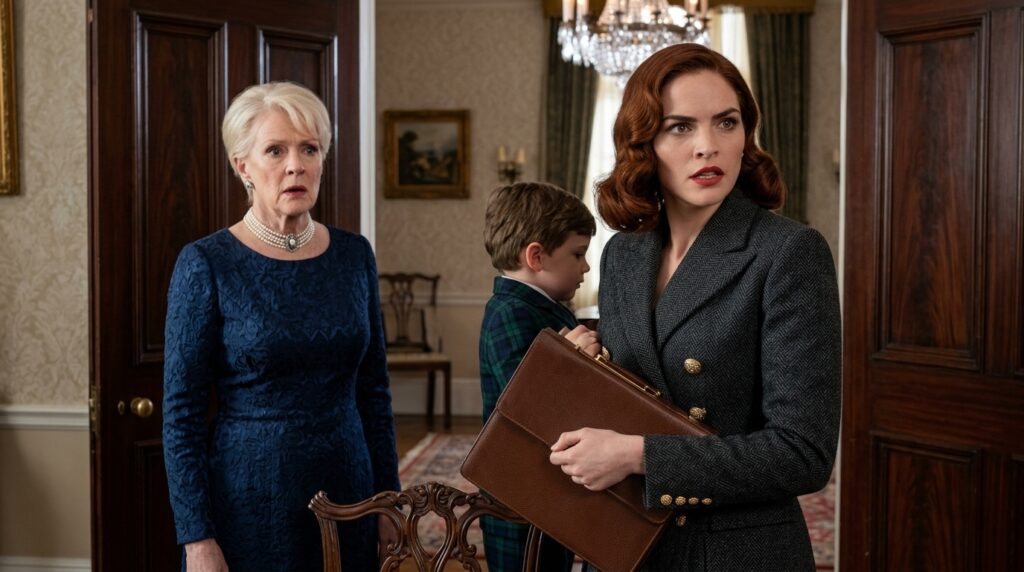
Chapter 1: The Boy Who Owned Everything
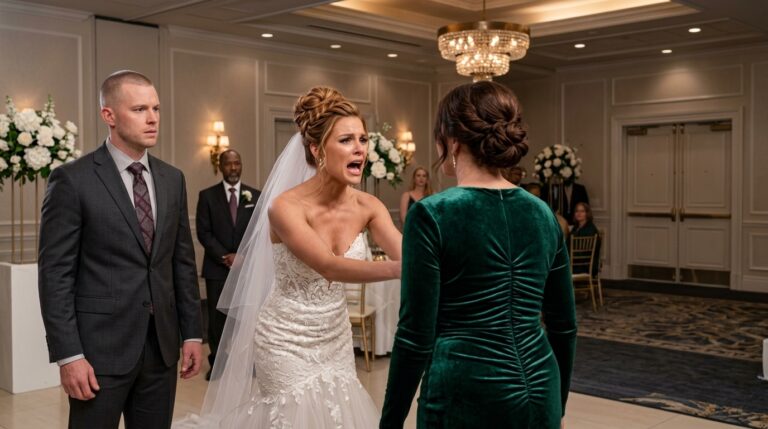
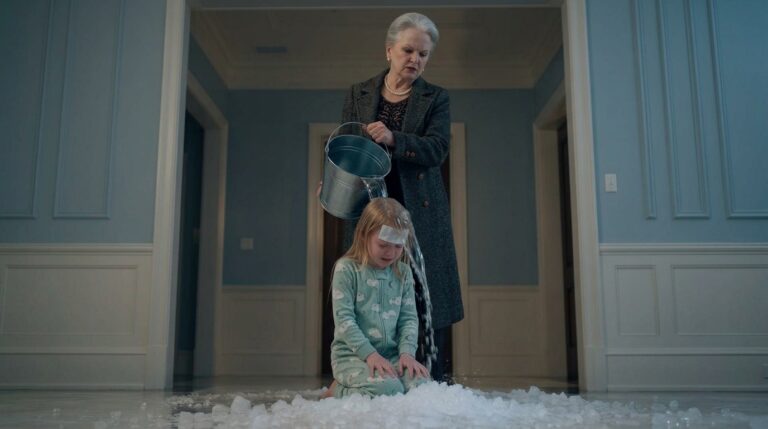
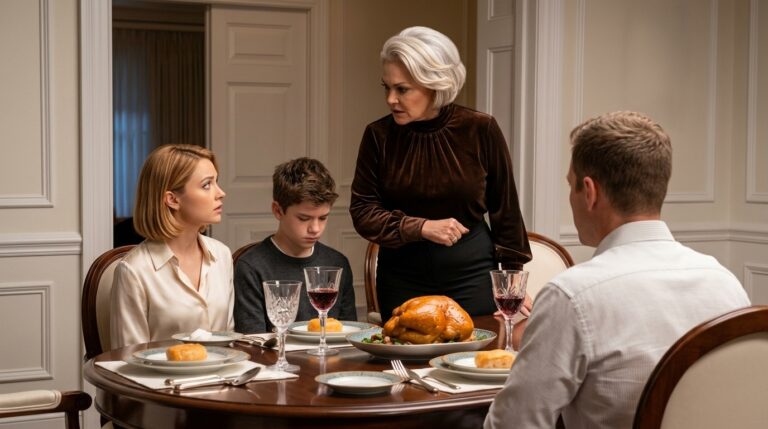
There was food scattered across the marble floor.
And Noah was crying while Evelyn held his hair and pushed his face down toward it.
“Eat it,” she said.
My son looked up at me with tears streaming down his face.
“Mommy…
please…”
The relatives were laughing.
My husband Daniel sat at the head of the table with a glass of wine in his hand.
He saw everything.
And he did nothing.
Evelyn said the house should have belonged to her bloodline.
That was when I understood.
She was punishing my son because my father left the mansion to me and Noah.
So I pulled her hand out of his hair.
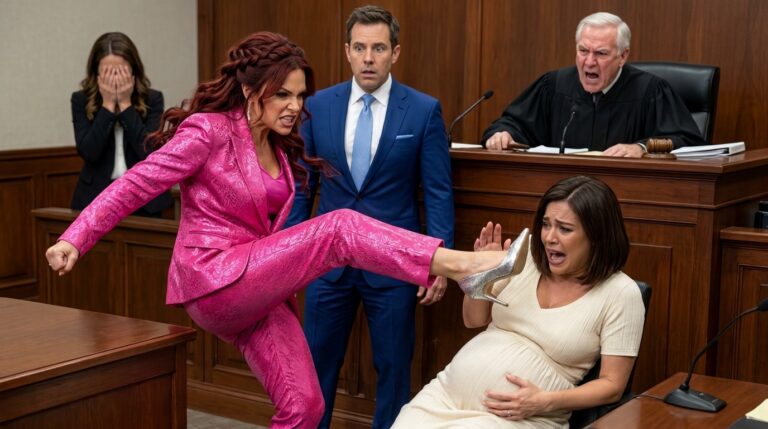
Then I sl@pped Daniel for watching.
And when the family kept staring at me like I was the problem…
I flipped the entire dinner table.
Plates shattered.
Wine spilled everywhere.
Then I opened the legal folder.
The deed.
The trust papers.
The inheritance documents.
Every page had my name.
And Noah’s.
Evelyn went pale.
Because the little boy she forced to eat from the floor…
owned the house she thought she controlled.
What will Evelyn do now that the truth is on the table?
Chapter 2: The Envelope Nobody Was Supposed to See
Evelyn’s hands were shaking.
She grabbed the deed off the table and read it twice.
Then a third time.
“This is forged,” she said.
“It has to be.”
“It was filed six months ago,” I told her.
“By my father’s attorney.
Call him if you want.”
Daniel hadn’t moved from his chair.
He was still holding his wine glass.
But his face had changed.
He knew.
I looked at him.
“You knew about this, didn’t you?”
He said nothing.
“Daniel.”
He set the glass down slowly.
“It wasn’t supposed to happen this way.”
Noah was still on the floor.
I pulled him up and held him against me.
His whole body was trembling.
Evelyn pointed at my son.
“He is a child.
He cannot own anything.
We will contest this.”
“Contest it with what?” I said.
“Your name isn’t on a single page.”
That was when Evelyn’s daughter Margaret stood up from the far end of the table.
She had been quiet the entire night.
She reached into her bag and pulled out an envelope.
Her face was unreadable.
“Mom,” she said quietly.
“Stop.
Before this gets worse.”
Evelyn froze.
“Margaret.
Put that away.”
“I can’t.”
The room went completely still.
Whatever was inside that envelope…
Evelyn was terrified of it.
What Margaret revealed next exposed a secret Evelyn had buried for years.
The full story is in the link below — and the truth is more shocking than anyone at that table expected.
Chapter 3: What Margaret Knew
Margaret didn’t open the envelope right away.
She held it in both hands and looked at her mother the way you look at someone you’ve been afraid of for a very long time.
“I found this three weeks ago,” she said.
“In the storage room.
Behind the water heater.”
Evelyn’s voice dropped to almost nothing.
“That is not yours.”
“No,” Margaret said.
“It’s not mine.
It’s not yours either.”
She set the envelope on the table — what was left of the table, pushed sideways now, wine still dripping from one edge onto the marble floor.
I watched Evelyn’s eyes follow it.
“Margaret, I am warning you—”
“You’ve been warning me my whole life.” Margaret’s voice didn’t shake.
“I’m done listening.”
She looked at me.
“Your name is Claire, right?”
“Yes,” I said.
“Your father’s name was Robert Hargrove.”
“It was.”
She nodded slowly.
“Then this belongs to you.”
I reached across and took the envelope.
My hands were steadier than I expected.
Noah pressed his face against my side and I felt him breathing — short, shallow breaths, still coming down from what had happened.
Inside the envelope were two documents.
The first was a letter.
Handwritten.
Dated eleven years ago.
I recognized my father’s handwriting immediately.
*If you are reading this, then I was not able to tell Claire myself.
I need you to know that the decision about the mansion was made a long time ago.
It was never negotiable.
Claire is my daughter.
Noah, when he comes, will be my grandchild.
The house belongs to them.
It has always belonged to them.
Do not let anyone tell them otherwise.*
*— Robert*
My throat closed.
The second document was a copy of a letter from Evelyn to my father’s attorney, sent eight years ago.
Before my father passed.
Before Noah was born.
In it, she had asked the attorney to redirect the inheritance.
To have the mansion placed in a family trust — controlled by her.
The attorney had refused.
She had tried anyway.
I looked up from the pages.
The room was very quiet.
“She knew,” I said.
Not to anyone in particular.
Just to the air.
“She’s always known,” Margaret said.
“That’s why she hated Noah from the beginning.
It wasn’t about bloodlines.
It was about the fact that your father chose you, and she couldn’t undo it.”
Evelyn’s chair scraped back.
“You have no idea what you’re talking about,” she said.
“Either of you.”
“Then explain it,” I said.
“Explain the letter to the attorney.
Explain why you tried to have the trust redirected before my father was even gone.”
She didn’t answer.
“Explain why you just held my six-year-old son’s face toward the floor.”
Still nothing.
Daniel finally spoke.
He was looking at the table, not at me.
“Evelyn told me the documents were being contested.
She said there was a legal question about the inheritance.
She said we needed to wait.”
“And you believed her.”
He didn’t answer that either.
I folded my father’s letter carefully and put it back in the envelope.
“I want everyone out of this house,” I said.
“Tonight.”
Evelyn laughed.
It was a short, hard sound.
“You cannot remove us.
This is a family home.
You have no legal authority to—”
“I have the deed,” I said.
“My attorney’s number is on the last page of that folder.
Call yours.
See what they tell you.”
She picked up her handbag from the floor where it had fallen when the table went over.
“This is not finished,” she said.
“No,” I agreed.
“It isn’t.”
She walked toward the hallway.
Most of the relatives followed without a word — quickly, quietly, the way people leave a room when they know they were on the wrong side and don’t want to be remembered for it.
Margaret stayed.
Daniel stayed.
Noah had fallen asleep against my shoulder, his weight heavy and trusting.
Margaret looked at her mother’s empty chair.
“She’s going to fight this.”
“I know,” I said.
“She has money.
She has connections.
And she is not someone who accepts losing.”
I looked down at my son’s face.
His eyelashes were still damp.
“Neither am I,” I said.
Margaret glanced at the envelope in my hand.
Then at me.
Something shifted in her expression — not quite an apology, not quite an alliance.
Something in between.
“There’s more,” she said quietly.
“There’s something else she did.
Something worse than the letter.”
She reached into her bag again.
And this time, what she pulled out wasn’t paper.
It was a phone.
Chapter 4: What Was on the Phone
Margaret set the phone on the table face-up.
The screen showed a voice memo.
The timestamp read fourteen months ago.
“Press play,” she said.
I looked at her.
“What is this?”
“Just press it.”
I reached out and tapped the screen.
My father’s voice filled the room.
He sounded tired.
Older than I remembered.
But it was him — unmistakably him — and the sound of it hit me somewhere behind my ribs.
*”I know what you’re trying to do, Evelyn.
I’ve known for a while now.
You’ve been speaking to my attorney without my permission.
You’ve been telling people in this family that I’m not of sound mind.
That I can’t make decisions for myself.”*
A pause.
Then Evelyn’s voice, smooth and careful.
*”Robert, I’m only trying to protect the family’s interests—”*
*”Claire is my family.
Noah is my family.
You have never accepted that.
Not once in thirty years.”*
*”She married into this family.
That doesn’t make her—”*
*”She is my daughter.”*
The silence on the recording lasted a long time.
*”I recorded this conversation,”* my father said, *”because I don’t trust you.
I want it on record that I am of sound mind, that my decisions are my own, and that if anything happens to the documents I’ve signed, I will know exactly where to look.”*
The recording ended.
I stood very still.
Noah stirred against me, shifted, went still again.
Daniel hadn’t moved.
He was staring at the phone on the table like it was something that had fallen from the ceiling.
“He knew,” I said.
“He knew she was trying to undermine him.”
“He recorded three conversations,” Margaret said.
“That’s the clearest one.
The other two are harder to listen to.”
“Why didn’t he tell me?”
“I think he didn’t want you to carry it while he was still alive.” She paused.
“He wanted you to have the house, not the fight.”
I sat down.
My legs had decided for me.
“How did you find the phone?”
“It was in a box in the storage room.
Labeled with your father’s name.
I think he left it there deliberately — somewhere Evelyn wouldn’t think to look, but someone eventually would.”
Evelyn had gone to the kitchen.
I could hear her on her own phone, her voice low and controlled, the words not quite audible.
Daniel looked at me for the first time since the table had gone over.
“Claire,” he said.
“Don’t.”
“I need to explain—”
“Not tonight.” I kept my voice level.
“Not in front of him.” I looked down at Noah.
He closed his mouth.
Margaret picked up the phone and held it out to me.
“You should keep this.
All three recordings.”
“Why are you doing this?” I asked her.
“She’s your mother.”
Margaret was quiet for a moment.
“She is.
And I love her.
But I watched what she did to that little boy tonight.” She glanced at Noah.
“I have a son too.
He’s four.
And I kept thinking — if someone did that to him—” She stopped.
“I can’t unknow what I know.
I can’t put that envelope back behind the water heater and pretend I never found it.”
I took the phone.
Evelyn walked back into the room.
She had composed herself.
Her posture was straight, her expression settled into something cold and deliberate.
“I’ve spoken to my attorney,” she said.
“We will be filing a challenge to the inheritance documents on the grounds of undue influence.
Your father was an elderly man in declining health.
There are questions about whether he was properly advised.”
“He recorded himself telling you he was of sound mind,” I said.
She looked at the phone in my hand.
Something moved across her face — fast, then gone.
“Recordings can be fabricated,” she said.
“So can accusations,” I said.
“We’ll let the courts decide.”
“Yes,” she said.
“We will.” She picked up her coat from the back of a chair.
“Enjoy the house tonight, Claire.
It may be the last quiet night you have in it for quite some time.”
She walked out.
The front door closed.
Margaret let out a long breath.
“She means it.
She will drag this out as long as she can.”
“I know.”
“Do you have an attorney?”
“I will by morning.”
She nodded.
Then she looked at Daniel.
“You should think very carefully about which side of this you want to be on.”
Daniel said nothing.
Margaret picked up her bag.
She paused at the doorway.
“Claire.
My father’s name was on some of those documents too — the ones from the attorney’s office.
The ones Evelyn sent.
He cosigned her letter.”
I looked at her.
“He’s been gone four years,” she said.
“But I thought you should know.”
She left.
The house was quiet now except for the sound of Noah breathing.
Daniel was still in his chair.
I looked at my husband — really looked at him — and tried to find the person I had married somewhere behind his expression.
I wasn’t sure he was still there.
“How long have you known?” I asked.
He picked up his wine glass.
Set it down again without drinking.
“Claire—”
“How long, Daniel.”
He looked at the floor.
“Two years,” he said.
Chapter 5: Two Years of Silence
I didn’t raise my voice.
There was nothing left in me for that.
The anger had burned through something and come out the other side as a kind of cold, flat clarity.
“Two years,” I said.
“She told me the inheritance was complicated.
That your father had made promises to different people.
That the documents might not hold up.”
“And you believed her.”
“She’s my mother, Claire.”
“She held our son’s face toward the floor.” I kept my voice even.
“Tonight.
In front of you.
And you sat there.”
He flinched.
It was small — a tightening around the eyes — but I saw it.
“I didn’t know she was going to do that.”
“But you knew something was wrong.
You’ve known for two years that she was trying to take what my father left to Noah.
And you said nothing.
Not to me.
Not once.”
He stood up.
Walked to the window.
The garden outside was dark, just the outline of the old oak tree my father had planted the year I was born.
“I thought it would resolve itself,” Daniel said.
“I thought if I stayed out of it, it would settle down.”
“It didn’t settle down.
It got worse.
Because nobody stopped her.”
He turned around.
“What did you want me to do?
She’s my mother.
You’re asking me to choose—”
“I’m not asking you to choose anything.
I’m telling you what happened.
Your mother tried to steal from our son.
And you knew.
And you let it go on.” I stood up carefully, shifting Noah’s weight.
He was deeply asleep now, his head heavy against my neck.
“I’m going to put him to bed.”
“Claire—”
“We can talk in the morning.
When he can’t hear us.”
I carried Noah upstairs.
His room was at the end of the hall, the one my father had painted pale blue the summer before Noah was born.
He had done it himself, my father — seventy-one years old, up a ladder with a roller brush, refusing help.
I laid Noah down and pulled the blanket up.
He didn’t wake.
I sat on the edge of his bed for a while in the dark.
My father had known Evelyn would fight.
He had recorded the conversations.
He had hidden the phone.
He had made sure the documents were filed and witnessed and airtight.
He had done everything he could think of to protect us — and still, somehow, his six-year-old great-grandchild had ended up on the floor of the dining room while the family laughed.
I took out my phone and sent a message to my friend Ruth, who had been a paralegal for twenty years before she retired.
*I need an attorney.
Someone who handles inheritance disputes.
It’s urgent.*
Her reply came back in four minutes.
*I know exactly who to call.
I’ll have a name for you by 8am.
Are you okay?*
I looked at Noah’s face in the dim light from the hallway.
*Not yet*, I typed back.
*But I will be.*
I went back downstairs.
Daniel was still in the kitchen.
He had made tea — two cups — and set one on the counter near me without saying anything.
I didn’t touch it.
“I need to ask you something,” I said.
“And I need you to tell me the truth.”
He nodded.
“Did you know about the letter?
The one Evelyn sent to my father’s attorney, trying to redirect the trust?”
He looked at the counter.
“She mentioned she had written to him.
She said it was just to ask questions.”
“It wasn’t questions.
It was an attempt to have the inheritance moved into her control.
The attorney refused and kept a copy.
Margaret found it.”
He was quiet.
“Daniel.
Did you know what was in that letter?”
“Not exactly.”
“That’s not an answer.”
He looked up.
“I knew she was trying to find a way to keep the house in the family.
Her version of the family.”
“Her version doesn’t include Noah.”
“I know that.”
“Then why—”
“Because I didn’t want to fight her.” His voice cracked slightly on the last word.
“I know how that sounds.
I know it’s not good enough.
But she is relentless, Claire.
You don’t know what it’s like to grow up with her.
When she decides something, she doesn’t stop.
She never stops.
And I thought — I thought if the documents were solid, she’d eventually accept it.”
“She will never accept it,” I said.
“And now she’s filing a legal challenge.
And our son’s inheritance is going to be dragged through a courtroom because you decided not to fight her.”
He had no answer for that.
I picked up the legal folder from where it had landed near the wall when the table went over.
I straightened the pages.
The deed was slightly wine-stained at the corner, but readable.
“I’m meeting with an attorney this week,” I said.
“I’m going to handle this.
With or without you.”
“I want to help.”
“Then I need to know everything.
Every conversation you had with her about this.
Every name she mentioned.
Every plan she told you about, even the ones that seemed small.” I looked at him directly.
“Everything, Daniel.
Because if I walk into that attorney’s office and something comes out that you didn’t tell me, I won’t forgive it.”
He nodded.
“Okay.”
“Okay isn’t enough.
I need you to say it.”
“I’ll tell you everything,” he said.
“I promise.”
I held his gaze for a moment.
Then I picked up the folder and went to my father’s old study to start writing it all down.
I was halfway through the second page when my phone rang.
Unknown number.
Late — nearly midnight.
I answered it.
“Mrs.
Hargrove?” A man’s voice.
Formal.
Careful.
“Yes.”
“My name is Gerald Fitch.
I was your father’s attorney.
I’ve been trying to reach you for several days.” A pause.
“I think we need to meet.
There are documents your father left that you haven’t seen yet.
Documents he specifically asked me not to release until after the first family gathering following his passing.”
I set down my pen.
“He planned for this,” I said.
“Yes,” Gerald Fitch said.
“He planned for quite a lot.”
Chapter 6: What Robert Left Behind
Gerald Fitch’s office was on the fourth floor of a building downtown, the kind of office that had been there for forty years and looked it — dark wood, framed certificates, a window that faced a brick wall.
He was older than I expected.
Seventy, maybe more.
He had known my father for thirty years.
He shook my hand and looked at me for a moment before saying anything.
“You have his eyes,” he said.
“Robert always said that.”
I sat down across from his desk.
Daniel was not with me.
I had come alone.
Gerald opened a drawer and set a sealed envelope on the desk between us.
My name was written on the front in my father’s handwriting.
“He left this with me four years ago,” Gerald said.
“With instructions.
He told me that Evelyn would challenge the inheritance.
He was certain of it.
He said — and I’m quoting him — ‘She has been planning this since the day Claire married into that family.'”
“He knew her that well.”
“He did.
He also knew that a simple will and deed might not be enough.
So he prepared additional documentation.” Gerald opened a second folder.
“A statutory declaration of testamentary capacity, signed by two independent physicians and witnessed by a judge, dated three years ago.
It confirms that your father was of entirely sound mind when he made his decisions about the estate.”
I looked at the document.
The signatures were clear.
The date was clear.
“She was going to claim undue influence,” I said.
“That he wasn’t properly advised.”
“Yes.
He anticipated that argument specifically.” Gerald pulled out another page.
“He also left a written statement, notarized, in which he describes in his own words why he made the choices he made.
Why the house went to you and Noah.
Why no other family member was included.” He slid it across the desk.
“I’d like you to read it.”
I picked it up.
My father’s handwriting.
Careful and deliberate, the way he wrote everything.
*I am writing this because I know there will be questions after I am gone.
I want the record to be clear.*
*I leave the mansion and all associated property to my daughter Claire and her son Noah because they are my family.
Not because of legal obligation.
Not because of pressure from anyone.
Because Claire has been present, loyal, and loving every year of my life that mattered.
Because Noah carries something good in him that I want to protect.*
*I do not leave the property to any other member of the extended family because I do not trust that it would be used well.
I have seen how some of them treat people they consider beneath them.
I will not reward that.*
*If anyone challenges this decision, let them challenge it.
The documents are solid.
The intentions are clear.
And I have made certain that the truth will be available to anyone who looks for it.*
*Take care of the oak tree.
I planted it the year Claire came home.*
I set the letter down.
Gerald waited.
“He thought of everything,” I said.
“He was a thorough man.” Gerald folded his hands on the desk.
“Mrs.
Hargrove, I want to be direct with you.
Evelyn’s challenge will fail.
The documentation is too strong.
But it will take time, and it will be unpleasant.
She will push every angle she can find.”
“I know.”
“Do you have an attorney of your own?”
“I’m meeting with one tomorrow morning.
Ruth Calloway’s recommendation.”
He nodded.
“Patricia Osei.
Good.
She’s excellent.” He paused.
“There is one more thing I need to tell you.
Something your father asked me to mention only in person, not in writing.”
I looked at him.
“Evelyn has approached two other family members in the past eighteen months.
She has been building a case — gathering statements, collecting anything she could use to suggest your father was confused or influenced in his final years.
She has been doing this quietly and carefully.”
“Who did she approach?”
“Your father’s brother, William.
And a cousin named Patrick.
Both of them gave her written statements.”
“Saying what?”
“Saying that your father had expressed doubts about the inheritance.
That he had mentioned, in passing, that he wasn’t sure Noah should be the primary beneficiary.” Gerald’s expression was steady.
“Those statements are false.
I know they are false because I spoke with your father regularly until six weeks before he passed, and he never wavered.
Not once.”
“Can you say that in court?”
“I already intend to.” He picked up a pen.
“I have my own notes from every meeting.
Dated, detailed, and kept in a separate secure location precisely because your father asked me to be careful.”
I sat back in my chair.
The full shape of it was becoming clear — not just Evelyn’s anger at the dinner table, not just the letter to the attorney, but something longer and more deliberate.
A campaign.
Planned over years.
Quiet and patient and thorough.
She had been building this since before Noah could walk.
“She really thought she could win,” I said.
“She still thinks she can,” Gerald said.
“Don’t underestimate her because she failed last night.
Last night was a reaction.
What she does next will be calculated.”
I picked up my father’s letter again and read the last line.
*Take care of the oak tree.
I planted it the year Claire came home.*
“I will,” I said quietly.
To him, not to Gerald.
Gerald walked me to the door.
In the elevator on the way down, my phone showed a message from an unknown number.
*Back off now and we can keep this quiet.
Push further and I will make sure everyone knows what kind of mother lets her child be used as a pawn in an inheritance dispute.*
I read it twice.
Then I forwarded it to Patricia Osei’s office with a single line: *This just arrived.
Adding it to the file.*
The elevator doors opened.
I walked out into the morning.
Chapter 7: The Hearing
Patricia Osei was exactly what Ruth had promised — direct, unhurried, and completely unimpressed by Evelyn.
“She filed the challenge yesterday afternoon,” Patricia said, sliding a document across her desk.
“Grounds of undue influence and diminished capacity.
Standard approach when someone doesn’t have a real case.”
“My father left a statutory declaration signed by two physicians and a judge.”
“I’ve seen it.
Gerald sent everything over this morning.” Patricia leaned back.
“Here’s where we are.
The challenge will go to a preliminary hearing.
The judge will look at the documentation and decide whether there’s enough to proceed to a full trial.
Given what your father prepared, I expect the challenge to be dismissed at that stage.”
“How long?”
“Six to eight weeks for the preliminary hearing.
Possibly less.”
“And in the meantime?”
“The property remains in your name.
You have full legal possession.
She cannot remove you, sell anything, or access the estate in any way.” Patricia paused.
“However, I want you to be careful.
She will be looking for anything she can use.
Any argument, any incident, anything that could be framed as instability or conflict.”
I thought of the message on my phone.
I showed it to her.
Patricia read it.
Her expression didn’t change, but she took a photo of the screen with her own phone.
“Attempted intimidation,” she said.
“That goes in the file.
If there’s a second message, call me before you respond.
Don’t respond at all, actually.
Just forward it.”
“Understood.”
She looked at me.
“How is your husband handling this?”
“He’s cooperating.
He gave me a full account of every conversation he had with Evelyn about the inheritance.
I’ve written it all down.”
“I’ll need that.
Can you send it today?”
“Yes.”
“And the recordings from your father’s phone?”
“Gerald has copies.
I have the originals.”
Patricia nodded slowly.
“Your father was a careful man.”
“He was.”
She closed the folder.
“One more thing.
Evelyn’s attorney contacted me this morning.
He made an informal offer — they’ll drop the challenge if you agree to a private settlement.
A cash payment to Evelyn and a right of residence in the east wing of the mansion for the remainder of her life.”
I looked at her.
“My answer is no.”
“I expected that.
I told him we’d need to discuss it.” She smiled slightly.
“I’ve now discussed it.”
The preliminary hearing was scheduled for a Thursday morning six weeks later.
I was there.
Patricia was beside me.
Gerald sat three rows back as a witness.
Evelyn arrived with her attorney and two of the relatives who had been at the dinner — William and Patrick, the ones who had given her written statements.
She was dressed carefully.
Composed.
She looked at me once when she came in and then looked away.
Her attorney presented the challenge.
He spoke for twenty minutes about Robert Hargrove’s age, his health in his final years, the influence of a devoted daughter, the possibility that decisions had been made under emotional pressure rather than clear judgment.
Then Patricia stood up.
She presented the statutory declaration.
The physician statements.
The judge’s witness signature.
Gerald’s contemporaneous notes from thirty years of meetings.
The recorded conversations in which my father explicitly stated he was of sound mind and that his decisions were his own.
Then she played the recording.
My father’s voice filled the hearing room.
*”I recorded this conversation because I don’t trust you.
I want it on record that I am of sound mind, that my decisions are my own, and that if anything happens to the documents I’ve signed, I will know exactly where to look.”*
William shifted in his seat.
Patrick looked at the floor.
The judge asked Evelyn’s attorney two questions.
He struggled with both.
Then the judge looked at the documentation for a long moment.
“The challenge is dismissed,” she said.
“The inheritance documents stand as filed.
The estate remains with the named beneficiaries.”
Evelyn’s attorney said something quietly to her.
She didn’t move.
“Furthermore,” the judge continued, “I am noting for the record that the intimidation message sent to Mrs.
Hargrove during the period of dispute will be referred for review.
Counsel will receive written notice.”
Evelyn stood up.
She looked at me across the room.
“This isn’t over,” she said.
Her attorney touched her arm.
She pulled it away.
“Evelyn,” Patricia said calmly, “the judge has ruled.
The documents are valid.
The estate belongs to Claire and Noah.
There is nothing left to contest.”
Evelyn picked up her bag.
“You think a piece of paper protects you,” she said to me.
“It doesn’t protect you from family.”
She walked out.
The door swung shut behind her.
Patricia gathered her folders without hurrying.
“She’ll try something else,” she said quietly.
“Not legally.
She’s out of legal options.
But watch your surroundings for a while.”
I nodded.
Gerald appeared at my shoulder.
He shook my hand.
“Robert would be pleased,” he said.
I looked at the empty doorway where Evelyn had gone.
“Not yet,” I said.
“But soon.”
That evening I came home to find the front door of the mansion standing open.
Chapter 8: The Open Door
I stood on the front step and looked at the door.
It was open about six inches.
No sound from inside.
The hallway light was on.
I called Daniel.
He picked up on the second ring.
“Are you home?” I asked.
“I’m at the office.
I won’t be back until seven.
Why?”
“The front door is open.”
A pause.
“I locked it this morning.
I’m certain I locked it.”
I pushed the door open slowly with my hand and stepped inside.
The hallway was undisturbed.
The coats on the rack.
The side table with the bowl where we kept keys.
The framed photograph of my father and me at the bottom of the stairs — the one taken the summer Noah was born.
I walked through each room.
Nothing was missing.
Nothing was moved.
Except in my father’s study.
The desk drawer was open.
Not ransacked — just open, the way someone leaves a drawer when they’ve looked through it carefully and tried to put things back.
The folder with the copies of the inheritance documents was still there.
But the photograph that had always sat on the corner of the desk — my father and my mother on their wedding day — was face-down.
Someone had been in this room.
I called Patricia.
“Don’t touch anything else,” she said.
“Call the police and have them document it.
Even if nothing was taken, you want a record.”
“She has a key,” I said.
“Evelyn has a key.
She’s lived in this house for years.”
“Change the locks tonight.
I’ll have a locksmith there within the hour.”
The police came.
They documented the open drawer, the face-down photograph, the unlocked door.
No sign of forced entry.
No damage.
The officer who took my statement looked at the study and then at me.
“Is there anyone who had access to the property who shouldn’t be here?”
“Yes,” I said.
“My mother-in-law.”
He wrote it down.
The locksmith came at seven.
Daniel arrived home while the locks were being changed.
He stood in the hallway and looked at the study door.
“She was here,” he said.
It wasn’t a question.
“Someone was.”
He was quiet for a moment.
Then he walked to the study and looked at the desk.
He reached out and turned the photograph right-side up.
“My mother gave them that photograph,” he said.
“As a wedding gift.
To your parents.”
“I know.”
“She turned it face-down.”
“Yes.”
He stood there looking at it.
Something was working through him — I could see it in the set of his shoulders, the way he wasn’t moving.
“Daniel.”
He turned around.
“She’s not going to stop,” I said.
“You know that now.
She lost in court today and she came here anyway.
She will keep coming.”
“I know.”
“So I need to know where you stand.
Not in principle.
Practically.
If she calls you, if she asks you to meet her, if she tries to use you to get information about what I’m doing — what are you going to do?”
He looked at me for a long time.
“I’m going to tell her I can’t help her,” he said.
“And then I’m going to tell you she called.”
“Every time?”
“Every time.”
I studied his face.
He looked tired.
He looked like a man who had been carrying something heavy for two years and had finally set it down and wasn’t sure what to do with his empty hands.
“Okay,” I said.
Noah came downstairs in his pajamas, drawn by the noise of the locksmith.
He looked at the man at the door and then at me.
“Mommy, why is someone changing the locks?”
“Because we’re making the house safer,” I said.
He thought about this.
“Like a fortress?”
“Exactly like a fortress.”
He seemed satisfied with that.
He went back upstairs.
Daniel watched him go.
“I’m sorry,” he said.
“For the two years.
For not telling you.
For sitting at that table and not moving.” His voice was low.
“I’m sorry, Claire.”
I didn’t answer right away.
“I know,” I said finally.
“But sorry doesn’t fix it.
What you do next does.”
He nodded.
The locksmith handed me two new sets of keys.
I gave one set to Daniel and kept the other.
I did not send a set to Evelyn.
Three days later, Margaret called.
“She’s planning something,” she said without preamble.
“I don’t know exactly what.
But she’s been on the phone constantly and she had a man I don’t recognize at the house yesterday for two hours.
She wouldn’t tell me who he was.”
“What did he look like?”
“Fifties.
Suit.
Briefcase.
Not her usual attorney — I know what he looks like.”
“Did you hear anything?”
“One thing.
She said — and I’m quoting her exactly — ‘The boy is the weak point.
Not the mother.'”
The line was quiet for a moment.
“Margaret,” I said carefully.
“What does she mean by that?”
“I don’t know.
But Claire — watch Noah.”
Chapter 9: The Weak Point
I called Patricia the same afternoon.
“She said Noah is the weak point,” I told her.
“A man with a briefcase.
Not her usual attorney.”
“Could be a private investigator,” Patricia said.
“Could be someone looking at the trust structure from a different angle.
If Noah is a minor beneficiary, there are specific legal arguments that can be made about guardianship and management of assets.”
“What kind of arguments?”
“That a child cannot meaningfully hold property.
That a guardian should be appointed to manage the inheritance on his behalf.
If she can get a court to appoint a guardian — someone she chooses or influences — she could effectively control the estate without owning it.”
I sat down.
“Can she do that?”
“She can try.
It would require her to argue that the current guardianship arrangement — you — is somehow inadequate.
She would need to find evidence that you are not managing the property in Noah’s best interests.”
“I’m his mother.”
“Yes.
Which makes it very difficult for her.
But not impossible, if she manufactures the right circumstances.”
“What circumstances?”
“Financial mismanagement.
Instability.
Conflict in the home.” A pause.
“The break-in at the house — if she staged it and you reacted badly, that could be framed as instability.
The dinner incident — the flipped table — could be framed as volatility.”
I thought about the relatives who had been there.
The ones who had laughed while Noah was on the floor.
The ones who had watched me flip the table and then followed Evelyn out quietly.
“She has witnesses,” I said.
“She has people who were there.
Whether they’ll testify for her is another question.” Patricia paused.
“Claire, I need you to do something that may feel counterintuitive.”
“What?”
“Nothing.
For the next two weeks, do nothing that could be observed or recorded.
No confrontations.
No contact with Evelyn.
No emotional reactions in public.
Be the most boring, stable, unremarkable person in the county.”
“And if she contacts me?”
“Forward it to me.
Don’t respond.”
I agreed.
For two weeks, I was quiet.
I took Noah to school.
I came home.
I worked.
I had dinner with Daniel, who had started talking to me again — really talking, the way we used to, before whatever had shifted between us in those two years of his silence.
Evelyn called once.
I forwarded it to Patricia without listening to the voicemail.
Daniel’s phone rang twice with her number.
Both times, he answered it in front of me, put it on speaker, and said: “Mom, I can’t help you with this.
Don’t call about the house again.” Both times she hung up without responding.
On the fifteenth day, Patricia called me.
“We found out who the man with the briefcase was,” she said.
“His name is Stuart Crane.
He’s not an attorney.
He’s a family court consultant — he advises people on guardianship applications.”
“She’s going to file for guardianship.”
“She was going to.
Past tense.” A pause, and I could hear something in Patricia’s voice — a careful steadiness that meant good news she didn’t want to oversell.
“Stuart Crane withdrew from the case this morning.
He sent a letter to her attorney saying he was unable to assist.”
“Why?”
“Because Margaret called him.
She told him what she witnessed at the dinner.
She told him about Noah on the floor.
She told him what Evelyn said about the boy being the weak point.” Patricia paused.
“She also told him she would testify to all of it, in any proceeding, under oath.”
I pressed my hand flat against the kitchen counter.
“Margaret did that.”
“She called him directly.
She found his name somehow — I don’t know how — and she called him and told him everything.”
I looked out the kitchen window at the oak tree in the garden.
The leaves had started to turn.
My father had planted it the year I came home.
“Is it over?” I asked.
“The guardianship angle is closed.
She’s out of legal options — the inheritance challenge failed, the intimidation message is under review, and now this.” Patricia’s voice was measured.
“But Claire, I want to be honest with you.
Someone like Evelyn doesn’t always work through legal channels.
The legal fight is over.
What she does outside of it — that I can’t predict.”
“I understand.”
“How are you doing?
Genuinely.”
I thought about it.
“I’m tired,” I said.
“But I’m okay.”
“Good.
Stay boring for a little while longer.”
I almost laughed.
“I’ll try.”
That evening, Noah sat at the kitchen table doing his homework.
Daniel was cooking.
The radio was on low.
Noah looked up from his worksheet.
“Mommy, is Grandma Evelyn going to come back?”
I sat down across from him.
“Why do you ask?”
He looked at his paper.
“At school today, Tyler said his grandma came back after she was angry and everything was okay again.
He said grandmas always come back.”
I looked at my son’s face — the careful, serious way he was watching me, waiting for the truth.
“Some grandmas do,” I said.
“But the most important thing is that you are safe.
And you are.
Okay?”
He nodded slowly.
“Okay.” Then: “Is this house really mine?”
“Yours and mine.
Great-grandpa Robert left it to us.”
Noah looked around the kitchen — the old tiles, the window over the sink, the garden outside going gold in the evening light.
“I like it here,” he said.
“Me too,” I said.
Daniel set a plate on the table.
He caught my eye over Noah’s head.
Something passed between us — not forgiveness exactly, not yet, but the beginning of the road back to it.
Noah picked up his pencil and went back to his homework.
Outside, the oak tree moved in the wind.
I was almost ready to believe it was over.
Then Margaret knocked on the door.
Chapter 10: What Margaret Came to Say
She was standing on the front step with her coat still on, her car running in the drive.
“I can’t stay,” she said.
“I just need to tell you something.”
“Come in.”
“I really can’t.
If she finds out I was here—” She stopped.
“She knows about Stuart Crane.
She knows I called him.
She’s not speaking to me.”
“Margaret—”
“I’m not here for sympathy.
I’m here because she said something tonight that frightened me.” She looked at me directly.
“She said she was going to make sure you understood what it meant to take something from this family.
Those were her exact words.
‘Make sure she understands.'”
“She’s threatened me before.”
“Not like this.
She wasn’t angry when she said it.
She was calm.” Margaret’s jaw tightened.
“My mother is frightening when she’s angry.
She is terrifying when she’s calm.”
I held the door.
“Come inside.
Please.”
She hesitated.
Then she stepped in.
Daniel came to the hallway.
He saw his sister and something moved across his face — relief, then worry.
“Maggie.”
“Don’t,” she said.
“I’m not here for a family moment.
I’m here because I think she’s going to do something to the property.”
“What do you mean?”
“There’s a man she’s been speaking to.
Not Crane, someone different.
She took a call from him in the garden so I couldn’t hear.
But I saw the name on her phone when it rang.” She looked at me.
“His name is Aldous Frey.
Does that mean anything to you?”
“No.”
“It meant something to her attorney.
I overheard him say the name on a call last week and his tone changed completely.” She pulled out her own phone and showed me a search result she’d already pulled up.
“Aldous Frey.
Property disputes.
He’s known for finding technical defects in inheritance documents.
Errors in filing, missing witnesses, procedural gaps.
If he finds one, even a small one, it can be used to delay or void a transfer.”
Patricia had told me the documents were solid.
But solid wasn’t the same as perfect.
“I need to call my attorney,” I said.
“Call her tonight,” Margaret said.
“Don’t wait until morning.”
She turned to go.
“Margaret.” Daniel’s voice stopped her at the door.
“Thank you.
For Crane.
For this.
For all of it.”
She looked at her brother for a moment.
“I didn’t do it for you,” she said.
“I did it for Noah.”
She left.
I called Patricia at nine in the evening.
She picked up.
“Aldous Frey,” I said.
A pause.
“Where did you hear that name?”
“Margaret.
Evelyn’s been in contact with him.”
“How long has Patricia been quiet for?” I asked.
“I’m thinking.” Another pause.
“Frey is legitimate.
He’s found real errors before — cases where documents were filed incorrectly, witnesses weren’t properly independent, dates were off.
He’s thorough.”
“Could he find something in my father’s documents?”
“Gerald filed everything.
Gerald has been doing this for forty years.” But her voice had a careful quality to it.
“I want to pull the original filings tonight and go through them myself.
Every page.
Every signature.
Every date.”
“Do you think there’s something there?”
“I think Evelyn is desperate and Frey is expensive and she wouldn’t be paying for expensive if she didn’t think she had something.” Patricia’s voice was steady.
“Go to sleep, Claire.
Let me work.
I’ll call you by seven in the morning.”
I did not sleep.
I lay in the dark and listened to the house — the old sounds of it, the settle and creak that I had known since childhood, the way the wind came through the gap under the study window that my father had always meant to fix.
At 6:47 in the morning, Patricia called.
“I found it,” she said.
My stomach dropped.
“One of the witness signatures on the trust amendment — the one filed four years ago — the witness address is listed as a business address, not a residential address.
It’s a minor procedural point.
Most judges would overlook it.”
“But Frey wouldn’t.”
“No.
He wouldn’t.” A pause.
“But here’s the thing, Claire.
I also found the solution.
Gerald kept a notarized affidavit from that same witness confirming their identity and address at the time of signing.
It was filed separately, as a backup.
Your father asked for it specifically.”
I closed my eyes.
“He planned for this too,” I said.
“He planned for Aldous Frey,” Patricia said.
“Or someone like him.
The affidavit closes the gap completely.
If Frey brings it to court, we present the affidavit, and the argument collapses in under ten minutes.”
I sat up in bed.
“So she has nothing.”
“She has nothing,” Patricia confirmed.
“I’ll prepare a formal response today and file it preemptively.
So that if Frey does bring anything, we’ve already answered it.”
I got up and went to the window.
The oak tree was there in the early morning light, still and solid.
My father had thought of everything.
Every attack.
Every angle.
Every small procedural gap that a desperate woman might try to use against his daughter and his great-grandchild.
He had thought of all of it, years before it happened, and he had quietly, carefully, built a wall around us.
I got dressed.
I went downstairs and made coffee.
When Noah came down for breakfast, I was already at the table.
“You’re up early,” he said.
“Couldn’t sleep.”
He climbed into his chair and reached for the cereal box.
“Is everything okay?”
“Everything is okay,” I said.
And this time, I meant it.
Chapter 11: The Last Move
Aldous Frey filed his findings with the court on a Wednesday.
Patricia had already filed our response the Friday before.
The judge reviewed both submissions and dismissed Frey’s challenge without a hearing.
The preemptive affidavit was cited directly in the ruling.
The procedural gap, the judge noted, had been anticipated and properly addressed at the time of filing.
Evelyn’s last legal option was gone.
Patricia called me when the ruling came through.
“It’s done,” she said.
“Completely done.
There are no remaining avenues for challenge.
The estate is yours and Noah’s in full, with no outstanding disputes.”
“What happens to the intimidation message referral?”
“Still under review.
That could result in a formal caution or a fine.
Her attorney will likely negotiate it down to nothing, but it will be on record.” A pause.
“Claire, I want to say something.”
“Go ahead.”
“In twenty-two years of practice, I have seen very few cases where someone prepared as thoroughly as your father did.
He didn’t just protect the inheritance.
He protected you.
Every argument Evelyn made, he had already answered.
Every gap she tried to find, he had already closed.” Her voice was quiet.
“He loved you very much.”
I was standing in the study when she said it.
The photograph of my parents was on the desk where Daniel had set it right-side up the night the locks were changed.
“I know,” I said.
I thanked her and hung up.
I sat at my father’s desk for a while.
Then I called Evelyn.
She picked up on the fourth ring.
Her voice was flat.
“Claire.”
“The ruling came through this morning,” I said.
“Frey’s challenge was dismissed.
The estate stands.
It’s over.”
Silence.
“I’m not calling to gloat,” I said.
“I’m calling because I want to say something to you directly, and I want to say it once.”
She said nothing.
But she didn’t hang up.
“What you did to Noah at that dinner — I will not forget it.
He is six years old.
Whatever your feelings are about the inheritance, about me, about my father’s decisions — none of that had anything to do with him.
He was a child on the floor.
And you put him there.”
Still nothing.
“I’m not going to keep you from Daniel.
He’s your son and that’s between the two of you.
But I need you to understand that Noah will not be in a room with you unless I am there and unless I have decided it is safe.
That is not a negotiation.
That is how it is.”
A long pause.
“You think you’ve won,” Evelyn said.
“I think my father made sure his grandson would be protected,” I said.
“That’s all.”
“He chose you over his own family.”
“He chose his daughter and his great-grandchild.
That is his family.” I kept my voice level.
“Goodbye, Evelyn.”
I hung up.
Daniel was in the doorway.
He had heard.
He came in and sat in the chair across from the desk — the chair where visitors had always sat, where I had sat as a child when my father was working, where Gerald Fitch had sat for thirty years of meetings.
“How do you feel?” he asked.
“Tired,” I said.
“Relieved.
Sad, a little.”
“Sad?”
“It shouldn’t have been like this.
She could have just — let it be.
My father made his choices.
She could have accepted them.”
“She couldn’t,” Daniel said.
“She’s never been able to accept anything she didn’t control.”
“I know.” I looked at the photograph on the desk.
“What about you?
How do you feel?”
He thought about it.
“Like I wasted two years.
Like I should have stood up at that table a long time before the dinner.” He paused.
“I keep thinking about Noah on the floor.
I keep seeing it.”
“Good,” I said.
Not cruelly.
Just honestly.
He looked at me.
“I mean that you should remember it,” I said.
“Not to punish yourself.
But so that the next time someone asks you to look away from something — you don’t.”
He nodded slowly.
“Fair.”
We sat in the study for a while without talking.
The afternoon light came through the window and moved across the floor the way it always had.
“Patricia said there may be a formal caution about the intimidation message,” I said.
“Will that affect her?”
“Probably not much.
But it’ll be on record.”
He nodded.
“Margaret called this morning,” he said.
“Before the ruling.
She wanted to know how it was going.”
“What did you tell her?”
“That we were waiting.
She said to tell you she was thinking of you.”
I thought of Margaret at the dinner table, quiet all evening, and then standing up with the envelope.
Margaret finding the phone behind the water heater.
Margaret calling Stuart Crane.
Margaret on the front step in her coat, her car still running.
“Tell her thank you,” I said.
“Tell her I’d like to have coffee with her sometime.
If she wants.”
Daniel looked at me with something that might have been surprise, or might have been gratitude.
“I will,” he said.
Noah came home from school at half past three.
He dropped his bag at the door and came looking for me.
I was in the kitchen.
“How was school?” I asked.
“Good.
We learned about trees.” He climbed onto a stool at the counter.
“Did you know oak trees can live for five hundred years?”
“I did know that.”
“Ours is going to live that long,” he said confidently.
“I’m going to make sure.”
I looked at my son — his certainty, his complete and uncomplicated sense that the oak tree was his to look after, that the house was his, that this was simply where he belonged.
My father had known this about him before Noah could even speak.
Had seen something in this child worth protecting.
Had spent years quietly building walls so that when the time came, Noah would be safe inside them.
“Great-grandpa Robert would like that,” I said.
Noah nodded seriously.
“I know.
That’s why I’m going to do it.”
He slid off the stool and went to find his snack.
I stayed at the counter for a moment.
Then I poured one cup of tea, carried it to the study, and sat at my father’s desk.
I set the cup down next to his photograph.
Outside, the oak tree stood in the late afternoon light, solid and unhurried, exactly where he had planted it.
I didn’t need to say anything.
He already knew.
Some people spend years quietly building walls to protect the ones they love — and we only understand how strong those walls were when someone tries to tear them down.
Have you ever had someone fight for you in ways you didn’t fully see until it was too late to thank them?
Share your story in the comments — we read every one.