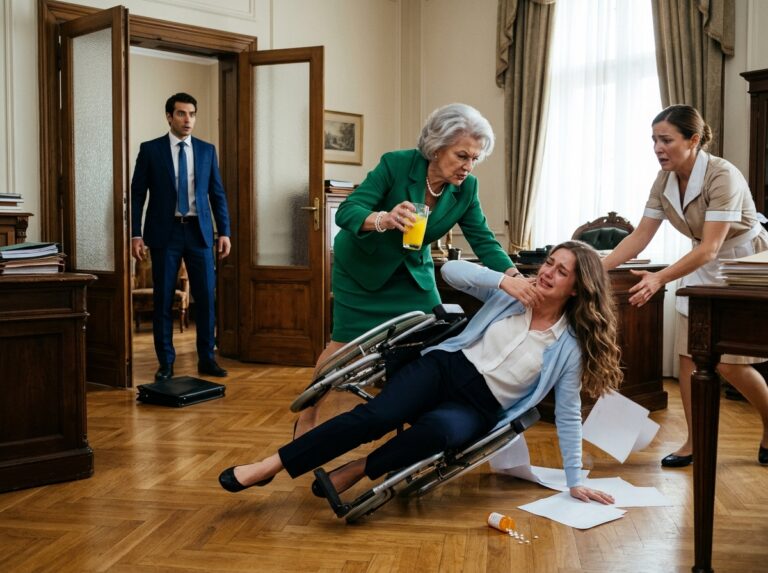
“# PART 2 — THEY THOUGHT THE COUNTY BELONGED TO THEM. THEN THE MAJOR OPENED A FILE THAT COULD DESTROY THE ENTIRE SHAW EMPIRE.
The first mistake Margaret Shaw made was believing my wife would never wake up.
The second was assuming that because I wore an Army uniform, I had no power outside a battlefield.
By midnight, I would discover something far worse than a family conspiracy.
Someone inside the United States defense establishment had helped arrange my wife’s murder.
And the person who had ordered it was still standing outside her hospital room.
My name is Grant Rowan.
I had been home from deployment for less than three hours when Detective Harold Finch followed me into the hospital’s deserted stairwell.
He closed the fire door behind us.
“”Major, before you do anything, you need to understand what you’re walking into.””
I studied his face.
“”Then stop talking around it.””
Finch removed a folded photograph from his jacket.
It showed our house.
Our white farmhouse.
The porch Evelyn had painted herself. The garden she had planted. The little wooden swing where we used to drink coffee on Sunday mornings.
But the photograph had been taken from inside our bedroom.
On the floor lay a dark stain.
Beside it was a fireplace poker.
I felt something inside me turn cold.
“”Where did you get this?””
“”One of the first responding officers.””
“”Why isn’t it in the evidence report?””
Finch swallowed.
“”Because the evidence report was rewritten.””
I looked up.
“”By whom?””
“”Captain Daniel Voss.””
I recognized the name.
Voss was the sheriff’s second-in-command, a man who had attended Margaret Shaw’s charity dinners for years.
Finch continued.
“”The original report mentioned blood in the upstairs hallway, signs of restraint, and at least three different shoe impressions.””
“”And the revised report?””
“”One unidentified burglar. No evidence of accomplices.””
I stared at the photograph.
Someone had beaten my wife nearly to death, and the people responsible were already rewriting the crime scene.
“”Who ordered the changes?””
Finch shook his head.
“”I can’t prove it.””
“”Then tell me what you believe.””
He hesitated.
“”Margaret Shaw.””
I folded the photograph carefully.
“”Detective, are you willing to testify?””
His expression changed.
“”Against the Shaws?””
“”Against whoever committed a crime.””
Finch looked toward the stairwell door.
“”My daughter is seventeen, Major. She graduates next spring. Margaret Shaw sits on the scholarship board.””
I understood.
This wasn’t loyalty.
It was fear.
“”Then don’t make a decision tonight,”” I said. “”Just preserve everything you still have.””
Finch looked surprised.
“”You’re not going to threaten me?””
“”No. But if you destroy evidence, I’ll make sure the truth comes out about that too.””
He nodded once.
Then he whispered something that stopped me.
“”Your wife called 911 twice before the attack.””
My breath caught.
“”Twice?””
“”The first call was disconnected. The second lasted eleven seconds.””
“”What did she say?””
Finch’s eyes filled with shame.
“”That’s the problem, Major.””
He paused.
“”Someone deleted the recording.””
At 2:17 in the morning, I stood beside Evelyn’s hospital bed.
The machines surrounding her hummed softly.
Her face was almost unrecognizable beneath the bruising and swelling.
I remembered our wedding day.
Evelyn had worn a simple ivory dress, her auburn hair falling over her shoulders.
She had refused the expensive diamond necklace Margaret offered her.
Instead, she wore a little silver pendant shaped like a compass.
I’d given it to her when we were dating.
“”Wherever you go,”” I’d told her, “”you’ll always know how to find me.””
Now that same pendant rested on the bedside table.
Its chain was broken.
I picked it up.
“”Evelyn,”” I whispered, “”I’m going to find out what happened.””
Her fingers didn’t move.
Her eyes remained closed.
But I leaned closer anyway.
“”And I promise you something. I won’t become the kind of man they want me to become.””
I kissed her forehead gently.
“”Because when you wake up, I want you to recognize your husband.””
Behind me, someone cleared his throat.
Dr. Keene stood in the doorway.
“”Major Rowan?””
I turned.
“”There’s something you should know.””
He stepped inside and closed the door.
“”Your wife’s injuries weren’t the only thing we found.””
My stomach tightened.
“”What else?””
He lowered his voice.
“”She has older bruising around both upper arms. At least ten days old.””
I stared at him.
“”Someone hurt her before this?””
“”Possibly. We also found evidence suggesting she had been restrained on a separate occasion.””
The room seemed to shrink.
I thought of our last video call.
Evelyn had worn a long-sleeved sweater despite the warm weather.
She had smiled.
But her eyes had looked tired.
I’d asked whether everything was all right.
She’d answered, “”Just missing you.””
I had believed her because I wanted to.
“”Doctor, was she conscious when she arrived?””
“”Briefly.””
“”What did she say?””
Keene glanced toward the door.
“”She kept repeating one word.””
I gripped the bedrail.
“”What word?””
His face tightened.
“”Ledger.””
I blinked.
“”Ledger?””
“”Yes. We thought she might be referring to a financial document.””
Then he added, “”She also said, ‘Don’t let Mother take it.'””
I looked down at Evelyn.
My wife had been trying to tell someone something.
Even while fighting to stay alive.
And suddenly, I remembered the last package she’d mailed me overseas.
A small envelope.
Inside had been a photograph of us standing beside the ocean.
On the back, she’d written:
Some things are worth protecting, even when the whole world tells you to look away.
At the time, I thought it was a love note.
Now I wasn’t so sure.
By sunrise, Margaret Shaw had arranged a private meeting with the hospital’s chief executive.
She hadn’t invited me.
I found them in a conference room overlooking the parking lot.
Margaret sat at the head of the table.
Meredith stood beside her.
Two attorneys occupied the remaining chairs.
When I entered, conversation stopped.
Margaret didn’t rise.
“”Grant. This is a private family matter.””
I looked at the attorneys.
“”Then why are there lawyers?””
Meredith crossed her arms.
“”Because we’re discussing Evelyn’s long-term care.””
“”Without her husband?””
Margaret slid a folder across the table.
“”These are documents Evelyn signed before your deployment.””
I opened it.
Medical authorization.
Financial management.
Temporary guardianship provisions.
All assigning control to Margaret Shaw.
I examined the signatures.
They looked like Evelyn’s.
Almost.
But Evelyn always crossed the final stroke of her n in Rowan with a tiny upward flourish.
These signatures didn’t have it.
“”Who witnessed these?””
One attorney answered.
“”Two employees of Shaw Aeronautics.””
“”Of course.””
Margaret’s expression sharpened.
“”Don’t start.””
I closed the folder.
“”Evelyn never gave you authority over her life.””
“”You don’t know what she did while you were gone.””
“”Then let a court determine whether these documents are genuine.””
Meredith laughed.
“”A court? Grant, do you have any idea how many judges our family knows?””
I looked at her.
“”That sounds like something you should avoid saying in front of witnesses.””
Her smile disappeared.
Margaret leaned forward.
“”Listen carefully. Evelyn was unstable. She had become obsessed with imaginary wrongdoing at the company. She stole confidential documents. She threatened employees.””
I felt my heartbeat slow.
“”What documents?””
Margaret realized her mistake.
“”That isn’t relevant.””
“”It sounds extremely relevant.””
“”Your wife needed treatment, Grant.””
“”She needed protection.””
Margaret stood.
“”You were absent. We were here.””
I stepped closer.
“”And now she’s lying in intensive care with twenty-seven broken bones.””
The room went silent.
I placed the disputed documents on the table.
“”Nobody changes Evelyn’s care or removes anything from her room without lawful authorization. And nobody takes her anywhere.””
Margaret’s eyes narrowed.
“”Are you threatening us?””
“”No.””
I looked directly at her.
“”I’m telling you that Evelyn is not a company asset you can transfer between departments.””
Then I walked out.
Behind me, Margaret spoke softly.
“”Grant, you have no idea what your wife discovered.””
I stopped.
For the first time since arriving, Margaret looked genuinely frightened.
I turned.
“”Then perhaps you should tell me.””
She said nothing.
But I had seen enough.
Whatever Evelyn had uncovered was worth more to Margaret Shaw than her daughter’s life.
At 9:40 that morning, I received a call from an unfamiliar number.
“”Major Rowan?””
“”Speaking.””
A woman’s voice trembled.
“”My name is Rebecca Hale. I worked with your wife.””
“”At Shaw Aeronautics?””
“”Yes. In internal compliance.””
“”Where are you?””
“”Not somewhere safe.””
I moved into an empty consultation room.
“”Tell me what happened.””
Rebecca inhaled shakily.
“”Three months ago, Evelyn found discrepancies in a series of defense procurement contracts. Payments to subcontractors that didn’t exist. Equipment recorded as delivered that never arrived.””
“”How much money?””
“”Almost eighty million dollars.””
I closed my eyes.
“”Did she report it?””
“”She tried.””
“”To whom?””
“”The company’s board. Then the internal ethics office.””
“”And?””
“”Both reports disappeared.””
I leaned against the wall.
Rebecca continued.
“”Your wife contacted an outside investigator. Someone she believed was independent.””
“”Who?””
“”I don’t know his real name. But after their meeting, people started following her.””
I thought of the older bruises.
“”Did Margaret know?””
Rebecca’s voice cracked.
“”Major, Margaret was the one who ordered Evelyn’s access revoked.””
“”Why didn’t Evelyn come to me?””
“”She wanted to. But she believed someone was monitoring your communications.””
My blood ran cold.
That was no longer simply a corporate scandal.
“”Rebecca, listen carefully. Do you still have evidence?””
A pause.
“”Yes.””
“”Where?””
“”Evelyn made copies. She said there was one person she trusted to keep them safe.””
“”Who?””
Rebecca started crying.
“”She wouldn’t tell me. She only said the person had been invisible to her family for years.””
A sharp noise sounded on the other end.
Rebecca gasped.
“”Someone’s here.””
“”Rebecca?””
Footsteps.
A door slamming.
Then her voice returned, barely audible.
“”Major, ask Faith about the blue room.””
The call disconnected.
I immediately tried calling back.
No answer.
Ten minutes later, the number was no longer in service.
Faith Shaw was the youngest of Evelyn’s six sisters.
Twenty-four years old.
Quiet.
Often dismissed by Margaret as the family disappointment.
I found her in the hospital chapel.
She sat alone in the back pew, twisting a tissue between trembling fingers.
When she saw me, she stood.
“”Grant, I can’t talk to you.””
“”Rebecca Hale told me to ask about the blue room.””
Faith went white.
She grabbed the pew to steady herself.
“”Where is Rebecca?””
“”I don’t know.””
Faith covered her mouth.
“”Oh, God.””
I sat beside her.
“”Faith, look at me.””
She shook her head.
“”If Mother finds out—””
“”Your sister is fighting for her life.””
Tears spilled down Faith’s cheeks.
“”I know.””
“”Then help her.””
For a long moment, she stared at the stained-glass window.
Finally, she whispered, “”The blue room is in the old family estate.””
“”The house outside Ashford?””
She nodded.
“”It used to be our schoolroom when we were children. Mother turned it into a private records office.””
“”What happened there?””
Faith pressed both hands against her face.
“”Three weeks ago, Evelyn came to see Mother. She had documents. She said she knew about the missing money.””
I waited.
“”Mother told her she was confused. Evelyn refused to leave without answers.””
“”And?””
“”Meredith took her phone. Jocelyn locked the door.””
My jaw tightened.
“”Was Evelyn hurt?””
Faith nodded.
“”Mother ordered them to keep her there until she agreed to sign a statement saying she’d invented everything.””
“”How long?””
“”Two days.””
I felt sick.
Two days.
While I was overseas, my wife had been imprisoned inside her childhood home.
“”Did you help her escape?””
Faith began sobbing.
“”I brought her food. I tried to tell Mother it was wrong.””
“”That’s not what I asked.””
She looked at me.
“”Yes.””
My breath caught.
“”I opened the back door. Evelyn ran. She told me she had hidden the evidence somewhere they would never think to look.””
“”Where?””
“”I don’t know.””
“”Then what happened?””
Faith’s hands shook violently.
“”Mother said Evelyn had become dangerous. She said the family had to protect itself.””
“”Did she order the attack?””
Faith didn’t answer.
I waited.
Finally, she whispered, “”I heard Meredith speaking to someone on the telephone.””
“”What did she say?””
Faith looked directly into my eyes.
“”She said, ‘Make sure Grant comes home to a funeral, not a witness.'””
The words struck harder than any battlefield explosion.
I couldn’t speak.
Faith grabbed my sleeve.
“”Grant, there’s something else.””
“”What?””
“”The night Evelyn was attacked, Mother told all six of us to come to your house.””
I stared at her.
“”All six?””
Faith nodded.
“”She said Evelyn was going to apologize and return the documents.””
“”Did you go?””
“”Yes.””
“”Was Evelyn alive when you arrived?””
Faith’s face crumpled.
“”Yes.””
I could barely breathe.
“”Then tell me exactly what you saw.””
She began to shake.
“”Evelyn was standing in the living room. Meredith was holding her phone. Laurel and Paige were blocking the doorway.””
“”And Margaret?””
“”Mother was sitting in your chair.””
My hands curled into fists.
“”Go on.””
“”She told Evelyn to sign a confession admitting she’d stolen company records and fabricated the allegations.””
“”Did Evelyn sign?””
“”No.””
Faith looked at me through tears.
“”She said she’d rather die than let them steal from the soldiers who depended on that equipment.””
I lowered my head.
That was Evelyn.
Stubborn.
Brave.
Too brave for her own safety.
Faith continued.
“”Mother slapped her. Evelyn tried to leave. Jocelyn grabbed her arm.””
“”And then?””
“”Meredith hit her.””
The chapel seemed to tilt.
“”With what?””
“”A metal fireplace poker.””
I shut my eyes.
“”How many times?””
“”I don’t know. I screamed. I tried to stop them.””
Faith began crying uncontrollably.
“”Paige held Evelyn down. Laurel took the poker. Sabrina kept telling them to stop before someone heard.””
“”And your mother?””
Faith whispered the answer.
“”She watched.””
For several seconds, neither of us spoke.
Then I asked the question that mattered most.
“”Why didn’t you call the police?””
Faith stared at her hands.
“”Because Mother took my phone. She said if I told anyone, she’d make sure I was blamed too.””
I looked at the young woman beside me.
She had failed her sister.
But she was finally telling the truth.
“”Faith, I need you to give a formal statement.””
“”They’ll destroy me.””
“”Maybe they’ll try.””
I stood.
“”But Evelyn is still alive. And if you want to help her, the truth has to exist somewhere Margaret can’t erase it.””
Faith slowly nodded.
Then she reached into her handbag.
“”I have something.””
She handed me a small black memory card.
My pulse quickened.
“”What is this?””
Faith wiped her eyes.
“”The living room security camera.””
By afternoon, I had contacted a military legal assistance attorney, who helped me identify an independent civilian attorney experienced in federal contracting cases.
Through that attorney, the evidence was submitted to federal investigators.
I did not have authority to arrest civilians, seize company records, or command local police.
But I knew how to document evidence, preserve testimony, and recognize when a situation involved more than local jurisdiction.
And I knew one other thing.
The Shaw family’s influence depended on keeping every piece of evidence inside the county.
Faith’s memory card changed that.
At 5:15 p.m., I sat inside a secure interview room with Special Agent Elena Cross of the FBI.
She was in her forties, with sharp gray eyes and the exhausted expression of someone who had spent too many years listening to people lie.
Across from her sat Faith.
A forensic examiner had made a working copy of the video.
Cross pressed play.
The screen showed our living room.
Evelyn stood near the fireplace, wearing a blue sweater and jeans.
Margaret sat in my armchair.
Meredith stood beside her.
The remaining sisters were scattered around the room.
The audio was clear.
Margaret’s voice filled the room.
“”Sign the statement, Evelyn.””
“”No.””
“”You have no idea what you’re doing.””
“”I know exactly what I’m doing.””
Evelyn’s voice was steady.
“”You stole money from defense contracts. You falsified delivery records. And people could have died because of it.””
Margaret rose.
“”Lower your voice.””
“”Why? Afraid someone will hear the truth?””
Meredith stepped forward.
“”Give me the phone.””
Evelyn backed away.
“”Don’t touch me.””
Then Meredith struck her.
I flinched.
On the screen, Evelyn stumbled against the fireplace.
Jocelyn grabbed her wrist.
Paige moved behind her.
Then Margaret said something that made Agent Cross stop the recording.
“”The Major was supposed to be dead by now.””
Silence.
Cross rewound the video.
Played it again.
“”The Major was supposed to be dead by now.””
I stared at the screen.
“”What did she mean?””
Cross didn’t answer immediately.
Instead, she looked toward another agent.
“”Get the relevant deployment security contacts on the line.””
My skin prickled.
Seven months.
A classified mission.
Three separate incidents where our movements had seemed compromised.
A vehicle that had been directed onto the wrong route.
A supply transfer whose timing had somehow become known outside our unit.
I’d believed they were operational failures.
Now I wasn’t sure.
Cross turned toward me.
“”Major Rowan, I need you to answer something carefully.””
“”All right.””
“”Did Shaw Aeronautics provide equipment or logistical support connected to your deployment?””
“”Yes.””
“”What kind?””
“”Communications systems. Some transport components.””
Cross exchanged a look with her colleague.
Then she asked, “”Did anyone connected to Shaw Aeronautics know your assignment details?””
“”Not officially.””
“”And unofficially?””
I thought about Margaret’s connections.
Her government contracts.
Her political donors.
Her private dinners.
Then I remembered a conversation from eight months earlier.
Margaret had visited our home shortly before my deployment.
She’d asked whether I would be operating near a particular region.
I’d refused to answer.
She’d smiled.
“”Of course, Grant. Some things are better left unspoken.””
At the time, I thought she was simply being intrusive.
Now the memory felt poisonous.
Cross leaned forward.
“”We need to consider the possibility that your wife’s attack and your deployment security concerns are connected.””
I looked at Faith.
She was crying silently.
“”Then find out,”” I said.
Cross nodded.
“”We will.””
At 8:30 that evening, Margaret Shaw appeared on television.
She stood outside Shaw Aeronautics headquarters, surrounded by reporters.
Her expression was sorrowful.
Her pearls gleamed beneath the camera lights.
“”My family is devastated by Evelyn’s tragic injuries,”” she announced. “”Unfortunately, her husband has returned from an extremely stressful military deployment and is making reckless accusations.””
I watched from Evelyn’s hospital room.
Margaret continued.
“”We ask for privacy while medical professionals assess the situation.””
Then a reporter asked whether Shaw Aeronautics was under federal investigation.
Margaret smiled.
“”Absolutely not.””
I switched off the television.
Evelyn lay motionless beside me.
I sat down and took her hand.
“”Your mother always did love an audience.””
For a moment, I imagined Evelyn rolling her eyes.
Then something moved.
Her index finger.
Barely.
I froze.
“”Evelyn?””
Nothing.
I leaned closer.
“”Sweetheart, if you can hear me, squeeze my hand.””
A second passed.
Then another.
And suddenly—
Her finger curled around mine.
I almost stopped breathing.
“”Nurse!””
Two nurses hurried inside.
Dr. Keene arrived moments later.
He checked her pupils, reviewed the monitors, and spoke gently.
“”Evelyn, can you hear me?””
Her eyelids fluttered.
My heart hammered.
“”Come on, sweetheart.””
Slowly, painfully, her eyes opened.
One was badly swollen.
The other searched the room.
Then found me.
A tear slipped down her cheek.
“”Grant,”” she whispered faintly around the oxygen support that had replaced her ventilator earlier that day.
I leaned close.
“”I’m here.””
Her lips trembled.
“”I tried…””
“”Don’t talk. You’re safe.””
But Evelyn became agitated.
Her pulse climbed.
She gripped my fingers.
“”Not… safe.””
I looked at Dr. Keene.
He motioned for me to remain calm.
“”Evelyn, you don’t have to explain anything right now.””
She shook her head weakly.
Then forced out three words.
“”Not… my… mother.””
I stared at her.
“”What?””
Her breathing quickened.
“”Not… her…””
Dr. Keene stepped closer.
“”Major, she needs rest.””
But Evelyn tightened her grip.
Her eyes widened with terror.
And she whispered something I would never forget.
“”Grant… your commander.””
My blood turned cold.
Then she lost consciousness again.
The monitors continued their steady rhythm.
Dr. Keene checked her carefully.
“”She’s stable,”” he said. “”But she can’t tolerate this much exertion.””
I nodded without hearing him.
Your commander.
There was only one man Evelyn could have meant.
Brigadier General Thomas Wexler.
My commanding officer.
The man who had personally authorized my emergency return home.
The man who had told me he was praying for Evelyn.
And the man who had insisted I travel alone.
At 10:06 p.m., Agent Cross called.
“”Major, we’ve reviewed additional footage from the memory card.””
I stepped into the corridor.
“”What did you find?””
“”The recording continues after your wife loses consciousness.””
I gripped the phone.
“”And?””
“”Margaret made a call.””
“”To whom?””
“”We’re still verifying the identity. But she addressed him as General.””
My heart began pounding.
Cross continued.
“”She said, ‘We did our part. Now make sure Rowan never learns what his wife found.'””
I closed my eyes.
“”Was there a response?””
“”The other person’s voice wasn’t captured clearly.””
I stared down the empty hallway.
Then Cross said something worse.
“”Major, the federal contracting investigators found evidence that some of the missing payments went through a consulting company linked to Thomas Wexler’s brother.””
I leaned against the wall.
The man I had trusted with my life.
The man who knew my movements.
The man who had sent me home.
“”Where is Wexler now?””
“”We’re trying to establish that.””
A sudden thought struck me.
“”Agent Cross, how did he know Evelyn was in the hospital?””
“”What do you mean?””
“”He called me before I boarded the transport. He told me her condition was critical.””
“”That information could have come through official channels.””
“”Maybe.””
I swallowed.
“”But he also told me the doctors believed she would never wake up.””
Cross went silent.
I continued.
“”At that point, the doctors hadn’t made that determination.””
Another pause.
Then she said, “”Major, do not contact him. And don’t leave the hospital alone.””
The call ended.
I stood motionless.
Behind the ICU doors, Evelyn was fighting to survive.
Outside, an entire network of people was trying to keep her silent.
I had spent seven months believing my greatest danger was overseas.
Now I understood that the people closest to my mission might have been more dangerous than the enemy.
At 11:48 p.m., a hospital security officer approached me.
“”Major Rowan?””
“”Yes?””
“”There’s a visitor asking for you downstairs.””
“”Who?””
“”He says he’s an Army officer.””
My chest tightened.
“”Name?””
The guard checked his tablet.
“”Colonel Andrew Mercer.””
I knew Mercer.
He was Wexler’s executive officer.
A man who rarely appeared anywhere without orders.
“”Did he say why?””
“”He said he has urgent information about your wife.””
I looked toward Evelyn’s room.
Then I called Agent Cross.
She instructed me to remain upstairs while federal agents verified Mercer’s identity and purpose.
Five minutes later, the security officer returned.
His face was pale.
“”Sir, the visitor is gone.””
“”Gone?””
“”He left when we asked him to wait.””
“”Did you get his vehicle?””
The guard hesitated.
“”Yes, sir. But there’s something else.””
He handed me a sealed envelope.
“”Mercer left this at the desk.””
I didn’t open it.
Instead, I asked security to preserve it and contacted Cross again.
When an agent arrived to collect the envelope, I watched him photograph it, document its condition, and carefully open it.
Inside was a single photograph.
It showed Evelyn.
Not in the hospital.
Not at our farmhouse.
But sitting at a table in an unfamiliar room.
Across from her sat Brigadier General Thomas Wexler.
The date printed in the corner was six weeks earlier.
While I had been deployed.
Beneath the photograph was a handwritten message.
ASK YOUR WIFE WHAT SHE GAVE HIM.
I stared at those seven words.
Evelyn had met my commander.
Secretly.
Six weeks before the attack.
Why?
Had she gone to him for help?
Had he betrayed her?
Or had she discovered something so dangerous that even Margaret Shaw was only a small part of it?
Agent Cross studied the photograph.
“”Major, do you recognize the room?””
I looked again.
Wood-paneled walls.
A large window.
A painting of a military aircraft.
Then I saw something reflected in the glass.
A silver emblem.
My breath caught.
“”Yes.””
Cross turned toward me.
“”Where?””
I pointed to the reflection.
“”That’s the private conference room at Shaw Aeronautics headquarters.””
Cross looked at the photograph again.
“”Are you certain?””
“”Absolutely.””
Then I noticed one final detail.
Evelyn’s hand rested on the table.
And beside it lay a familiar object.
A small silver compass pendant.
Except the pendant’s back was open.
Inside was something dark and rectangular.
A tiny storage device.
My eyes widened.
The pendant.
The broken chain.
The item sitting beside Evelyn’s hospital bed.
I turned toward the ICU.
“”Agent Cross, I think I know where Evelyn hid the evidence.””
We hurried back.
The bedside table was empty.
The silver compass was gone.
I stopped in the doorway.
A nurse approached.
“”Major? Is something wrong?””
“”Where is my wife’s necklace?””
She frowned.
“”The necklace?””
“”The silver compass pendant. It was right here.””
She checked the belongings inventory.
Then her face changed.
“”That’s strange.””
“”What?””
“”It was signed out twenty minutes ago.””
“”By whom?””
She turned the clipboard toward me.
Under Authorized Collection was a signature.
Colonel Andrew Mercer.
My heart hammered.
But beneath his name was another notation.
Released by patient request.
I looked at Evelyn.
She lay unconscious.
She couldn’t possibly have authorized anything.
Agent Cross took the clipboard.
Her expression hardened.
“”Lock down the exits. Preserve every security recording.””
The nurse hurried away.
Then something unexpected happened.
Evelyn’s heart monitor began sounding.
Dr. Keene rushed in.
I moved beside the bed.
“”Evelyn?””
Her eyes opened.
She looked directly at me.
And for the first time, there was unmistakable recognition in them.
“”Grant…””
“”I’m here.””
Her hand moved weakly toward my sleeve.
I leaned closer.
“”Don’t worry about the necklace. We’ll find it.””
She shook her head.
“”No…””
Her voice was barely audible.
“”Not… necklace.””
I stared at her.
“”What do you mean?””
Her fingers tightened.
“”Decoy.””
I felt my entire body go still.
“”The necklace was a decoy?””
She blinked once.
Then whispered:
“”They… took… the wrong one.””
I looked at Agent Cross.
She was already reaching for her phone.
Evelyn pulled me closer.
Her lips brushed my ear.
And she spoke six words that shattered everything I thought I understood.
“”Grant… I know who your father is.””
I froze.
My father had died when I was eight.
At least, that was what I’d been told.
Evelyn’s eyes filled with tears.
Then she whispered a name.
A name I had never expected to hear from my wife’s lips.
“”Thomas Wexler.””
I stepped backward.
“”No.””
Evelyn tried to speak again.
But exhaustion overwhelmed her.
Her eyes closed.
Dr. Keene gently moved me aside.
I stood there, unable to breathe.
Thomas Wexler.
My commander.
The man who had mentored me for twelve years.
The man who had approved my deployment.
The man now linked to the conspiracy against my wife.
And according to Evelyn, the man who was secretly my father.
Then my phone rang.
An unknown number.
I answered.
A familiar voice spoke.
“”Hello, son.””
I recognized it instantly.
General Wexler.
He sounded calm.
Almost affectionate.
“”I assume Evelyn finally told you.””
I couldn’t speak.
Wexler sighed.
“”Your wife was always too intelligent for her own good.””
My hand tightened around the phone.
“”What did you do to her?””
“”Grant, there are things you don’t understand.””
“”Then explain them.””
A pause.
Then he said, “”I didn’t order Evelyn’s death.””
My breath caught.
“”But you know who did.””
“”Yes.””
“”Who?””
Wexler was silent for several seconds.
Then his voice changed.
“”The woman you know as Margaret Shaw isn’t the person running this operation.””
I stared through the glass at Evelyn.
“”Then who is?””
Wexler exhaled.
“”Someone who has been watching you since the day you were born.””
Before I could respond, he added:
“”And Grant, if you want your wife to survive the night, you need to understand one thing.””
“”What?””
“”The woman who raised you wasn’t your mother.””
The call ended.
I stood frozen beneath the fluorescent lights.
For thirty-eight years, I had believed I knew where I came from.
Now my commanding officer had claimed to be my father.
My wife had hidden evidence inside a decoy.
And somewhere beyond those hospital walls, a person whose identity I didn’t even know was controlling a conspiracy that had nearly killed Evelyn.
Then Agent Cross’s phone buzzed.
She read the message.
Her face drained of color.
“”What is it?”” I demanded.
She looked at me.
“”Major, we just located Rebecca Hale.””
“”Is she alive?””
Cross swallowed.
“”Yes.””
Relief surged through me.
But her next words stopped it.
“”She says Margaret Shaw wasn’t trying to kill Evelyn.””
I stared at her.
“”Then what was she doing?””
Cross looked toward my wife’s room.
“”According to Rebecca, Margaret was trying to force Evelyn to reveal where she’d hidden a classified file.””
“”What file?””
Cross turned her phone toward me.
On the screen was a document bearing a government classification marking.
Across the top, in bold letters, were three words.
PROJECT BLACK MIRROR.
Beneath them was a photograph.
A photograph of a little boy standing beside a military officer.
The officer was Thomas Wexler.
The boy was me.
And standing behind us was a woman whose face I had seen in a framed photograph my entire childhood.
The woman I believed had died when I was eight.
My mother.
Except beneath her photograph, the document listed her current status.
ALIVE — LOCATION RESTRICTED.
My knees nearly gave way.
Then I saw the final line.
Subject Grant Rowan: Identity preservation protocol scheduled for termination.
The date was tomorrow.
And suddenly I understood that Evelyn wasn’t the only person they had intended to silence.
# PART 3 — THE DEAD WOMAN WHO HAD BEEN WATCHING ME FOR THIRTY YEARS
My mother had been dead for thirty years. Yet somewhere inside a classified government file, someone had scheduled her son to disappear tomorrow.
I stared at the photograph on Agent Elena Cross’s phone.
The little boy was unmistakably me.
I recognized the crooked smile, the oversized blue jacket, and the small scar above my right eyebrow. I had gotten that scar falling from an apple tree when I was seven.
Beside me stood Brigadier General Thomas Wexler, looking younger, his hand resting on my shoulder.
Behind us was a woman with dark auburn hair.
My mother.
The woman whose funeral I remembered attending when I was eight years old.
“That’s impossible,” I whispered.
Cross studied my face.
“Major, what do you remember about her death?”
“A car accident. November 1996. My father had already disappeared. They told me she died instantly.”
“Who told you?”
“My uncle. Richard Rowan.”
“Where is he now?”
“Dead. Heart attack, twelve years ago.”
Cross exchanged a glance with another agent.
Then she turned the phone toward herself.
“Grant, I need you to understand something. This document has not been authenticated. And even if it’s genuine, the phrase ‘identity preservation protocol’ doesn’t necessarily mean assassination.”
“Then why does it say termination?”
“That’s what we’re going to establish.”
I looked through the glass into Evelyn’s hospital room.
My wife had nearly been beaten to death.
My commanding officer might be my father.
And now the woman who had raised me was apparently alive.
“Agent Cross, I don’t care what secrets these people have been keeping. I want my wife safe. Everything else comes second.”
Cross nodded.
“Then we start there.”
She arranged for independent security at Evelyn’s room while investigators reviewed the hospital’s access records.
At 3:12 a.m., she returned with news.
Colonel Andrew Mercer had been located.
He was sitting in an FBI interview room, demanding to speak with me.
“Absolutely not,” Cross said when I asked to see him.
“Why?”
“Because he claims he came to protect you.”
I stared at her.
“He stole my wife’s necklace.”
“He says he was ordered to retrieve it.”
“By Wexler?”
Cross shook her head.
“By someone using your mother’s name.”
For several seconds, I couldn’t speak.
Then my phone vibrated.
A message had arrived from an unfamiliar number.
It contained a photograph.
An elderly woman sat beside a window overlooking a mountain lake. Her hair was silver now, but I recognized the shape of her eyes.
Below the photograph were six words.
GRANT, I NEVER STOPPED LOOKING FOR YOU.
I sat down.
The room seemed to tilt.
Another message appeared.
Do not trust the general. Do not trust the woman calling herself your mother. Ask Evelyn about the seventh daughter.
I read it twice.
“The seventh daughter?” Cross repeated.
“Margaret has seven daughters. Evelyn and her six sisters.”
Cross took a slow breath.
“Maybe that’s not what the message means.”
Before I could respond, Dr. Keene appeared.
“Major Rowan, your wife is awake again.”
I was moving before he finished speaking.
Evelyn lay against her pillows, pale beneath the bruises. Her breathing was shallow, and her left eye was still swollen nearly shut.
But when I approached, she looked directly at me.
“Grant.”
I took her hand.
“I’m here, sweetheart.”
Her lips trembled.
“I’m sorry.”
The words nearly broke me.
“For what?”
“For bringing this into our home.”
I leaned closer.
“Evelyn, listen to me. You did nothing to deserve what happened to you.”
A tear rolled toward her ear.
“I thought I could stop them.”
“You did stop them. You’re alive. You got the evidence out.”
Her breathing grew uneven.
“Not all of it.”
I glanced at Dr. Keene, who signaled that she needed to conserve her strength.
“Evelyn, you don’t have to explain tonight.”
She shook her head.
“Blue room.”
“I know. Faith told us.”
“No.”
Her fingers tightened around mine.
“Not Mother’s blue room.”
I froze.
“Then whose?”
She swallowed painfully.
“Your mother’s.”
A terrible silence settled over us.
“My mother is dead, Evelyn.”
Her eyes filled with tears.
“No, Grant.”
She looked toward the door.
“She’s the reason I was still alive when the ambulance came.”
I felt my heart pounding against my ribs.
“What do you mean?”
Evelyn struggled to speak.
“She came after they left. She called for help. She stayed with me.”
“Who?”
Evelyn looked straight into my eyes.
“Her name is Catherine.”
My breath caught.
Catherine Rowan.
My mother’s name.
Then Evelyn whispered something even stranger.
“She told me to tell you she’s sorry about the red bicycle.”
My knees weakened.
When I was seven, I had begged my mother for a red bicycle.
She promised to buy it for my eighth birthday.
But according to everyone who raised me, she died three weeks before that birthday.
Nobody outside my childhood family knew about that bicycle.
I stepped into the hallway and found Cross.
“My mother was at the house.”
Cross straightened.
“How do you know?”
“Evelyn recognized her.”
“That doesn’t establish her identity.”
“Then establish it.”
Cross studied me for a moment.
“We will.”
At dawn, investigators obtained a court-authorized search of the old Shaw estate.
They discovered something behind the blue room’s paneled wall.
Not a safe.
Not a hidden weapons cache.
A narrow passage leading to a locked basement office.
Inside were decades of corporate records, photographs, and sealed correspondence.
One folder carried my name.
Another carried Catherine Rowan’s.
But the most disturbing discovery was a birth certificate.
It belonged to a baby girl born thirty-nine years earlier.
Her mother’s name was Margaret Shaw.
Her father’s name had been concealed by a later amendment.
The child’s original name was Evelyn Catherine Shaw.
I stared at the document.
My wife had always told me she was named after her grandmother.
Now I understood that wasn’t the whole truth.
Cross turned another page.
A photograph slipped out.
It showed Margaret Shaw standing beside a hospital bed.
In that bed lay a young woman holding a newborn baby.
The young woman was Catherine Rowan.
And written on the back, in faded blue ink, were five words.
THE CHILD THEY MUST NEVER FIND.
Then Cross’s phone rang.
She answered, listened, and slowly turned toward me.
“Major, the laboratory has completed the first genetic comparison.”
I waited.
“Thomas Wexler is not your biological father.”
Relief and confusion struck simultaneously.
“Then why did Evelyn say he was?”
Cross hesitated.
“Because someone altered the records she was shown.”
“Who?”
Her expression hardened.
“That’s what we’re trying to determine.”
Then she continued.
“But we found something else.”
“What?”
“The records suggest Catherine Rowan gave birth to two children.”
I stared at her.
“Two?”
Cross nodded.
“Grant, you may have a twin sister.”
And somewhere in that hospital, my wife knew exactly who she was.
# PART 4 — MY WIFE’S FAMILY STOLE A BABY. THE TRUTH ABOUT MY SISTER WAS EVEN WORSE.
The next morning, I learned that the woman who had nearly murdered my wife might also have stolen my sister before either of us could speak.
I stood inside the federal field office, staring at two birth records.
One listed me as Grant Michael Rowan.
The other listed a baby girl named Grace Catherine Rowan.
Same mother.
Same date of birth.
Same hospital.
The second record had been marked deceased six days later.
But no death certificate existed.
“Where is she?” I asked.
Agent Cross folded her hands.
“We’re investigating.”
“Thirty-eight years, Agent. Someone has known where my sister was for thirty-eight years.”
Cross looked exhausted.
“We’ve found a private adoption file connected to an attorney who represented Shaw Aeronautics.”
“Margaret.”
“Possibly.”
I stood.
“Then bring her in.”
“We need evidence sufficient to support charges. And we need to identify whoever handled the adoption.”
I wanted to shout.
Instead, I thought of Evelyn.
She had survived because someone had refused to give up on her. I would not dishonor that courage by losing control now.
“Tell me what you need.”
Cross studied me.
“Your cooperation. And your patience.”
I gave her both.
By afternoon, forensic investigators had recovered another recording from the Shaw estate.
It was twenty-three years old.
The footage showed a teenage girl standing in the blue room.
She was crying.
Margaret Shaw sat behind a desk.
“You will never contact that woman again,” Margaret said.
The girl shook her head.
“She says she’s my real mother.”
Margaret rose.
“She is a dangerous liar.”
“But she showed me pictures.”
Margaret struck the desk.
“Enough!”
The girl flinched.
Then she spoke a sentence that made my blood turn cold.
“If Catherine Rowan is lying, why do I look exactly like her?”
Cross paused the recording.
I stared at the girl’s face.
Dark hair.
Gray eyes.
A small scar above her eyebrow.
The same scar I carried.
“Who is she?”
Cross looked at me.
“Grant, we believe that’s your sister.”
“What’s her name?”
Cross swallowed.
“Margaret called her Grace.”
I leaned forward.
“Where is she now?”
Cross didn’t answer immediately.
Instead, she opened a second photograph.
It showed the Shaw sisters at a charity gala.
Meredith.
Jocelyn.
Paige.
Laurel.
Sabrina.
Faith.
And standing beside Margaret was my wife.
I stared at the photograph.
Then at the frozen image of the teenage girl.
The resemblance was unmistakable.
“No.”
Cross remained silent.
“No,” I repeated. “Evelyn is not my sister.”
“Grant, listen carefully. The teenage girl in the recording isn’t Evelyn.”
I looked again.
The face was similar.
But not identical.
The girl had darker eyes and a narrower jaw.
Cross pointed to the photograph.
“Look at the woman beside Meredith.”
I leaned closer.
Jocelyn.
Evelyn’s second-oldest sister.
The woman who had restrained Evelyn during the attack.
The woman who had helped imprison her in the blue room.
Jocelyn Shaw was my missing twin sister.
I sat down.
For a moment, I couldn’t hear anything.
My sister.
My own blood.
Had helped beat my wife nearly to death.
Cross waited until I could speak.
“Does she know?”
“We believe she learned the truth when she was fifteen. But we don’t yet know how much she remembers.”
I stared at Jocelyn’s smiling face.
“Then she knew I existed.”
“Possibly.”
“She stood outside Evelyn’s hospital room and looked straight at me.”
Cross said nothing.
I remembered Jocelyn’s expression that night.
She hadn’t smiled like Meredith.
She had watched me with something colder.
Recognition.
Or hatred.
At 4:30 p.m., Faith requested another interview.
She arrived with Rebecca Hale.
Rebecca looked exhausted, with dark circles beneath her eyes.
“I should have come forward sooner,” she said.
Cross switched on the recorder.
“Tell us what you know.”
Rebecca took a breath.
“Shaw Aeronautics wasn’t simply falsifying invoices. Someone was diverting specialized communications components into unauthorized supply channels.”
“Who?”
“Margaret approved the payments. Meredith controlled the financial records. But the contracts were arranged through a private consulting network.”
“Wexler?”
Rebecca nodded.
“His brother’s company was involved.”
I leaned forward.
“Why was my wife investigating?”
Rebecca looked at me.
“Because Evelyn discovered the equipment had been substituted with defective components.”
My stomach tightened.
“Defective how?”
“Some systems failed under conditions they were supposed to withstand. Evelyn found internal testing reports that had been concealed.”
I thought of the incidents during my deployment.
The lost communications.
The convoy that had taken the wrong route.
The unexplained equipment failures.
“Did soldiers die?”
Rebecca lowered her eyes.
“We don’t know the full consequences yet.”
I closed my fists.
Cross noticed.
“Major.”
I looked at her.
“Keep going.”
Rebecca wiped her face.
“Evelyn found evidence of a plan to destroy the records before a federal audit. She copied everything.”
“And Project Black Mirror?”
Rebecca hesitated.
“That was the name of an old internal compartmentalization program. It started decades ago. It was supposed to protect witnesses and sensitive identities connected to an investigation of illegal defense exports.”
“What does that have to do with my mother?”
Rebecca glanced at Cross.
“Because Catherine Rowan was one of the original witnesses.”
My breath caught.
“She worked for Shaw Aeronautics?”
“She was an auditor. She discovered illegal transactions involving senior executives and military officials.”
“And they tried to kill her?”
Rebecca nodded.
“She survived an attack, but someone arranged for the world to believe she died.”
“Who?”
Rebecca’s voice became very quiet.
“Thomas Wexler helped move her into protective custody.”
I stared at her.
“Then why did he claim to be my father?”
“Because the original operation had been compromised. Someone was feeding false identity records into the system.”
Cross leaned forward.
“Who was controlling that information?”
Rebecca looked directly at me.
“Jocelyn Shaw.”
I felt a chill move through me.
My sister had been raised inside the family that stole her.
She had learned the truth.
And instead of escaping, she had become the keeper of their secrets.
But Rebecca wasn’t finished.
“There’s something else. Evelyn believed Jocelyn had been trying to expose Margaret for years.”
I stared at her.
“Then why did she help attack Evelyn?”
Faith began crying.
“Because Mother told Jocelyn that if she refused, she’d kill Grant.”
The room went silent.
I looked at Faith.
“What?”
Faith’s voice trembled.
“Mother had photographs of you overseas. Your routes. Your convoy. She told Jocelyn that one phone call could make you disappear.”
I felt sick.
“Did Jocelyn believe her?”
Faith nodded.
“She’d already seen what Mother could do.”
Cross looked toward Rebecca.
“Where is Jocelyn now?”
Rebecca swallowed.
“She disappeared this morning.”
Then Faith reached into her purse.
“I know where she went.”
She unfolded a handwritten note.
It contained an address in the Blue Ridge Mountains.
Below it were three words.
BRING MY BROTHER.
I stared at the paper.
After thirty-eight years, my sister wanted to meet me.
And I had no idea whether she intended to embrace me—
Or finish what Margaret Shaw had started.
# PART 5 — THE GENERAL CONFESSED EVERYTHING. THEN MY MISSING SISTER WALKED OUT OF THE DARK.
I had spent my life learning to recognize danger. Nothing prepared me for meeting my own sister across a table while federal agents waited outside.
The meeting took place in an isolated mountain lodge.
Agent Cross insisted on controlling the location and securing the surrounding property.
I agreed.
I wasn’t going there as a soldier.
I was going as a brother.
At 7:14 p.m., a black SUV approached.
Jocelyn stepped out.
She wore jeans, a gray coat, and no makeup.
Without the expensive jewelry and carefully styled hair, she looked younger.
And painfully familiar.
She stopped six feet away.
For a long moment, neither of us spoke.
Then she whispered, “You have Mother’s eyes.”
I felt something tighten in my chest.
“You knew?”
She nodded.
“Since I was fifteen.”
“Why didn’t you find me?”
Her eyes filled with tears.
“Because Margaret told me she’d kill you.”
I stared at her.
“You could have gone to the police.”
“She owned the police.”
“Federal authorities?”
Jocelyn gave a bitter laugh.
“I tried.”
She reached into her coat.
Two agents immediately stepped forward.
Cross raised a hand.
“Slowly.”
Jocelyn removed a folded letter.
It was addressed to me.
“Mother wrote this when we were babies.”
My hands trembled as I opened it.
The handwriting was delicate.
My beautiful children,
If you ever read this, it means someone finally found the truth.
You were born together, and nothing in this world can change that.
Grant, you always cried when Grace cried.
Grace, you always stopped crying when your brother held your hand.
I don’t know whether I will ever see you grow up.
But I want you to know something.
You were never abandoned. You were taken from me.
I stopped reading.
My vision blurred.
For thirty years, I had believed my mother had died and left me behind.
Now I understood she had been fighting to survive.
And somewhere, she had been fighting to find us.
Jocelyn began crying.
“I wanted to tell you.”
I looked up.
“Then why did you hurt Evelyn?”
Her expression collapsed.
“I didn’t know they were going to do that.”
“You held her.”
“I know.”
“You helped keep her from escaping.”
“I know.”
“She has twenty-seven broken bones, Jocelyn.”
She covered her face.
“I know!”
The sound echoed through the lodge.
Then she lowered her hands.
“I deserve whatever happens to me. I’m not asking you to forgive me.”
I looked at her for a long time.
“Good. Because I can’t.”
She nodded.
“But I need you to tell the truth.”
“I will.”
Cross moved closer.
“Start with the night of the attack.”
Jocelyn took a shaking breath.
“Margaret summoned all of us. She said Evelyn had stolen documents that could destroy the family.”
“Then?”
“Meredith took Evelyn’s phone. Paige blocked the door. Laurel had been drinking. Margaret demanded the ledger.”
“And you?”
“I tried to convince Evelyn to hand it over.”
“Did she?”
“No.”
Jocelyn looked at me.
“She said something I’ll never forget.”
“What?”
“She said, ‘If your company is built on the suffering of innocent people, then it deserves to fall.'”
I closed my eyes.
That was Evelyn.
Jocelyn continued.
“Meredith hit her first. I grabbed Evelyn because I thought I could stop her from fighting back. Then Laurel picked up the poker.”
Her voice broke.
“I tried to pull Evelyn away. Paige held her. Everything happened so fast.”
“Did Margaret stop them?”
Jocelyn shook her head.
“No.”
“What did she do?”
“She told them not to damage Evelyn’s hands until she signed the statement.”
A cold silence followed.
Cross’s expression hardened.
“And after Evelyn lost consciousness?”
“Margaret told us to clean the house and stage a burglary.”
“Who called the ambulance?”
Jocelyn shook her head.
“Not us.”
I stared at her.
“Then who?”
She looked toward the window.
“Catherine.”
My heart slammed against my ribs.
“My mother?”
Jocelyn nodded.
“She arrived after Margaret left. She’d been watching the house because Evelyn had asked her to.”
I could barely breathe.
“Where is she?”
Jocelyn hesitated.
Then she whispered, “She’s close.”
A door opened behind us.
I turned.
An elderly woman stepped into the room.
Silver hair.
Gray eyes.
A familiar scar near her chin.
The same scar my mother had gotten when I accidentally knocked a glass from the kitchen counter as a child.
She looked at me.
Her hands rose toward her mouth.
“Grantie?”
Nobody had called me that in thirty years.
My knees nearly gave way.
“Mom?”
She began crying.
“Oh, my beautiful boy.”
I crossed the room.
For one terrible second, I was afraid to touch her.
Afraid she would disappear.
Then she wrapped her arms around me.
And I was eight years old again.
For thirty years, I had carried an empty place inside my heart. In one embrace, it finally had a name.
We held each other until neither of us could speak.
Then Catherine pulled back.
“Let me look at you.”
Her hands touched my face.
“You look so much like your grandfather.”
I laughed through tears.
“I thought you were dead.”
“I know.”
“Why didn’t you come?”
Her expression crumpled.
“Because they told me you had died too.”
I stared at her.
“What?”
She nodded.
“After the attack, they showed me a death certificate. They told me both my children were gone.”
Jocelyn began sobbing behind us.
Catherine looked toward her daughter.
“My Grace.”
Jocelyn shook her head.
“I don’t deserve that name.”
Catherine stepped forward.
“You deserve the truth. What you do with it now is your choice.”
Then another voice spoke from the doorway.
“She’s right.”
I turned.
Thomas Wexler stood beside Agent Cross.
His face looked older than I remembered.
Cross had arranged his presence under federal supervision after investigators secured his cooperation.
Wexler looked at me.
“Grant, I owe you an explanation.”
I stepped toward him.
“You told me you were my father.”
“I did.”
“You lied.”
“Yes.”
“Why?”
His expression tightened.
“Because I was trying to draw attention away from the man who actually was.”
I stared at him.
“My father is dead.”
Wexler shook his head.
“Your father was an Army intelligence officer named Michael Rowan. He discovered the same criminal network Catherine was investigating.”
“What happened to him?”
Wexler lowered his eyes.
“He was killed trying to get evidence to federal authorities.”
I felt the old grief return.
“But you told me he disappeared.”
“That was part of the cover story.”
“Why did you mentor me?”
“Because I promised him I’d look after his son.”
I stared at the man who had guided my military career.
“You knew where my mother was.”
“Not until recently. Her identity had been compartmentalized after the witness-protection operation was compromised.”
“And the stolen money?”
Wexler’s expression darkened.
“My brother helped move it. I discovered his involvement too late.”
“Did you profit?”
“No. But I concealed what I knew because I was afraid the investigation would expose people I’d failed to stop.”
Cross spoke sharply.
“General Wexler has agreed to provide records and testimony. His own conduct remains under investigation.”
I looked at him.
“Did you compromise my deployment?”
“No. But someone used access associated with my office.”
“Who?”
Wexler hesitated.
Then he said something that changed everything.
“Margaret Shaw wasn’t the person who designed Project Black Mirror’s corruption. She inherited it.”
I stared at him.
“From whom?”
Wexler looked toward Catherine.
She closed her eyes.
Then whispered a name.
“Arthur Shaw.”
Margaret’s supposedly deceased husband.
The founder of Shaw Aeronautics.
The man whose funeral had been broadcast nationally ten years earlier.
Wexler nodded.
“Arthur Shaw is alive.”
And according to the general, he was preparing to leave the country before sunrise.
# PART 6 — THE BILLIONAIRE WHO FAKED HIS DEATH RETURNED. HIS OWN DAUGHTER DESTROYED HIS EMPIRE.
Arthur Shaw had been buried beneath a marble monument for ten years. At 5:42 the following morning, federal agents found him preparing to board a private aircraft.
He wasn’t alone.
Margaret Shaw stood beside him.
So did Meredith.
The family had planned to disappear before the investigation reached the company’s offshore accounts.
But they had underestimated one person.
Evelyn.
My wife had spent three months building a record that no single executive could destroy.
Rebecca Hale had preserved transaction logs.
Faith had copied the security footage.
Jocelyn had provided testimony about the attack.
And Catherine had kept the original documents from the investigation that began thirty years earlier.
Together, the evidence exposed a scheme involving fraudulent defense contracts, concealed payments, false delivery certifications, and intimidation of witnesses.
Arthur Shaw had created the structure.
Margaret had maintained it.
Meredith had managed the money.
And several officials had helped protect it.
At 6:03 a.m., Agent Cross called me.
“Grant, Arthur Shaw is in custody.”
I stood beside Evelyn’s bed.
“Margaret?”
“Also in custody.”
“Meredith?”
“Yes.”
I closed my eyes.
For the first time since returning home, I felt something loosen in my chest.
“Thank you.”
Cross paused.
“There’s more.”
“What?”
“Arthur made a statement after his arrest.”
I waited.
“He claims he never ordered Evelyn’s assault.”
“Then who did?”
“He’s blaming Margaret.”
I looked at my wife.
She was awake, watching me.
Her voice was faint.
“He’s lying.”
I moved closer.
“Sweetheart?”
She swallowed.
“Arthur knew.”
“How?”
“Because I met him.”
My heart stopped.
“When?”
“Six weeks ago.”
I remembered the photograph of Evelyn sitting across from Wexler.
“The conference room?”
She nodded.
“Wexler was there. Arthur came afterward.”
I stared at her.
“Why?”
“To offer me money.”
“How much?”
“Forty million dollars.”
I blinked.
“For what?”
“To destroy the evidence and leave you.”
The room went silent.
Evelyn looked at me.
“He said you would die if I didn’t cooperate.”
I felt a familiar coldness settle inside me.
“What did you tell him?”
A tiny smile touched her swollen lips.
“I told him he couldn’t afford me.”
I laughed once, brokenly.
Then tears filled my eyes.
“God, Evelyn.”
She squeezed my hand.
“I was scared.”
“I know.”
“I thought I could protect you.”
I leaned down and kissed her forehead.
“You did.”
She shook her head.
“No. I almost lost everything.”
I touched her cheek gently.
“You’re here. That’s everything.”
For a long moment, we stayed like that.
Then Evelyn whispered, “There’s something else.”
I looked at her.
“What?”
“The ledger.”
“We have the financial records.”
“Not the real ledger.”
I froze.
“What do you mean?”
She swallowed.
“Arthur kept a private account of every payment, every official, every threat.”
“Where?”
Her eyes filled with tears.
“Somewhere no one would ever search.”
I leaned closer.
“Tell me.”
She whispered, “Our wedding video.”
I stared at her.
“Our wedding video?”
She nodded.
“Remember the old camera your mother-in-law gave us?”
“Margaret?”
“No. Catherine.”
I went still.
Evelyn’s voice trembled.
“I met her before we married.”
I couldn’t speak.
“She came to me when she learned who you were. She wanted to tell you everything, but she was afraid the people watching her would hurt you.”
“You knew my mother was alive?”
“Not at first. She used another name. She told me she was a friend of your father’s.”
I stared at my wife.
“Why didn’t you tell me?”
Tears spilled down her face.
“Because she begged me not to until she could prove the danger was over. Later, when I learned the truth, I wanted to tell you myself. But then I found the contracts.”
I looked away.
For the first time since arriving, anger rose toward Evelyn.
Not because she’d betrayed me.
Because she had carried something enormous alone.
“You should have trusted me.”
“I know.”
Her voice broke.
“I’m sorry.”
I sat beside her.
For several seconds, neither of us spoke.
Then I took her hand.
“We’re going to have difficult conversations about this.”
She nodded.
“But we’re going to have them together.”
She began crying.
I kissed her fingers.
“Now tell me about the video.”
Evelyn managed a faint smile.
“The camera was modified. Catherine helped me use it to hide a digital archive. I replaced the original storage card with an encrypted one after our anniversary.”
“Where is it?”
“Inside the wooden box beneath our bed.”
I stared at her.
“The box with our wedding invitations?”
She nodded.
“Under the false bottom.”
I almost laughed.
For months, I’d imagined my wife hiding secrets in bank vaults and encrypted military servers.
Instead, she’d hidden the most dangerous evidence in North Carolina beneath dried flowers and wedding invitations.
Because she knew the Shaw family would search for money and power, but never for love.
Investigators obtained the archive through the proper search and evidence-preservation procedures.
The files were extraordinary.
Payment records.
Recorded conversations.
Internal communications.
Copies of falsified certifications.
And a document titled:
PROJECT BLACK MIRROR — FINAL CONTROL REGISTER.
It revealed that the original identity-protection program had been exploited to conceal financial crimes and manipulate witness records.
Arthur had used the same network to fake his death and continue controlling Shaw Aeronautics from overseas.
But the final document contained something unexpected.
A trust agreement.
It listed Catherine Rowan as the beneficiary of a large block of founding shares in Shaw Aeronautics.
The shares had been placed in trust decades earlier as part of a settlement intended to protect her after she exposed wrongdoing.
Arthur had concealed the agreement.
Margaret had falsified ownership records.
And Catherine had never received what was legally hers.
Agent Cross called me that evening.
“Grant, there may be a substantial civil ownership dispute.”
“How substantial?”
“Potentially controlling.”
I looked at Evelyn.
She was sleeping peacefully.
Then I asked the only question that mattered.
“Will this help the people harmed by the fraud?”
Cross paused.
“That depends on what the lawful owners choose to do.”
I looked at the woman who had nearly died to uncover the truth.
And I knew exactly what Evelyn would choose.
But before we could discuss it, the hospital’s emergency alarm sounded.
A nurse hurried into the room.
“Major Rowan, we need to move your wife.”
My heart slammed against my ribs.
“Why?”
The nurse looked frightened.
“Someone called in a threat against the ICU.”
I turned toward the hallway.
At the far end stood a man wearing a hospital maintenance uniform.
He looked directly at me.
Then turned and ran.
# PART 7 — THEY CAME BACK TO FINISH THE JOB. BUT THE LAST BETRAYAL CAME FROM SOMEONE I TRUSTED.
The man who entered the hospital that night wasn’t carrying a gun. He was carrying something far more dangerous: a forged order transferring Evelyn to another facility.
Hospital security stopped him before he reached the ICU.
His identification was false.
The transfer paperwork bore the signature of a physician who had never examined Evelyn.
And the receiving facility didn’t exist.
When investigators questioned him, he claimed he had been paid to deliver the documents.
He insisted he knew nothing about the assault or the corporate investigation.
Agent Cross called me at 11:26 p.m.
“Grant, the hospital threat appears to have been a diversion.”
“For what?”
“Someone wanted Evelyn removed from the hospital under false pretenses.”
I looked through the glass.
My wife was asleep.
“Who?”
“We’re tracing the payment.”
“Arthur?”
“Possibly.”
I rubbed my forehead.
“He’s in custody.”
“That doesn’t mean everyone who worked for him is.”
Cross paused.
“Major, there’s something else. The transfer paperwork originated from an account associated with Colonel Mercer.”
I froze.
“Mercer?”
“Yes.”
The man who had stolen Evelyn’s necklace.
The man who claimed he was trying to protect us.
I remembered his photograph.
His warning.
His disappearance from the hospital.
“Where is he?”
“Being questioned.”
I closed my eyes.
“Agent Cross, I need the truth.”
“So do I.”
The next morning, Mercer requested a formal interview.
He admitted he’d taken the compass pendant.
He admitted he’d used false authorization.
But he denied arranging the hospital transfer.
“I thought the pendant contained evidence,” he told investigators.
“Who ordered you to take it?” Cross asked.
Mercer hesitated.
“General Wexler.”
Cross stared at him.
“Wexler denies that.”
Mercer lowered his eyes.
“Then someone impersonated him.”
He produced a copy of the message.
It had come through an internal military communication channel.
The sender’s identity appeared legitimate.
But technical investigators discovered the account had been compromised.
The instruction had not originated with Wexler.
It had been sent through a contractor-operated system linked to Shaw Aeronautics.
Someone had been using the company’s technology to impersonate military officials.
Someone with access to internal systems.
Someone who understood both the defense contracts and the family.
Then Rebecca Hale called.
Her voice trembled.
“Grant, I found the missing administrator records.”
“Whose account?”
A pause.
“Faith’s.”
I stared at the phone.
“Faith?”
“The youngest sister.”
“I know who she is.”
Rebecca swallowed.
“She had access to the system.”
I thought of Faith crying in the chapel.
Her shaking hands.
The memory card.
Her confession.
She had helped expose the attack.
She had given investigators the evidence that destroyed Margaret.
Why would she now help someone silence Evelyn?
I called Cross.
She was already reviewing the information.
“Grant, don’t jump to conclusions.”
“Faith’s credentials were used.”
“That doesn’t prove Faith used them.”
I knew she was right.
But the suspicion hurt.
Faith had been the one Shaw daughter I believed might still be innocent of the worst of it.
At 3:40 p.m., investigators found her.
She was sitting outside a small church, crying.
When Cross approached, Faith stood immediately.
“I was waiting for you.”
Cross studied her.
“Why?”
Faith handed over her phone.
“Because someone is threatening my son.”
I froze when Cross told me.
“Her son?”
Faith was twenty-four.
Unmarried.
She had never mentioned a child.
Cross explained.
“She gave birth at nineteen. Margaret arranged a private guardianship and told Faith she’d never see the boy again if she disobeyed.”
My stomach turned.
“Where is he?”
“With a foster family under a protected placement. We’re confirming his safety.”
Faith had spent years trapped by the same kind of coercion that had nearly destroyed Jocelyn.
But there was a difference.
She had finally chosen to fight.
During her interview, Faith revealed that Margaret had controlled the administrator credentials and routinely used her daughters’ accounts to conceal instructions.
Faith had discovered the activity weeks earlier.
She’d begun copying the logs.
That was why she’d preserved the security footage.
She knew something terrible was coming.
But she hadn’t known Evelyn would be the victim.
“I thought Mother was planning to ruin her financially,” Faith said through tears. “I didn’t know she would let them hurt her.”
Cross leaned forward.
“Who ordered the hospital transfer?”
Faith looked terrified.
Then she whispered a name.
“Sabrina.”
I stared at Cross when she called.
“Sabrina Shaw?”
“Yes.”
Of all the sisters, Sabrina had spoken the least.
She had stood outside Evelyn’s ICU scrolling through her phone.
She had laughed with Paige.
She had acted as though nothing mattered.
Now investigators believed she had helped coordinate the attempt to remove Evelyn from the hospital.
But the reason wasn’t what I expected.
Sabrina had been managing Arthur Shaw’s private communications for years.
She knew where he lived.
She knew which accounts he controlled.
And she knew that if Evelyn testified, her own involvement would become public.
She wasn’t protecting her mother.
She was protecting herself.
Investigators obtained evidence linking Sabrina to the forged transfer order.
She was arrested that evening.
When I heard, I felt no satisfaction.
Only exhaustion.
Seven sisters.
One mother.
One father who had pretended to be dead.
An entire family poisoned by greed and fear.
And in the middle of it all, Evelyn.
The only Shaw daughter who had refused to surrender her conscience.
That evening, I sat beside her bed.
She was stronger now.
The swelling had begun to recede.
She could speak in short sentences without exhausting herself.
“Grant?”
I looked up.
“Yes, sweetheart?”
“Are you angry with me?”
I frowned.
“Why would I be?”
“For not telling you about Catherine.”
I took a long breath.
“Yes.”
Her eyes filled with tears.
I squeezed her hand.
“But being angry doesn’t mean I stopped loving you.”
She nodded.
“I was afraid.”
“I know.”
“I thought if I told you, you’d go looking for her and someone would kill you.”
I looked at her.
“You don’t have to carry every danger alone.”
She began crying softly.
“I don’t know how to stop.”
I leaned forward.
“Then we’ll learn together.”
She smiled through tears.
“Promise?”
“Promise.”
She reached for my hand.
Then she whispered something that made my heart stop.
“Grant, I have one more secret.”
I stared at her.
“Evelyn…”
She smiled faintly.
“This one is good.”
I waited.
Her eyes filled with tears.
“Before the attack, I went to the doctor.”
I felt my chest tighten.
“Why?”
She swallowed.
“Because I thought I might be pregnant.”
The room went completely still.
I looked at her.
“Pregnant?”
She nodded.
“The blood test was positive.”
My heart began pounding.
“But after the attack…”
Her voice broke.
I gripped her hand.
“Did we lose the baby?”
She began crying.
“I don’t know.”
I stood immediately.
“Doctor!”
Dr. Keene entered moments later.
I explained.
His expression softened.
“Major, we need to review her imaging and laboratory results. We also need an obstetric specialist.”
I looked at Evelyn.
She was trembling.
For the first time since coming home, I was afraid of something I couldn’t fight, investigate, or command.
I sat beside her.
“We’ll face whatever comes.”
She nodded.
Then the obstetric specialist arrived.
After reviewing the available records and performing an examination, she looked at us with a careful smile.
“Mrs. Rowan, I have some encouraging news.”
Evelyn gripped my hand.
The doctor continued.
“Your pregnancy is still viable.”
I stopped breathing.
Evelyn began sobbing.
I leaned down and held her as gently as I could.
Then the doctor added:
“There’s something else.”
I looked up.
“What?”
She turned the ultrasound screen toward us.
“Look here.”
Two tiny flickers appeared.
Two heartbeats.
Twins.
For thirty-eight years, I had believed my twin sister was dead.
Now my wife was carrying twins of our own.
I looked at Evelyn.
She was laughing and crying at the same time.
And for the first time since that terrible phone call overseas, I allowed myself to believe we might actually have a future.
But the greatest surprise was still waiting.
# PART 8 — THE SHAW EMPIRE FELL, MY WIFE WOKE UP TO A MIRACLE, AND THE FAMILY THEY TRIED TO DESTROY BECAME STRONGER THAN EVER — THE END
Nine months after I stepped off that military transport, I stood in a courtroom watching Margaret Shaw realize that the daughter she had nearly killed would be the one to end her reign.
The courtroom was packed.
Reporters lined the benches.
Former Shaw Aeronautics employees filled the back rows.
Several military families sat together near the aisle.
Evelyn sat beside me in a wheelchair.
Her recovery had been difficult.
There had been surgeries.
Months of rehabilitation.
Nights when pain kept her awake.
Days when she could barely tolerate being touched.
But she had survived.
And now she was ready to testify.
I leaned toward her.
“You don’t have to do this today.”
She looked at me.
“Yes, I do.”
“Sweetheart—”
She squeezed my hand.
“Grant, I spent my whole life being afraid of my mother.”
I waited.
“Today, I want her to see that I’m not afraid anymore.”
I kissed her forehead.
“Then I’m right here.”
Across the courtroom, Margaret Shaw sat beside her attorneys.
Her pearls were gone.
Her charcoal suit had been replaced by plain courtroom clothing.
She looked smaller.
Older.
But when Evelyn entered, Margaret’s expression hardened.
She leaned toward her attorney and whispered something.
Evelyn saw it.
And smiled.
Not cruelly.
Not triumphantly.
Simply without fear.
The proceedings that day concerned the criminal case against Margaret and several relatives, alongside evidence relevant to the broader federal fraud investigation.
The prosecution presented the security footage.
The financial records.
The falsified medical documents.
The testimony of Rebecca Hale.
The statements from Faith and Jocelyn.
And the evidence linking Margaret to the effort to conceal the assault.
When the recording of Evelyn’s beating played, I couldn’t watch.
I stared at the floor.
But Evelyn kept her eyes on the screen.
When it ended, the courtroom was silent.
The prosecutor approached.
“Mrs. Rowan, why did you refuse to sign the statement your mother demanded?”
Evelyn took a breath.
“Because it was false.”
“Did you understand the danger?”
“Yes.”
“Why continue?”
She looked toward the military families in the back row.
“Because the money wasn’t just money.”
Her voice grew stronger.
“It represented equipment that soldiers were supposed to receive. Systems they were supposed to trust. Safety standards that were supposed to mean something.”
She paused.
“My husband spent seven months overseas believing the people supplying his equipment were doing their jobs.”
I felt tears burning my eyes.
Evelyn continued.
“I couldn’t protect him on the battlefield. But I could refuse to help the people who were putting him and others at risk.”
The courtroom remained silent.
The prosecutor nodded.
“Thank you, Mrs. Rowan.”
Then Margaret’s attorney stood.
He attempted to portray Evelyn as unstable, vindictive, and obsessed with destroying the family.
Evelyn listened calmly.
When he finished, she looked directly at him.
“Sir, may I ask you something?”
The judge allowed her to clarify her answer.
Evelyn folded her hands.
“If I had invented everything, why did my mother need six daughters and a fireplace poker to make me stop talking?”
No one moved.
The attorney sat down.
Margaret looked away.
Several weeks later, the verdicts came.
Margaret was convicted of serious offenses connected to the assault and obstruction.
Meredith and Laurel were convicted for their roles in the violence.
Paige and Sabrina faced convictions related to the attack, concealment, and subsequent interference.
Jocelyn’s cooperation and her own participation were both considered in separate proceedings. She accepted responsibility and received a sentence that included imprisonment followed by supervised release.
Faith, whose testimony and preserved evidence had been crucial, faced scrutiny for her earlier silence but was not convicted in the assault case.
Arthur Shaw’s fraud prosecution continued separately, supported by extensive financial evidence and cooperating witnesses.
Other executives and officials faced investigations of their own.
No single verdict repaired what had happened.
But the network that had protected the Shaws was finally being dismantled.
And the truth was no longer trapped inside one county.
The civil proceedings involving Catherine’s trust took longer.
Independent auditors reconstructed decades of ownership records.
Eventually, a court recognized Catherine’s lawful interest in the founding shares that had been concealed from her.
The result was extraordinary.
Through the trust and subsequent restructuring, Catherine gained substantial influence over the company’s future.
When she learned the decision, she sat quietly for several minutes.
Then she looked at Evelyn.
“What do we do with it?”
Evelyn smiled.
“Something good.”
Together, they supported the creation of an independent charitable foundation.
Its purpose was simple.
To help military families facing medical crises, support injured service members, and fund assistance for people harmed by corporate misconduct.
A separate restitution process addressed the financial losses and contract fraud.
The foundation did not erase those obligations.
It was something new.
Something built from what remained after the lies collapsed.
They named it The Rowan Promise Foundation.
When a reporter asked Catherine why she had chosen that name, she smiled.
“Because a promise kept can change a life.”
Then she looked at me.
“And sometimes, a promise takes thirty years to keep.”
I stood beside her, unable to speak.
My mother.
Alive.
My sister.
Alive.
My wife.
Recovering.
And two children waiting to be born.
For the first time in my life, I felt as though the pieces of my family were finally finding their way home.
But there was still one thing I hadn’t done.
I hadn’t forgiven Jocelyn.
She wrote to me from prison.
At first, I couldn’t open the letters.
I remembered Evelyn’s injuries.
The security footage.
Jocelyn’s hands restraining my wife.
Every time I saw her name, anger rose inside me.
Then one evening, Evelyn found me sitting at the kitchen table with another unopened envelope.
She sat beside me.
“From Jocelyn?”
I nodded.
“Are you going to read it?”
“I don’t know.”
Evelyn was quiet for a moment.
Then she said, “You don’t have to forgive her.”
I looked at her.
“She’s my sister.”
“And she hurt me.”
“I know.”
Evelyn took my hand.
“Grant, forgiveness isn’t something you owe people because you share blood.”
I stared at her.
She continued.
“But you can decide whether you want to know who she becomes after this.”
I looked at the envelope.
Then slowly opened it.
Inside was a drawing.
Two children holding hands.
A boy and a girl.
Above them were the words:
I wish I had known you when we were little.
Below that, Jocelyn had written:
I cannot undo what I did to Evelyn. I cannot ask either of you to forget. But I want to spend the rest of my life becoming someone who would have protected her instead.
I am sorry, Grant.
Your sister, Grace.
I read it three times.
Then I folded the letter.
I wasn’t ready to forgive her.
But I wrote back.
I remember you. I just didn’t know it was you.
It was a beginning.
Nothing more.
And for now, that was enough.
Three months later, Evelyn went into labor.
I had faced enemy fire.
I had commanded soldiers through dangerous operations.
I had stood before federal investigators and watched powerful people lose everything.
None of it prepared me for the moment Evelyn grabbed my hand and shouted:
“GRANT ROWAN, IF YOU TELL ME TO BREATHE ONE MORE TIME, I WILL THROW YOU OUT OF THIS ROOM!”
The nurse laughed.
I wisely closed my mouth.
Catherine stood near the door, crying and smiling.
Evelyn looked at her.
“Don’t encourage him.”
My mother wiped her eyes.
“I wouldn’t dream of it.”
Several hours later, two newborn cries filled the delivery room.
A boy.
And a girl.
Both healthy.
Both perfect.
I stood beside Evelyn as the nurse placed our daughter in her arms.
Then our son.
My wife looked down at them.
Her eyes filled with tears.
“Grant.”
I leaned closer.
“Yeah?”
“We did it.”
I laughed through tears.
“You did it, sweetheart.”
She shook her head.
“No. We did.”
I kissed her forehead.
Then the nurse asked, “Have you chosen names?”
Evelyn looked at me.
We had discussed dozens.
But in that moment, the answer felt obvious.
I looked at our son.
“Michael.”
My father’s name.
Then I looked at our daughter.
“Grace.”
My sister’s birth name.
Catherine covered her mouth.
Tears spilled down her cheeks.
Evelyn smiled.
“Michael and Grace Rowan.”
I held our son against my chest.
He was impossibly small.
Warm.
Alive.
And when his tiny fingers curled around mine, I felt something inside me finally settle.
For thirty-eight years, my family had been defined by people who disappeared. Now it would be defined by people who stayed.
Six months after the twins were born, we moved.
Not far.
Just outside the town where Evelyn had always wanted to live.
We bought a farmhouse with a wide porch, a garden, and enough land for the children to run.
Catherine moved into a small cottage nearby.
Faith visited often, sometimes bringing her young son after the court-approved guardianship arrangements were resolved.
Rebecca became the foundation’s director of compliance.
Dr. Keene attended our first charity dinner.
Even Detective Finch came.
He had eventually testified about the altered police reports, despite the risks to his career.
When I thanked him, he shook his head.
“I should have done it sooner.”
“Maybe,” I said. “But you did it.”
He smiled.
Then looked toward Evelyn.
“She’s something special.”
I watched my wife standing beneath the porch lights, laughing with Catherine.
“Yeah,” I said quietly.
“She is.”
That evening, after the guests left, Evelyn and I sat together on the porch swing.
The twins slept inside.
The garden smelled of lavender.
Crickets sang beneath the warm Carolina sky.
Evelyn rested her head against my shoulder.
“Do you ever think about that night?”
I knew which night she meant.
The hospital.
The ventilator.
The broken bones.
The terrible silence.
“Every day,” I admitted.
She nodded.
“Me too.”
I looked at her.
“Does it still scare you?”
“Sometimes.”
I kissed her hair.
“Me too.”
She lifted her head.
“Grant, can I ask you something?”
“Anything.”
“If you could go back, knowing everything that would happen, would you still marry me?”
I stared at her.
Then laughed softly.
“Evelyn, I’d marry you in every lifetime.”
Her eyes filled with tears.
“Even with my family?”
I looked toward the house.
Toward the nursery where our children slept.
Toward the cottage where my mother lived.
Toward the life we had built from the wreckage.
“Especially knowing what kind of family we could build.”
She smiled.
Then kissed me.
And for a while, we sat without speaking.
But the final surprise came on our wedding anniversary.
Catherine arrived carrying a small wooden box.
It was old.
Scratched.
The brass clasp had turned green with age.
She placed it on the kitchen table.
“I’ve been saving this for thirty years.”
I looked at her.
“What is it?”
She smiled.
“Open it.”
Inside was a photograph of two newborn babies.
Me.
And Grace.
Beside it lay a small silver compass.
Almost identical to the pendant I had given Evelyn.
I picked it up.
“Mom?”
Catherine nodded.
“Your father gave me that when we were married.”
I turned it over.
An inscription had been engraved on the back.
NO MATTER HOW FAR, WE FIND OUR WAY HOME.
My throat tightened.
Catherine reached into the box again.
“And there’s one more thing.”
She lifted out a faded photograph.
A little boy stood beside a bright red bicycle.
I stared at it.
The bicycle.
The one my mother had promised me before she supposedly died.
I looked at her.
“You bought it?”
She nodded through tears.
“Of course I did.”
“But I never got it.”
“I know.”
Her voice broke.
“I kept it all these years.”
I stared at her.
“Where?”
She smiled.
“In my garage.”
I laughed.
Then cried.
And for the first time in thirty years, my mother and I held each other without a secret standing between us.
That afternoon, we brought the bicycle home.
It was too small for me now.
The paint had faded.
The tires were cracked.
But I cleaned it carefully.
Replaced the tires.
Polished the frame.
And placed it in the nursery.
Not because I expected my children to ride it immediately.
But because someday, when they were old enough, I wanted to tell them its story.
The story of a promise.
The story of a mother who never stopped loving her children.
The story of a wife who refused to surrender.
And the story of a man who came home expecting to bury the person he loved most—
Only to discover an entire family waiting to be found.
That night, Evelyn stood beside me in the nursery.
She looked at the bicycle.
Then at our sleeping twins.
“Grant?”
“Yeah?”
“Are you happy?”
I looked at her.
At the woman who had survived the impossible.
At the children whose tiny breaths filled the quiet room.
At the silver compass resting on the windowsill.
Then I smiled.
“More than I ever thought possible.”
She leaned against me.
And together, we watched our children sleep.
For years, I had believed strength meant standing alone.
Taking the pain.
Carrying the burden.
Never allowing anyone to see how badly something hurt.
But Evelyn taught me something different.
Strength was staying when leaving would have been easier.
Courage was telling the truth when silence would have been safer.
And family was not the blood that bound you to the past, but the love that helped you build a future.
Margaret Shaw had once looked me in the eye and called me one soldier.
She had believed her money could buy every courtroom, silence every witness, and bury every secret.
She had been wrong.
Not because I possessed some extraordinary power.
Not because I could command armies.
But because she had underestimated the woman lying in that hospital bed.
Evelyn had been the strongest person in the room long before I came home.
And in the end, she didn’t need me to save her from the truth.
She needed me to stand beside her while she brought it into the light.
I kissed my wife’s forehead.
Then whispered the words I had spoken beside her hospital bed.
“I’m home, Evelyn.”
She looked up at me.
Smiled.
And answered with the words I would carry for the rest of my life.
“I know, Grant. And this time, we’re all home.”
THE END.